
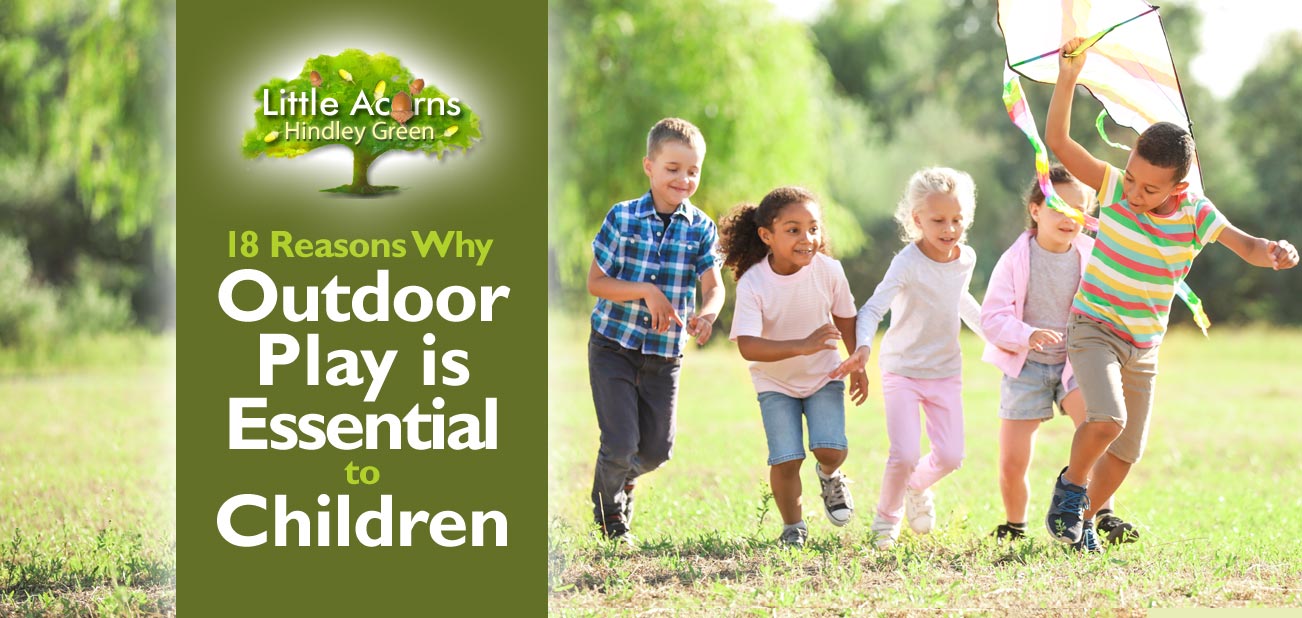
 Outdoor play is one of the truly magical elements of any healthy, fun-filled childhood. At the very least, it gives children the chance for some freedom, fresh air, and adventures that simply aren’t possible indoors. In today’s technological age of electronic screens, however, it’s also something that children have been doing less and less of over the generations. That’s a shame, when you think about it, not least because outdoor play is immense fun and incredibly beneficial to children. In light of this, today’s post explores 18 Reasons Why Outdoor Play is Essential to Children — of all ages. Take a look and see why outdoor play is so good for little ones.
Opportunities for Unique Adventures
 We mentioned it in our introduction — playing outdoors provides children with wonderful opportunities for real adventures! Whether it’s exploring The Great Outdoors on a family ramble, climbing on playground equipment with friends, embarking on a make-believe quest with the family dog, or making a den with siblings, there are no limits to what’s possible with outdoor play. Indeed, the adventures that are possible through outdoor play are only limited by a child’s imagination! Speaking of which…
Outdoor Play Boosts Creativity
Children are naturally inventive, especially when they play and create. Outdoor play opens up a myriad of new opportunities for them to use their imaginations, generate ideas, build, and create. Whether building a den, inventing new games, role-playing, or crafting things from natural objects, outdoor play naturally boosts children’s imaginations and creative skills.
Outdoor Play is Pure Fun!
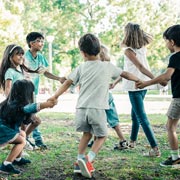 Let’s not forget, too, that playing outdoors is huge fun — and that’s important. Simply put, playing outdoors and giving children space to run around will make them happy. And there’s not much in life that’s more important than a child’s happiness — it’s an essential part of any magical childhood.
Children Learn So Much Through Outdoor Play
It’s common knowledge that young children learn best through play. By playing outdoors, children are exposed to new and virtually infinite opportunities to learn new things. Whether it’s new facts about the world or about themselves, these new learnings are gold dust that will enrich any child.
Outdoor Play Encourages New Skills
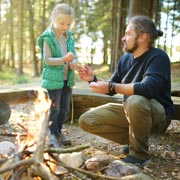 Outdoor play lends itself to the learning of new skills. With such a varied array of activities possible, children will naturally attempt new things, and each of these can be an opportunity to extend their skills. Physical skills might include tying knots, building dens with branches, playing ball games, climbing, racing, and so on. In addition, children will learn softer skills like teamwork, cooperation, strategy, critical thinking, leadership, and role play. What’s more, all of this will happen instinctively — such is the power of outdoor play.
Outdoors is a Feast for the Senses
Playing outdoors is a potential feast for children’s senses (under adult supervision, of course). The outdoor environment is rich in textures, colours, smells, and scents that will stimulate children’s senses — taste too, under close adult supervision. Brightly coloured flowers that smell incredible, the fascinating textures of tree bark, soft moss growing on rocks, the delicious flavour of an apple, and multicoloured rainbows spanning the sky are just a few of the many things that’ll stimulate the senses of a child outdoors. Such stimulation teaches children about the world, about nature, and encourages new connections in children’s developing brains.
Improved Spatial Awareness
Next, we come to the proprioception and vestibular senses, which control and coordinate the position of the body through movement, spatial orientation, and the sensing of gravity — even when the eyes are closed. These additional, hidden senses are also stimulated by the many activities experienced during outdoor play, allowing children to fine-tune their spatial awareness, physical movements, coordination, and the adjustments of force. Such skills will allow them to move optimally and stay safer from potential harm.
Outdoor Play Boosts Friendships
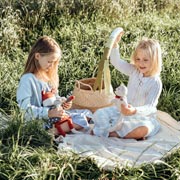 Children who regularly play outdoors will inevitably meet other children and encounter new dynamics. These will help them make new social connections, and immersive activities will deepen existing friendships. Playing outdoors is a great way, therefore, to strengthen and extend a child’s social circle, and boost social skills like teamwork, leadership, cooperation, brain storming, and so on.
Enhanced Communication Skills
All this outdoor play, which is seldom undertaken without other friends, siblings, or family members, is a natural conduit for improving communication skills. Group-based activities and multi-player outdoor games require clear communication skills, which children will naturally learn while having the best fun.
Outdoor Play Supports the EYFS
The Early Years Foundation Stage (EYFS) curriculum is, importantly, another beneficiary when children play outdoors. Several prime and key areas of the EYFS are supported when children do so. Examples include Physical Development, Communication & Language, Understanding the World, Personal, Social & Emotional Development and even Mathematics — each of these is boosted in children who play outdoors.
Outdoor Play Boosts Children Physically
 The often high-octane activities associated with outdoor play will also help children boost strength, fitness, motor, and coordination skills. By exposing themselves to different terrains, environments, tasks, games, and equipment outdoors, they will increase the variety of motor skills they need to accomplish activities. Running, jumping, hopping, constructing, chasing, and climbing will all help improve them physically, in so many ways that may not be possible indoors. What’s more, such things will help children protect themselves from harm, as well as empower them physically.
Proximity to Nature is Good for Children
Many studies have shown that being close to nature is immensely beneficial to children and adults alike. Indeed, the benefits of nature are profound and numerous to children (click the bold link to read our stand-alone article on the topic). In short, close proximity to nature boosts mental well-being, reduces anxiety, fights depression, and even improves academic grades. Incredibly, even just a view of a natural open space has been proven to improve children’s educational performance. Just a few minutes spent closer to nature can also help children reset following a time of stress.
Outdoor Play Helps Children Assess Risk
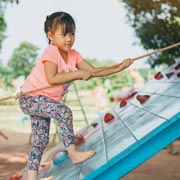 Playing outdoors, with adult oversight, is the perfect opportunity for children to begin learning how to assess risk. Whether it’s safely navigating outdoor play equipment, stepping over undulating ground, climbing a tree, or playing fast-paced ball games, children will soon learn when and how they need to assess possible risks. It’s a skill that, once learned, will keep them safer from harm, so is incredibly important.
Outdoor Play is in the Real World
Outdoor play takes children back to the all-important basics, away from electronic screens and the dangers of a more sedentary lifestyle. Outdoors, they’re deeply involved in activities, immersing themselves fully into real-life games and scenarios. That’s a far cry from sitting and looking at electronic TVs, tablets, smartphones and computers. And, with the UK recently debating whether it would be better to ban mobiles in schools and social media for children under 16, this is highly relevant today.
Outdoor Play Boosts Confidence
By playing outdoors, children get to enjoy greater movement, more independence, and an element of freedom that’s simply not possible indoors. By giving children such opportunities, they will naturally take charge of activities a little more, learn to make decisions for themselves, and add deeper levels of sophistication to their relationships with friends. Such opportunities will naturally boost independence, self-confidence, and self-esteem — essential tools to help them thrive as they get older.
Outdoor Play Helps Ready Under-5s for School
 All these new skills and enhancements make under-5s well-equipped when the time comes to leave preschool and begin school. Through outdoor play, they’ll have greater independence, confidence, communication and social skills, and physical skills, to name just a few. What a great way to help them hit the ground running from the moment they begin school!
Outdoor Play Widens Children’s Horizons
There are few activities that will better expose children to the wider world than outdoor play. Through it, they’ll discover new places, new facts, new skills, new activities, and broaden their understanding of our beautiful planet. As well as having fun and discovering new experiences, their eyes will be truly opened to the enormous scope of what’s out there if they care to explore. That widening of horizons can profoundly benefit their lives and future potential.
Outdoor Play Prepares Children for Life
 All in all, outdoor play prepares children for life. Through greater independence, better confidence, raised self-esteem, and new tools, skills and knowledge at their disposal, children can go forward with new vigour and thrive. Such is the power of outdoor play.
So, with spring not far away at the time of writing, it’s a great time to plan some outdoor play for your children — under adult supervision, of course. Whether it’s a trip to the playground or a hike in the wilds of the countryside, outdoor play will benefit them in incredible ways. And it’s so much fun! What’s not to like?
Little Acorns Nursery, Hindley Green
A Weekday Childcare Service Near Wigan
 At Little Acorns Nursery, Hindley Green, we understand the benefits of outdoor play and nature to children. With that in mind, children under our care get to experience rich and stimulating opportunities for outdoor play and proximity to nature. The childcare setting is fortunate to have extensive grounds, where children can enjoy playing on a wide range of equipment or explore nature zones.
Little Acorns Nursery supports free childcare hours for eligible families. This includes eligible children as young as 9 months old. To apply for a place, find out more, arrange a nursery tour, or get in touch, please get started below:
Little Acorns Nursery is located in Hindley Green, near Wigan. Families living nearby in Bickershaw, Leigh, Atherton, Westhoughton, Ince-in-Makerfield, Platt Bridge, Tyldesley, Bolton and Greater Manchester may also find it a convenient choice.
 One of the most widely accepted truths among professionals involved in ‘early years’ education is that play is incredibly important to children. That’s not just because it comes naturally to them and is fun; play is the key tool through which children learn about themselves, each other, and the world around them. Indeed, the act of playing benefits children in a wide array of profoundly beneficial ways, including socially, mentally, physically, and emotionally. With that in mind, today’s post highlights some of the many benefits of play to children, particularly in their early years. So, if you have a child under five, take a look and you’ll soon see why encouraging your little one to play in a variety of ways will bring out the very best in them and help set them up for life.
 One of the most obvious things about children’s play is that often it gets them exerting themselves physically, as they run, climb, jump, make, create, and construct. Such activities help them to master gross and fine motor skills, balance, movement, and coordination. All such skills are enhanced significantly through play and are a fundamental building block of children’s development.
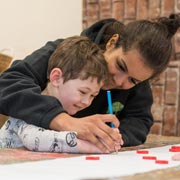 Right from an early age, the act of playing helps in the development of young minds and even contributes to the rapid growth of new connections in the brain. This is true even for babies, whose key tool to learn about the world is through play, as they explore with their senses as well as by reaching out to grasp toys and objects around them.
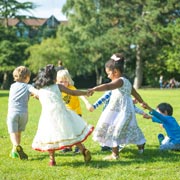 Whether playing with peers or with parents, the need to gradually master communication and language is imperative. Play helps that to happen in the most natural of ways. All the time they’re playing, children are naturally communicating, picking up new vocabulary, learning new phrases, getting to grips with grammar, and so on. Play is indeed a wonderful facilitator of communication and language.
 Playing is an integral part of every happy childhood. It’s fun and, put simply, makes children happy. That’s wonderful for children’s emotional and spiritual well-being and the importance of that cannot be overstated.
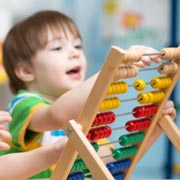 As we have seen in this article, play benefits children in a completely holistic way. Play enhances their lives through a multitude of benefits that include improved skills and abilities, a deeper understanding of the world and society, solid friendships and the myriad of opportunities that all of that will bring. Play also fosters a deeper love of learning, because play makes learning enjoyable. Indeed, through play, children explore, discover, and learn instinctively — with zero ‘friction’. As such, play should be at the very core of every child’s learning and development journey.
 Settings like

