Let’s Get Composting!
 Autumn brings a variety of new, nature-based activity opportunities for children to enjoy outdoors. Along with an autumn scavenger hunt, there is another activity that is perfect for the season given the abundance of fallen leaves — composting. Composting is a simple activity that not only teaches children new skills and knowledge, but also benefits the natural world. Showing children and under-fives how easy it is to make compost will educate them about the circle of life, teach them the value of recycling, give a home to creatures like minibeasts, and give households a free resource that will nourish plants come springtime. It’s a win-win for children, families, and nature! With that in mind, welcome to today’s introductory guide to composting for kids — let’s get composting! And rest assured that, because this is for children and under-fives, we’ll keep things simple.
Activity Overview
Through this activity, children will learn how to make a compost heap, the simple measures needed to maintain it, the types of things that can be composted, and what the compost can be used for once ready. They’ll discover that things usually discarded can be repurposed, recycled, and given a second life that will benefit nature and the household.
What Will Children Need
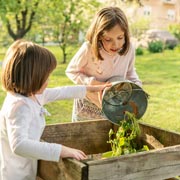 Children will essentially need material to compost and somewhere to compost it. Also, depending on the scale of the compost heap, a spade or gardening trowel will be useful, along with access to water. During the compost preparation, gloves can be worn for protection if preferred, and/or supervising adults will need to ensure that children wash hands with soap and water after working on the task.
What Can Children Compost?
Children and their families can compost an array of things that would otherwise have gone to waste. Key ingredients can include:
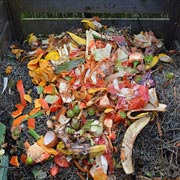 Fresh grass cuttings;
- Fallen/dead leaves and small twigs foraged from the garden or local open space;
- Crushed eggshells;
- Vegetable scraps and fruit peelings;
- Loose coffee grounds and loose tea leaves (empty the contents of any tea bags as the bags themselves often contain microplastics, which do not break down);
- It’s also possible to incorporate small pieces of unlaminated cardboard and shredded paper scattered into the overall organic mix, although see the next section for details to avoid.
Avoid…Avoid including scrap meat, fish, dairy products including cheese, oily foods, pet food, laminated or glossy paper/cardboard, string, tags containing metal rivets, anything containing plastic, and pet litter or waste. After all, you don’t want to attract pests and bad smells, and you only want to use ingredients that are biodegradable. |
How Children Can Get Started
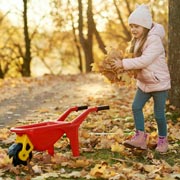 The first task is to choose somewhere for your child’s compost heap. An unused corner of the garden would be perfect for a simple heap, although it’s also possible to make a child’s compost heap in a container like a large pot, a timber packing crate, or even a robust cardboard box if garden space and resources are limited. A parent may need to guide children in this regard.
At the other end of the scale, it’s also possible, of course, to build a larger compost area that has sturdier sides. With the help of an adult, such a construction can be made out of repurposed pallet wood, logs, wire mesh, a crate, or timber sleepers. However, as this particular composting task is a children’s activity, we’ll assume you’ll keep the scale fairly modest and the approach fairly simple. Even at a small scale, high-quality compost is possible with the right approach and ingredients.
What to Do
Whatever the location and style of the compost heap, the approach for making compost is the same.
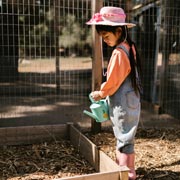 Ideally, the compost heap should contain a layer of garden earth at the base to get things started.
- Children should regularly collect the ‘ingredients’ for the compost heap that we outlined earlier. For example, crushed eggshells, vegetable scraps, fruit peelings, banana skins, foraged autumn leaves, grass cuttings, twigs, and so on. Including a wide mix is important. Once collected, these can be scattered in a layer onto the compost heap, which will build up over time.
- The child should keep it moist by regularly sprinkling water on the pile. This can be done with either a watering can or a wet sponge that can be wrung out over the compost pile.
- The pile should be stirred and mixed once a week, using a spade, gardening trowel, or stick, depending on the size and depth of the heap.
- Take care to avoid hurting any minibeasts that will inevitably move in once the compost heap is established.
First Steps to a Greener Life
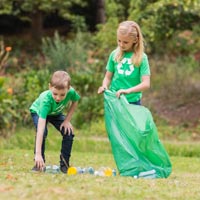 One of the first lessons that children will learn during their composting journey is that what might have been considered rubbish can, in fact, be converted into a valuable resource. All those scraps hold nutrients and minerals that need not be wasted. Instead, they can be recycled and put to new use rather than being discarded and going into landfill.
Recycling is a concept that is becoming more and more important over the years, and composting is an easy and worthwhile way to introduce green values to little ones. Indeed, it may be the first step that sets them on a path towards a more ecologically friendly lifestyle.
What to Expect
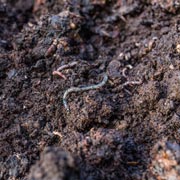 As the compost heap builds up and is mixed over time, the ingredients will gradually biodegrade. Whilst doing so, the pile may appear to shrink and will also darken in colour. Biodegrading is a natural process that is helped by the bacteria, worms, and little bugs that inhabit the mixture.
Indeed, as the composting process unfolds, children will discover some of the little minibeasts that have made the compost heap their home. These are fascinating little creatures that help the compost heap break down. From worms and centipedes to woodlice and beetles, they come in a wide variety of different forms. Another important lesson for children to learn is that the creatures should be treated delicately, with empathy, so they are not unduly disturbed or harmed. Learn more about minibeasts and download a free minibeasts reference poster for your child here.
Eventually, the composting process will result in a rich, crumbly, earth-like compost that’s dark brown in colour. This is packed full of natural goodness that plants will love.
What to Do With the Compost
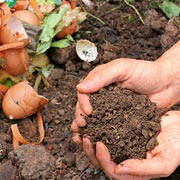 The resulting compost can be used as the soil for potted plants, for growing vegetables and fruits, or mixed around those already in the garden to give them a boost. Compost is rich in nutrients that will greatly enhance the health of growing plants and shrubs, to help them grow and reach their full potential. Plants and flowers will be stronger and will thrive. Fruit and vegetables grown at home will be more bountiful too. All in all, growing plants will become healthier.
Lessons From This Activity
 This activity is not only fun, but will also feed children’s minds. It will teach children new skills, the value of preparation, the importance of patience, and the need to look after nature’s flora and fauna. It teaches children about the natural world, the circle of life, the seasons, how to care for other living things, and the importance of green values. Above all, the exercise demonstrates that if you look after nature, it will look after you. These are all wonderful concepts for children to understand, so it’s crucial to explain them as part of children’s learning journeys during the activity.
So, we encourage families to gather autumn leaves and save those kitchen scraps — they’re a valuable commodity and setting children on their composting path will open children’s eyes to new concepts while combining outdoor exploration, science, recycling, horticulture, and so much more.
Happy Composting, from Little Acorns Nursery
Weekday Childcare Services in Hindley Green, Near Wigan
 At Little Acorns Nursery in Hindley Green, we know how important spending time outdoors, close to nature, is for children. Nature benefits children in so many ways, including physically, mentally, emotionally, spiritually — and even academically (click the bold link to learn more). It’s one of the many reasons we recommend outdoor play and nature-based activities so often on our blog.
Children who attend Little Acorns Nursery in Hindley Green are fortunate to have access to the nursery’s unusually large garden and outdoor area. Various zones allow them to get involved in nature watching, gardening tasks, sensory play, construction, counting activities, creative play, and a wide variety of outdoor play activities. It’s easy to understand why it’s therefore so popular with the nursery children!
Get in touch to find out more about nursery places at Little Acorns or to arrange a visit. Choose a button below to get started — we’ll be delighted to hear from you:
Little Acorns Nursery provides childcare services in Hindley Green, Wigan. As such, we’re also a great match for families in nearby areas like Bolton, Ince-in-Makerfield, Platt Bridge, Westhoughton, Atherton, Leigh, Bickershaw, and Tyldesley.
Safety Note
Supervision from a responsible parent or adult will always be needed for little ones, especially when children are playing and exploring outdoors. Children will need guidance when it comes to outdoor safety, hazards, and hygiene and, indeed, all such guidance will help educate them about potential dangers and the assessment of risks.
 Most children in England start school in Reception Class, usually in the September term, when they’re still only 4. That’s up to a year before they have officially reached Compulsory School Age. This allows them to start their school education earlier than the law requires so that, by the time they begin Year One at school, they can confidently hit the ground running. Starting in Reception at the age of four sets them up for success in so many ways, including academically, socially, emotionally and more. Beginning earlier also empowers them with a wider skill set, with a greater level of confidence and independence, an existing cohort of friends, a better grasp of what Year One will have in store for them, and so on. And, of course, by enrolling at school from Reception Year, they will complete the final EYFS modules that will be so important to their success from Year One onwards.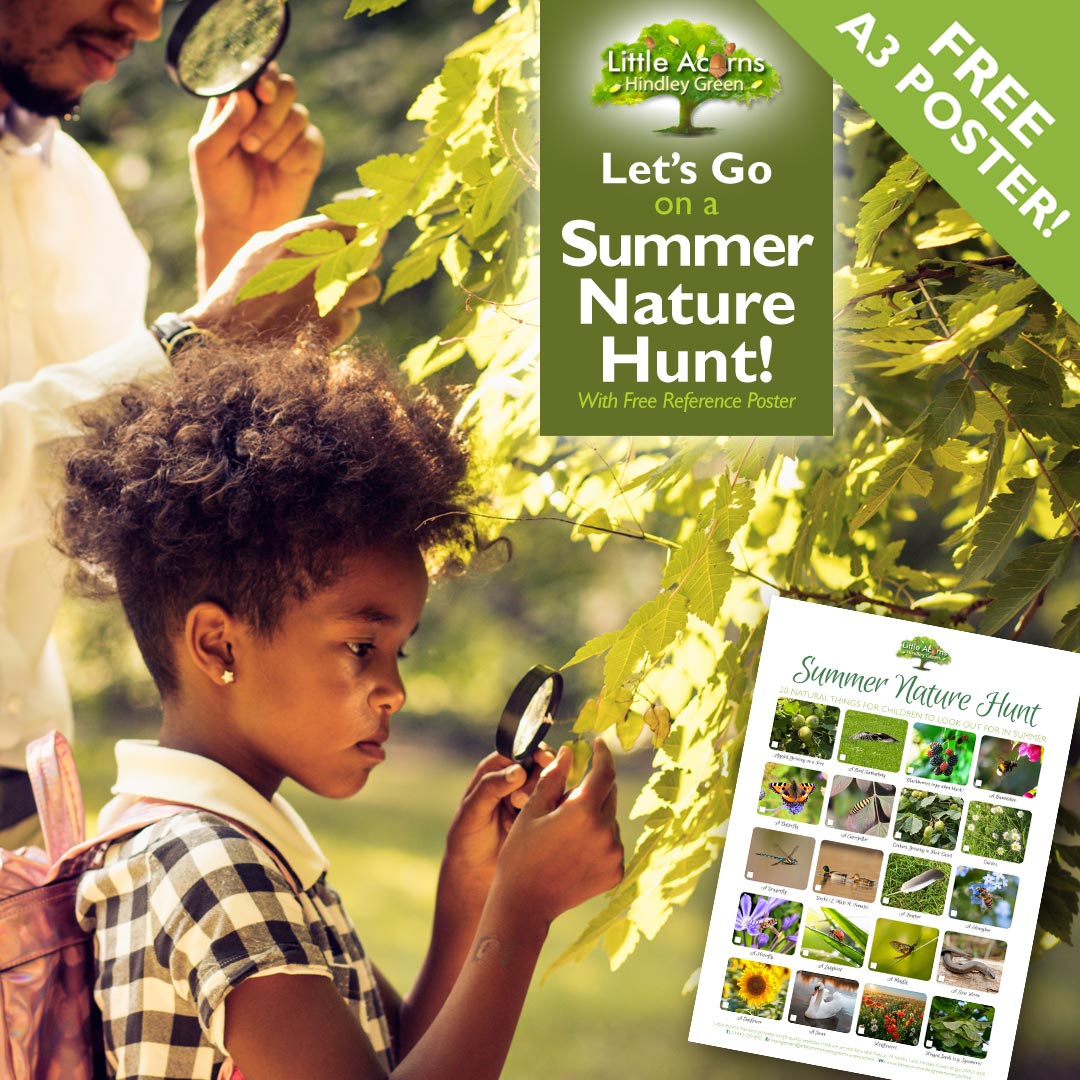
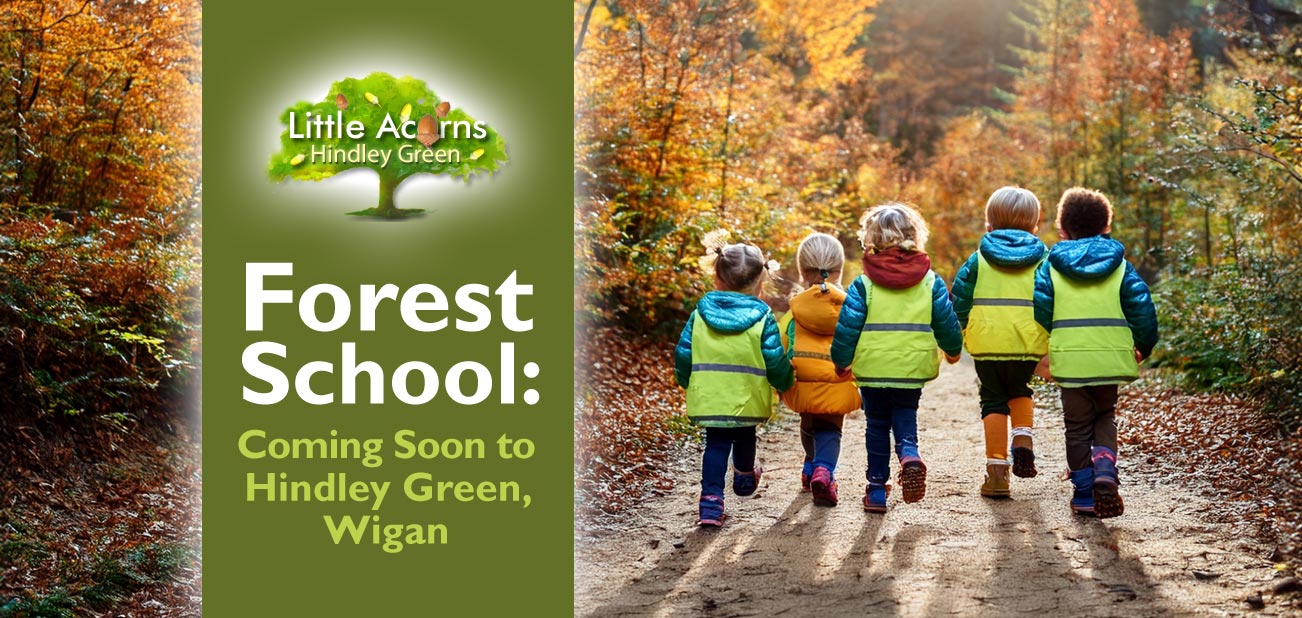
 The team at Little Acorns Nursery is delighted to announce that we’ll soon be running regular Forest School sessions for children under five in the Hindley Green/Wigan area. Little ones absolutely adore Forest School — they seem instinctively drawn to nature and natural outdoor spaces. Like them, we simply can’t wait to begin! Preparations and training are underway, and we hope to begin our first Forest School sessions for children from September 2026. It’ll be a really exciting addition for the new term and for families living nearby. With all that in mind, today’s post explains what Forest School is all about, how it came to be, and how it benefits children, especially those under five.
 Forest School is not so much a place, destination, or static centre of learning as it is a child-centred philosophy and learning process. Through a Forest School programme, little learners can safely play, explore, and discover outdoors, close to nature, under the supervision of specially trained adult leaders. There, in the natural environment, they will learn new skills and grow holistically in a vast number of new ways.
 As well as being inspired by several incredibly influential proponents* of outdoor play, learning, and discovery, Forest School has its strongest roots in Scandinavia. It was there that people first took notice of their outdoor ‘Friluftsliv’ (free air life) culture. Soon becoming virtually a way of life, the philosophy began to spread around the world. It eventually arrived as ‘Forest School’, in the UK, back in the early 1990s. Its UK beginnings were initially led by staff from Bridgewater College, Somerset, who had visited Scandinavia to see Friluftsliv for themselves. Since then, Forest School’s popularity has grown and grown, with children and adults loving everything about it and enjoying the many benefits it brings.
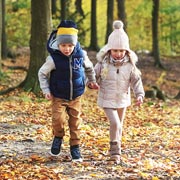 Forest School sessions are held regularly over an extended period of time and, weather conditions permitting, cover several seasons of the calendar year. They’re usually likely to include a variety of activities in tandem with general exploration and discovery. Examples might include climbing, balancing, problem-solving, activities connecting children to nature, working in teams to complete creative or building tasks, and so on.
 The impact of Forest School on children can be truly profound. It’s not only immense fun but also incredibly beneficial to little ones. Even those who previously might have been reserved, or who displayed challenging behaviour, often absolutely flourish when embarking on a Forest School programme. Indeed, many discover skills they didn’t know they had and often relate deeply to the natural world. Forest School is also a great leveller, with children from all kinds of backgrounds finding a new niche where any of them can thrive on an equal playing field. Nature is a place where social bonds adapt and grow in unexpected but often brilliant new ways. New connections are made on so many different levels too. And, with all its profound effects on children, Forest School often helps children develop a long-term appreciation for the natural world, the Great Outdoors, and the need to look after the planet responsibly. It really is a wonderful thing — and we can’t wait to introduce Hindley Green and Wigan children to Forest School.

 As adults, it’s lovely to reflect back on the type of childhood memories that give us a warm, fuzzy feeling. These are memories that still bring joy when we think about them, even years later. They’re often memories of events and special moments shared with parents and siblings, in times of wonder and togetherness. Sometimes, they might be of a family adventure of some kind — a holiday somewhere wild, an unforgettable activity, or a magical moment that’s simply so wonderful we’ll never forget it. We can think of such memories as almost foundational parts of our childhoods, very much akin to milestones in the progression of our growth as children. These moments are irreplaceable. With that in mind, we’ll explore some ideas today for how to gift your own children such wonderful memories — moments they’ll remember fondly — perhaps for the rest of their lives. What a gift that would be!
 Children’s ears will always prick up when you tell them they’re going on an adventure! These can take many forms, so they are limited only by your imagination, time, and resources as a parent. Need an example? Try taking them on a ramble or hike. Take a picnic! Take rucksacks, suitable footwear, wet weather gear (just in case), something to drink, and a smartphone with a camera for any photos. Maybe first show them a map of where you plan to walk with them. Aim for some interesting places. Viewpoints, interesting landmarks, beautiful countryside, woodlands, and riverside walks are good examples, and will give children something to look forward to on the journey. Ensure there is somewhere to stop for food, drinks, and/or snacks along the way. Maybe build in some activities or games en route too. All such things will make for a really memorable day. Even if they find it hard at first, they will end up with lots of fresh air and exercise, a feeling of accomplishment, and some great memories.
 Next time it’s sunny, and you and your child are out and about in the garden or open space, look out for the big fluffy, white ‘cumulus’ clouds. If there are some gently gliding across the sky, encourage your child to lie on their back, look up, and study them (avoiding looking directly at the sun, of course). Many of these enormous clouds are quite beautiful. Even better, there’s a game you can play together — looking for cloud animal shapes, faces, or even dragons and monsters in the clouds. Such shapes sometimes form naturally as the clouds shift and change formation on the winds high above us. There is even a name for this type of illusion; pareidolia, although it applies to seeing faces and shapes anywhere, not just in clouds. Searching for and finding an animal or face, whether in the clouds, the bark of a tree, or on a rocky formation, is sure to delight any child. It will be something they’re likely to remember and repeat throughout childhood and even into adulthood. Indeed, it’s another magical aspect of childhood and the world around us.
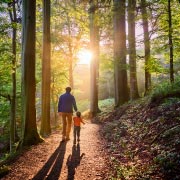 Setting aside 30 to 60 minutes specifically to witness a sunset with your child is also something that can be magical. It’s also an incredibly simple but powerful activity to do with children. Some sunsets are truly awe-inspiring, with incredible colours, cloud patterns, and shapes that look like they’re something from a fantasy movie or book. If the timing is right, children can even see the distant sun slowly disappear over the horizon as dusk and then nighttime arrive. It is a beautiful thing to witness, and it also teaches children more about the world and our place within the universe. It will be a lovely memory of shared, high-quality family time too, and will also demonstrate to little ones that some of the most magical activities cost no money at all, and do not involve toys or electronic screens.
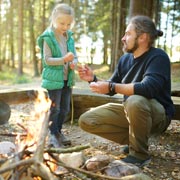 Surprise your little ones with a last-minute getaway. Editor’s note: My father did this for us a few times each year when my sister and I were children. He’d come home from work on a Friday evening and excitedly ask the family, “Who wants to go away for the weekend?” and my sister and I would shout, “We do!” with great gusto. We’d quickly pack, and off we’d go. By Friday night, we’d arrive at a campsite, or sometimes a random spot en route, and sleep like babies. After spending the weekend visiting our favourite places, we’d arrive back on Sunday night feeling like we’d been away for a week. Those are still some of my fondest childhood memories. And, it’s the kind of exciting last-minute break that doesn’t cost the Earth and is huge fun — something we could all do for our children occasionally, perhaps.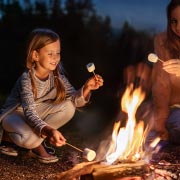
 On a clear, cloudless night, stargazing somewhere away from neighbourhood lights will open children’s eyes to the magic of the nighttime sky. Even if you spend just 5 or 10 minutes together watching the night sky, you’re bound to bring out the wonder of space in your child’s mind. The Moon, twinkling stars, the little star tinged red (Mars), the pan-shaped form of the Plough (a.k.a. ‘Big Dipper’), and helping your child find the North Star are all things they’ll find fascinating and remember longer-term. Stay watching long enough for them to see little satellites marching their way across the darkness as they loop around the world, nowadays often in the company of others in a satellite ‘constellation’. Even better: help your child spot their first shooting star — and make a wish. Magical!
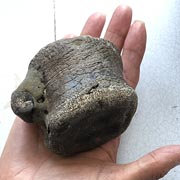 There are many places around England and the UK where fossils can be found if you/your children take the time to look for them. Children love it when they find them (as do many adults), and it’s always incredible to see their reactions when you tell them that this fossilised creature or plant they just found lived literally millions of years ago. It puts things into perspective and opens their eyes and minds to the wonders of Planet Earth and even life itself. Not only that, they have a magical keepsake to remind them of their fossil hunt(s). Try Googling good fossil-hunting locations near you, or
  Children are naturally fascinated by the world around them — and especially the natural world. The UK is lucky to be a lush environment with lots of flourishing flora and fauna. So, for little ones, there is so much to see and discover. That’s one of the many reasons we will soon be providing Forest School sessions at Little Acorns Nursery in Hindley Green, in fact. It’s also why we’ve published various nature-based scavenger hunt activity ideas here on this website. So, another interesting, informative, educational, and memorable activity that will enrich your child’s childhood is a nature-based scavenger hunt. Check out our
 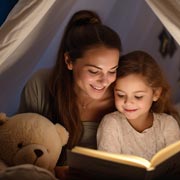 Let’s not forget that magical memories can be made indoors, too! Reading books to children before they go to bed can build lasting memories. Editor’s note: My own children, now in their late twenties, still recall me reading to them every night, as we gradually worked through all the Harry Potter books. This was before they had started making the movies, and I made sure to put on different voices for different characters, whisper when there was a tense moment, or speak more urgently when Harry Potter was in mortal danger. They loved it! And now they’re parents themselves, they’re paying it forwards and reading books in a similar way for their own children. And, not only were those book-reading sessions “an integral part of their childhood” (they tell me), but they’re also incredibly good memories for me, as a parent. It really was magical on so many levels, so it is thoroughly recommended.
 Editor’s note: Another thing my own children remember fondly was singing songs each evening with me when they were very young. These were home-spun songs that we made up as we went along, sung together near bedtime most evenings, along with some basic guitar playing. It was both entertaining and amusing as we took it in turns to make up new, often silly, verses. What’s more, my children described it recently as a ‘free concert every night’, and it’s lovely that they remember it so clearly and fondly over two decades later. So, regularly playing musical instruments and singing together is highly recommended and highly creative for all parties. And, who knows where it could lead — a possible career in music, perhaps!
 We hope you’ve enjoyed our ideas today for creating magical memories for your child. They’re just a starting point, though, to inspire new ideas for families. When high-quality memories are made, they can last a lifetime. Children may well look back on them as integral parts of their childhood, and instantly be transported back in time as they recall them. Such memories can bring togetherness, as well as a warm, fuzzy glow. What’s most important, though, is that the proactive creation of such memorable times lets children know that their happiness is important, they matter, are loved, and, all in all, it really is a wonderful world.
 National Children’s Gardening Week arrives in May and is the perfect opportunity for children to get outdoors and enjoy some wholesome, nature-based activities. Starting towards late May, it’s a time when spring is in full swing, the weather is usually fine, and seeds and plants grow fast in the nourishing sunshine. Embraced by children at homes, in childcare settings, schools and community groups across the Nation, this special week is fun, educational, and hugely worthwhile for children. What’s more, it benefits Greenfingers, the chosen charity supported by the initiative.
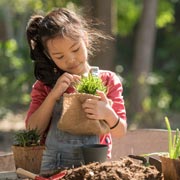
 Many children have an instinctive connection to nature. National Children’s Gardening Week nurtures such instincts by encouraging children to get hands-on in the garden or local green space. As well as helping children discover many new facets about the natural world, activities in this special spring week will also teach them about the circle of life, ecosystems, and a sense of responsibility towards nature. It will also open their eyes to the beauty and wonder of the world as a whole, as well as giving them a greater sense of their place within it. Let’s also not forget that
 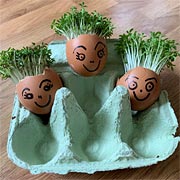 Growing mustard, cress, or microgreens is even more simple and can be accomplished entirely indoors if families have no outdoor access. What’s more, the results are very tasty to eat!
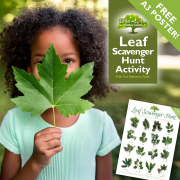

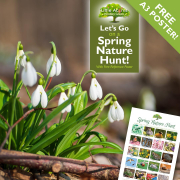
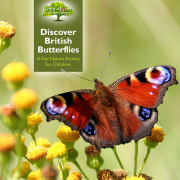 Discovery hunts are also fun and entertaining this spring. If children have completed the spring nature hunt above, they can graduate to
 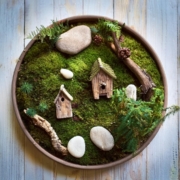 Make a mini garden, also similar to a fairy garden. These are always a huge hit with children, and look magical!
  In our introduction, we mentioned that this fabulous children’s gardening week raises money for Greenfingers. They are a wonderful charity that supports children in hospices. This is achieved by creating beautiful gardens and open spaces where children and their families and friends can spend quality time together. Without the support of Greenfingers, such magical spaces simply wouldn’t exist. Check out



 Did you know that the position newborn babies prefer to face when lying on their backs may be an indicator of whether they’ll be left- or right-handed? The thumb they suck is, of course, a similar indicator. The 85% of them who prefer to face right in the first few months and the 90% who suck their right thumb generally turn out to be right-handers — the same kinds of percentage of adults who are right-handers.
 The locations where babies are born around the world are also very interesting. 5% of the world’s babies are born in Europe. What about the other 95%? Well, a staggering 52.9% of all babies are born in the continent of Asia, 30.7% across Africa, 10.7% in the Americas, and just 0.7% across Oceania.
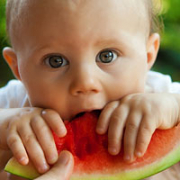 Babies are born with many more taste buds than adults. They’re not only on the tongue either. Spread on the roof and sides of the mouth, tonsils, and throat, as well as on the tongue, it’s thought they’re super-abundant in babies to help them experience tastes in a highly sensitive way. This could be an evolutionary mechanism to help them identify safe and unsafe food sources. Some estimates put the number of babies’ taste buds as high as three times more than adults, although we have found conflicting reports about the exact numbers. Whatever the number, it decreases by the time a child reaches adulthood. Interestingly too, babies can’t taste salt until the age of about 4 months.
 Did you know that babies’ brains double in size in the first year alone, and triple in size by the time children are 5? Some experts believe that boys’ brains grow faster than girls’ brains in the first three months, but it’s inconclusive. Either way, brains don’t finish developing fully until the age of 21 and, even then, there is some scientific debate as to whether they continue developing even longer.
 As well as many other benefits associated with breastfeeding, statistics show that babies who are breastfed for at least two months are half as likely to be at risk of Sudden Infant Death Syndrome (SIDS). As well as that, breastmilk passes on important antibodies to the infant, helps protect it from certain diseases and allergies, and even adapts to supply the exact calorific content the baby requires over time. Incredible!
 Outdoor play is one of the truly magical elements of any healthy, fun-filled childhood. At the very least, it gives children the chance for some freedom, fresh air, and adventures that simply aren’t possible indoors. In today’s technological age of electronic screens, however, it’s also something that children have been doing less and less of over the generations. That’s a shame, when you think about it, not least because outdoor play is immense fun and incredibly beneficial to children. In light of this, today’s post explores 18 Reasons Why Outdoor Play is Essential to Children — of all ages. Take a look and see why outdoor play is so good for little ones.
 We mentioned it in our introduction — playing outdoors provides children with wonderful opportunities for real adventures! Whether it’s exploring The Great Outdoors on a family ramble, climbing on playground equipment with friends, embarking on a make-believe quest with the family dog, or making a den with siblings, there are no limits to what’s possible with outdoor play. Indeed, the adventures that are possible through outdoor play are only limited by a child’s imagination! Speaking of which…
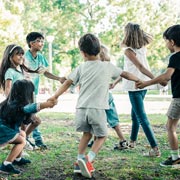 Let’s not forget, too, that playing outdoors is huge fun — and that’s important. Simply put, playing outdoors and giving children space to run around will make them happy. And there’s not much in life that’s more important than a child’s happiness — it’s an essential part of any magical childhood.
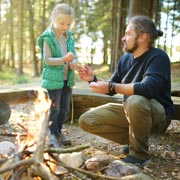 Outdoor play lends itself to the learning of new skills. With such a varied array of activities possible, children will naturally attempt new things, and each of these can be an opportunity to extend their skills. Physical skills might include tying knots, building dens with branches, playing ball games, climbing, racing, and so on. In addition, children will learn softer skills like teamwork, cooperation, strategy, critical thinking, leadership, and role play. What’s more, all of this will happen instinctively — such is the power of outdoor play.
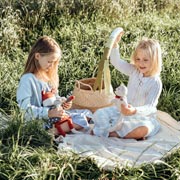 Children who regularly play outdoors will inevitably meet other children and encounter new dynamics. These will help them make new social connections, and immersive activities will deepen existing friendships. Playing outdoors is a great way, therefore, to strengthen and extend a child’s social circle, and boost social skills like teamwork, leadership, cooperation, brain storming, and so on.
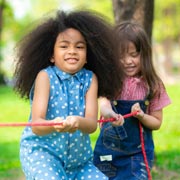 The often high-octane activities associated with outdoor play will also help children boost strength, fitness, motor, and coordination skills. By exposing themselves to different terrains, environments, tasks, games, and equipment outdoors, they will increase the variety of motor skills they need to accomplish activities. Running, jumping, hopping, constructing, chasing, and climbing will all help improve them physically, in so many ways that may not be possible indoors. What’s more, such things will help children protect themselves from harm, as well as empower them physically.
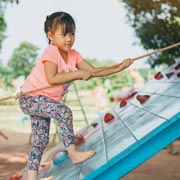 Playing outdoors, with adult oversight, is the perfect opportunity for children to begin learning how to assess risk. Whether it’s safely navigating outdoor play equipment, stepping over undulating ground, climbing a tree, or playing fast-paced ball games, children will soon learn when and how they need to assess possible risks. It’s a skill that, once learned, will keep them safer from harm, so is incredibly important.
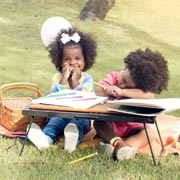 All these new skills and enhancements make under-5s well-equipped when the time comes to leave preschool and begin school. Through outdoor play, they’ll have greater independence, confidence, communication and social skills, and physical skills, to name just a few. What a great way to help them hit the ground running from the moment they begin school!
 All in all, outdoor play prepares children for life. Through greater independence, better confidence, raised self-esteem, and new tools, skills and knowledge at their disposal, children can go forward with new vigour and thrive. Such is the power of outdoor play.