
A Guide to Primary School Applications
If Your Child is 3 or Has Just Turned 4, This is For You
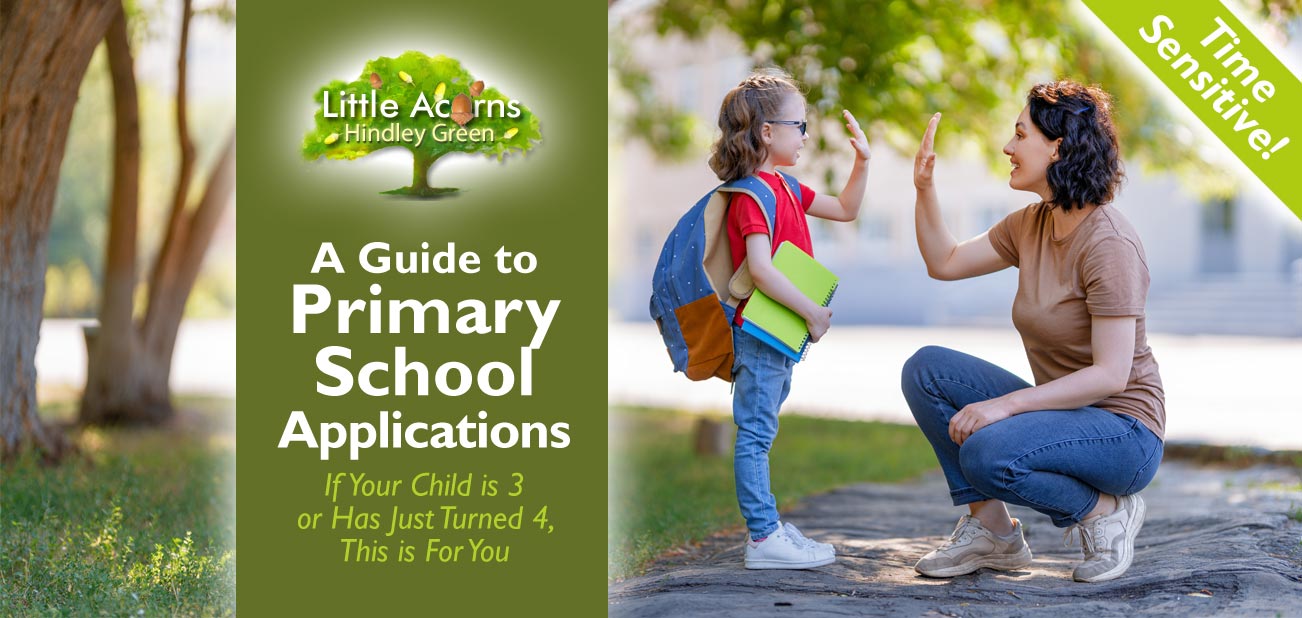
If your child has reached the age of 3 or has just turned 4, it’s time to apply for their primary school place. While children are within this age range, applications must be made between the start of September and mid-January if you want them to start school the following September. If you miss the deadline, your child’s application effectively goes to the back of the processing queue. That could adversely affect which school your child is offered, particularly where popular schools are oversubscribed. So, timing is important if you want your child to have the best chance of receiving an offer for your preferred choice. With all this in mind, today’s Guide to Primary School Applications outlines the key dates and guidelines for making a successful school application for your child.
Compulsory School Age
In the UK, children reach the statutory age for starting school, known as Compulsory School Age, on 31st of December, March, or August following their fifth birthday (whichever comes first). That means that, according to UK law, they must start full-time education no later than the beginning of the school term following their fifth birthday. That said, in practice most families opt to start their children earlier, while they’re still four.
* Starting Primary School at 4 vs. 5
 Most children in England start school in Reception Class, usually in the September term, when they’re still only 4. That’s up to a year before they have officially reached Compulsory School Age. This allows them to start their school education earlier than the law requires so that, by the time they begin Year One at school, they can confidently hit the ground running. Starting in Reception at the age of four sets them up for success in so many ways, including academically, socially, emotionally and more. Beginning earlier also empowers them with a wider skill set, with a greater level of confidence and independence, an existing cohort of friends, a better grasp of what Year One will have in store for them, and so on. And, of course, by enrolling at school from Reception Year, they will complete the final EYFS modules that will be so important to their success from Year One onwards.
However, families with ‘Summer-Born’ four-year-olds (born from April to August inclusive) may feel they’re too young for ‘big’ school at the age of four. Such children would be the youngest in the year if starting in Reception at four. It may be similar for parents whose children are affected by developmental delays, medical conditions, or other limiting factors that adversely affect school readiness. In light of such scenarios, some parents may consider delaying their child’s school start until they’re five years old — the statutory age.
Several options are potentially available for such children if postponing the school start:
- Parents can ask to defer their four-year-old’s start to a term other than September if they wish, for example, beginning in the January or April term if they think their child would be more school-ready by that time.
- They can also ask the school if it’s possible to agree part-time rather than full-time attendance while the child remains below Compulsory School Age.
- Or they can elect to delay their child’s school start until the child reaches Compulsory School Age (5).
What Happens if They Delay the Child’s School Start?
If electing to delay by a full academic year, parents of such children would need to make a request to their local school’s admission authority. It is worth noting, however, that it would not be up to the parents which year children go into if delaying until the age of five. Although the parent would be able to request which year their 5-year-old goes into (i.e. Reception or Year 1) the final decision would be that of the school’s admission authority. It would be based upon what was deemed to be in the child’s best interests, given their abilities and individual needs at that time. It is also worth noting that, if skipping Reception year, a child would miss out on the part of the EYFS curriculum usually covered in that year, key elements of which are phonics and arithmetic. Such a facet is likely to be factored in by school admission authorities when making their decision.
Need Advice About Timing of Your Child’s School Start?
If you need advice or a second opinion about the timing of your child’s school start, speak to the school you have in mind and to your early years provider.
If your child is at Little Acorns Nursery in Hindley Green, we’d be happy to discuss the options with you. And rest assured, whatever the decision, we’ll always do everything possible to help your child be as school-ready as possible by the time they leave us.
Parents whose children have special educational needs and disabilities (SEND) can also get advice from the “SENCo” — a specially-trained Special Educational Needs Coordinator. Both childcare nurseries and schools in England will each have their own SENCo.
Some parents may also benefit from advice from other professionals where appropriate, for example, speech therapists and health visitors.
Key Dates for Primary School Applications
The majority of people should apply for their child’s school place between 1 September and 15 January when the child is 3 years old, or has recently turned 4. That deadline is the same whether families want the child to start school at the age of four or five*.
There are a few exceptions, for example, if you are moving house and need to change schools mid-year. However, for the sake of clarity, this guide focuses on the more standard timing and circumstances that apply to the majority of families.
How to Apply for Your Child’s Primary School Place
You can register an interest directly with your primary school of choice. However, registering an interest does not guarantee your child a place even if the school is attached to the nursery/preschool your child already attends. Ultimately, you usually need to make the formal application through your local authority, which is usually best achieved online, as outlined below.
To start an application for primary school for your child, go to this Gov.uk address, enter your postcode, and click the green ‘Find’ button. The site will then match you with your local authority. For example, for those near our nursery in Hindley Green near Wigan, you are taken to Wigan Metropolitan Borough Council’s ‘Primary School Admissions’ page. This, as with other areas, has lots of information about applying for a primary school place together with all the appropriate hyperlinks for applications, appeals, further information, and such like.
As part of your application, you will have the opportunity to confirm, in order, your most preferred primary schools. Subject to there being available spaces, the order of your preferences will be taken into consideration when places are allocated. However, other factors outlined later in this guide are also likely to affect your child’s offer.
Applying Late
If you miss the 15th of January deadline for standard primary school places starting in the September term, the local authority’s site will give you access to a ‘late application form’. Note, however, that applying after 15th of January means your application will be processed after those received on time. This is likely to reduce the chances of achieving an offer for a place at your preferred school.
Changing Your Mind
If you change your mind about your school choice(s), your local authority website will also give you options and guidance. You may be required to use a late application form which, if used after the 15th of January, may also give you a lower chance of receiving an offer for your child’s preferred school.
Tips for Securing a Place at Your Preferred Primary School
There are several criteria that, if applicable to your child’s application, are likely to give them the best chance of securing an offer for your preferred school. These include:
- Filling out the application form correctly, in full, and submitting on time;
- Living near your preferred school;
- A sibling of your child already attending the school;
- Having worked at the school for 2 or more years;
- Matching the religion of the school if it’s a faith school;
- The child being eligible for the Pupil Premium (or Service Pupil Premium);
- And, of course, the chosen school not being over-subscribed.
Receiving Your Offer
on Primary School Offers Day
Families of pre-schoolers who applied for a primary school place on time between September and mid-January will find out which primary school their child has been offered around mid-April. Specifically, ‘National Offers Day for Primary School Places’ is usually 16 April each year. However, if that falls on a weekend or bank holiday, the ‘offers’ date for that particular year moves to the next working day.
Learn more about what to expect on Primary School Offers Day here. Our stand-alone guide explains the criteria used by school admissions authorities for offers, what happens if you are late with your application, what to do if you do not receive an offer for the school you had hoped for, and much more.
Little Acorns Nursery, Hindley Green
Getting Wigan Children Under Five School-Ready
 If your child is at Little Acorns Nursery in Hindley Green, we’d be happy to discuss primary school options with you. And rest assured, whatever the decision, we’ll always do everything possible to help your child become as school-ready as possible by the time they leave us. Also check out our excellent guide and tips for transitioning your child to Reception Class here.
Little Acorns provides almost year-round weekday childcare from 7:30 am to 6:00 pm, representing a highly convenient childcare service for working families. What’s more, we support free childcare hours for eligible children and will be starting Forest School sessions in the near future.
To explore the possibility of sending your baby, toddler, or pre-schooler to Little Acorns Nursery in Hindley Green, please choose an option below:
Our Hindley Green childcare nursery and preschool may suit local families in Hindley Green itself as well as those living in Wigan, Bolton, Bickershaw, Leigh, Atherton, Westhoughton, Ince-in-Makerfield, Platt Bridge, Tyldesley, or Greater Manchester.