
Today, we look at sleep for children, particularly under-fives, and why getting enough is so important for them. Parents may ask themselves, ‘Is my newborn getting the right amount of sleep?’ and wonder how much sleep infants, toddlers, and preschoolers should ideally get. Such thoughts are common among parents and, while every child is different, today’s post aims to provide some clarity and guidance. Remember, though, that it’s important to seek urgent professional medical help should you have any concerns about your child’s health or wellbeing — that’s always a given. That said, let’s dive in today and take a look at sleep for children in their early years.
Why Getting Enough Sleep is Important for Under-5s
Firstly, let’s remind ourselves why getting enough sleep is so important for children generally, and babies especially. As well as simply making them tired, getting too little sleep can adversely affect little ones in several other ways, with the child often too young to even understand why.
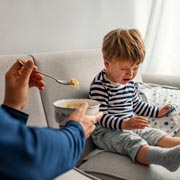 Tired children are likely to become emotional, bad-tempered, and distressed.
- They can quickly become uncooperative, likely to throw tantrums, and become a danger to themselves.
- Their day-to-day learning will suffer due to the impairment of concentration, cognitive function, attention spans, memory, and alertness.
- Sleep deficiency is strongly linked to a disruption of important hormones that are only produced during sleep. These include children’s growth hormone, which is crucial for children’s healthy growth and body functionality during early infancy, as well as others that help govern things like skin repair and muscle health.
- A longer-term lack of sleep can potentially cause health issues around blood pressure, weight, mental health and even diabetes.
“Sleeping the number of recommended hours on a regular basis is associated with better health outcomes including: improved attention, behaviour, learning, memory, emotional regulation, quality of life, and mental and physical health.” (4)
Don’t forget, too, that children not sleeping well generally means parents also have disturbed sleep. For them, that usually means they struggle in the days that follow, with tiredness, physical fatigue, and an inability to concentrate and function properly. Longer term, it can become detrimental to parents’ health. Indeed, one could argue that parents have a vested interest in getting their children’s sleep right.
“Regularly sleeping fewer than the number of recommended hours is associated with attention, behaviour, and learning problems. Insufficient sleep also increases the risk of accidents, injuries, hypertension, obesity, diabetes, and depression.” (4)
What is the Recommended Number of Hours of Sleep for Under-Fives?
We’ve researched various authoritative sources to find a consensus for the amount of sleep that children require in every 24-hour period, including any naps. Sources included the NHS (1), The Sleep Foundation (2), a respected Sleep Consultant (3), the American Academy of Sleep Medicine (4), and Great Ormond Street Hospital for Children (NHS Foundation Trust) (5). Findings are outlined briefly in the table below, and in more detail that follows.
Regular Sleep Required for Optimal Health:
| Babies 0-4 months: | Circa 11-18 hours including daytime naps* |
| Babies 4-12 months: | 12-16 hours including daytime naps |
| Toddlers 1-2 years: | 11-14 hours including daytime naps |
| Pre-schoolers 3-5 years: | 10-13 hours including daytime naps |
| School-age Children 6-12 years: | 9-12 hours |
| Teenagers 13-18 years: | 8-10 hours |
*Newborn Babies Aged 0 to 4 months
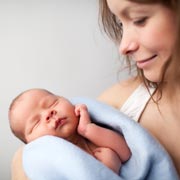 There are no hard and fast recommendations for newborns primarily because newborns have not yet developed a ‘circadian’ rhythm — they cannot yet tell the difference between day and night. Such a rhythm will develop with time — and every child is different. That said, generally speaking, it is thought that newborn babies aged up to four months require anywhere from 11 (although there is much debate about the lower figure) to 18 hours of sleep in every 24-hour period. That includes daytime naps. 18 to 20 hours total per day is not unusual for children up to 4 months, while the average for babies in their first 6 weeks is 14½ hours per 24 hours according to a well-respected sleep consultant(3). The consultant goes on, however, to clarify that it could be anywhere from 9 to 20 hours for that age group — a very wide range. Indeed, the U.K.’s NHS guidelines also point out that the amount of time newborns sleep can very enormously from baby to baby during the first four months.
It’s interesting to note that detailed analysis of multiple sleep studies by the American Academy of Sleep Medicine (4) could not reach a consensus on how much sleep to recommend for infants less than 4 months of age. Despite analysing 864 published articles relating to healthy sleep for children, there was simply not enough clear study data for them to make a recommendation for that youngest age group.
“Some babies will actually sleep up to 18-20 hours a day, but it’s important to remember that not all babies will sleep that much — and every baby is different … It’s important you don’t compare your baby to any other.” (1)
And, while some babies may sleep right through the night from the age of 8 weeks, many won’t. That’s especially so if they’re breastfed and wake up multiple times during the night, keen to feed.
For parents coping with such interruptions to their own natural sleep pattern, it can be exhausting. The NHS therefore advises such parents to grab the opportunity to sleep at the same time as babies when they nap during the daytime — taking all necessary safety precautions for the baby, of course.
Sleep for Babies Aged 4-12 months
 The sleep pattern for young babies will gradually improve as they grow, learn to recognise the difference between day and night, and get into a circadian rhythm. It may further improve at the 6-month mark, when night feeds are often no longer so necessary. Many infants aged 6 to 12 months typically sleep for around 15 hours or so, mostly at night, although such progress can sometimes be disturbed with the onset of teething.
Sleep for Toddlers Aged 1-2 years
 The accepted range for sleep for toddlers aged from 1 to 2 years is 11-14 hours including daytime naps, and children of this age typically experience somewhere between 12 and 14 hours of sleep per 24-hour period. Again, that includes any daytime naps.
Sleep for Pre-schoolers Aged 3-5 years
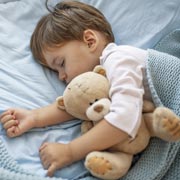 Experts suggest that a minimum of 10 hours, up to and including 13 hours, is the most appropriate sleep duration for children of pre-school age (3 to 5 years), including any naps. Indeed, the NHS suggests that 12 hours of sleep per 24 hours is typical for this age group. That said, it’s accepted that the sleep and nap needs of a 3-year-old pre-schooler are likely to be different from a child of 5 attending primary school.
“Sleep needs change throughout life, with infants, children, and teenagers generally requiring more sleep than adults.” (3)
Sleep Beyond the Early Years
Today’s guide focuses on sleep for children in their early years, i.e. up to the age of 5. However, just to complete the full picture, children aged 6 to 12 generally need somewhere between 9 and 12 hours of sleep per 24 hours, while teenagers (13 to 18 years old), require a little less. For teens, experts agree that somewhere between 8 and 10 hours per 24-hour period is the most appropriate range for optimal health.
Childcare at Little Acorns Nursery, Hindley Green, Wigan
 At Little Acorns Nursery in Hindley Green, Wigan, we know how important sleep is for little ones. The homely baby room, for example, has its own peaceful sleep area where babies can get much-needed daytime naps. Our infants, toddlers, and pre-schoolers are also supported with rest sessions and naps, whenever needed, to help them recuperate and recharge. Also rest assured that if you have a child at Little Acorns Nursery and would like them to have extra daytime naps while under our care, please simply let us know your requirements.
Thinking about a nursery place for your child? Come for a guided visit — we’ll be happy to show you and your child around, so you can see how they might fit in. Please select an option below to arrange a tour, ask any questions, or enrol your child for a nursery place:
Our nursery and preschool is in Hindley Green, so will also be convenient for families living nearby in Wigan, Bolton and the Greater Manchester region; areas like Bickershaw, Platt Bridge, Westhoughton, Ince-in-Makerfield, Leigh, Atherton, and Tyldesley are all within a short travel distance.
Sources: 1). NHS 2). The Sleep Foundation — How Does Sleep Work? 3). Andrea Grace (Baby & Child Sleep Consultant) 4). Consensus Statement of the American Academy of Sleep Medicine on the Recommended Amount of Sleep for Healthy Children 5). Great Ormond Street Hospital for Children (NHS Foundation Trust) — Paediatric Sleep: Helping your child get a good night’s sleep
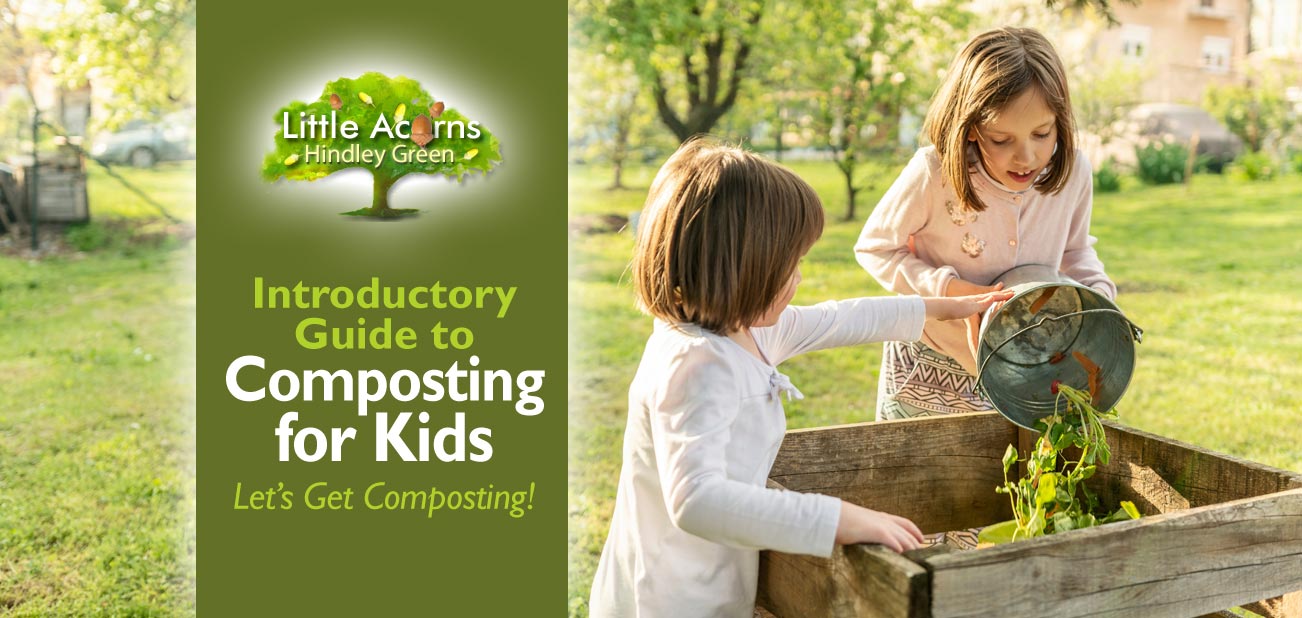
 Autumn brings a variety of new, nature-based activity opportunities for children to enjoy outdoors. Along with
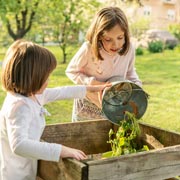 Children will essentially need material to compost and somewhere to compost it. Also, depending on the scale of the compost heap, a spade or gardening trowel will be useful, along with access to water. During the compost preparation, gloves can be worn for protection if preferred, and/or supervising adults will need to ensure that children wash hands with soap and water after working on the task.
 Fresh grass cuttings;
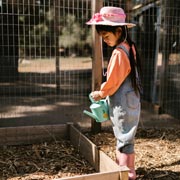
 The first task is to choose somewhere for your child’s compost heap. An unused corner of the garden would be perfect for a simple heap, although it’s also possible to make a child’s compost heap in a container like a large pot, a timber packing crate, or even a robust cardboard box if garden space and resources are limited. A parent may need to guide children in this regard.
 Ideally, the compost heap should contain a layer of garden earth at the base to get things started.
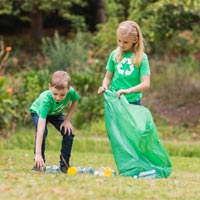 One of the first lessons that children will learn during their composting journey is that what might have been considered rubbish can, in fact, be converted into a valuable resource. All those scraps hold nutrients and minerals that need not be wasted. Instead, they can be recycled and put to new use rather than being discarded and going into landfill.
 As the compost heap builds up and is mixed over time, the ingredients will gradually biodegrade. Whilst doing so, the pile may appear to shrink and will also darken in colour. Biodegrading is a natural process that is helped by the bacteria, worms, and little bugs that inhabit the mixture.
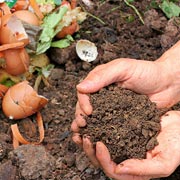 The resulting compost can be used as the soil for potted plants, for growing vegetables and fruits, or mixed around those already in the garden to give them a boost. Compost is rich in nutrients that will greatly enhance the health of growing plants and shrubs, to help them grow and reach their full potential. Plants and flowers will be stronger and will thrive. Fruit and vegetables grown at home will be more bountiful too. All in all, growing plants will become healthier.
 This activity is not only fun, but will also feed children’s minds. It will teach children new skills, the value of preparation, the importance of patience, and the need to look after nature’s flora and fauna. It teaches children about the natural world, the circle of life, the seasons, how to care for other living things, and the importance of green values. Above all, the exercise demonstrates that if you look after nature, it will look after you. These are all wonderful concepts for children to understand, so it’s crucial to explain them as part of children’s learning journeys during the activity.
 Most children in England start school in Reception Class, usually in the September term, when they’re still only 4. That’s up to a year before they have officially reached Compulsory School Age. This allows them to start their school education earlier than the law requires so that, by the time they begin Year One at school, they can confidently hit the ground running. Starting in Reception at the age of four sets them up for success in so many ways, including academically, socially, emotionally and more. Beginning earlier also empowers them with a wider skill set, with a greater level of confidence and independence, an existing cohort of friends, a better grasp of what Year One will have in store for them, and so on. And, of course, by enrolling at school from Reception Year, they will complete the final EYFS modules that will be so important to their success from Year One onwards.


