
Let’s Get Composting!
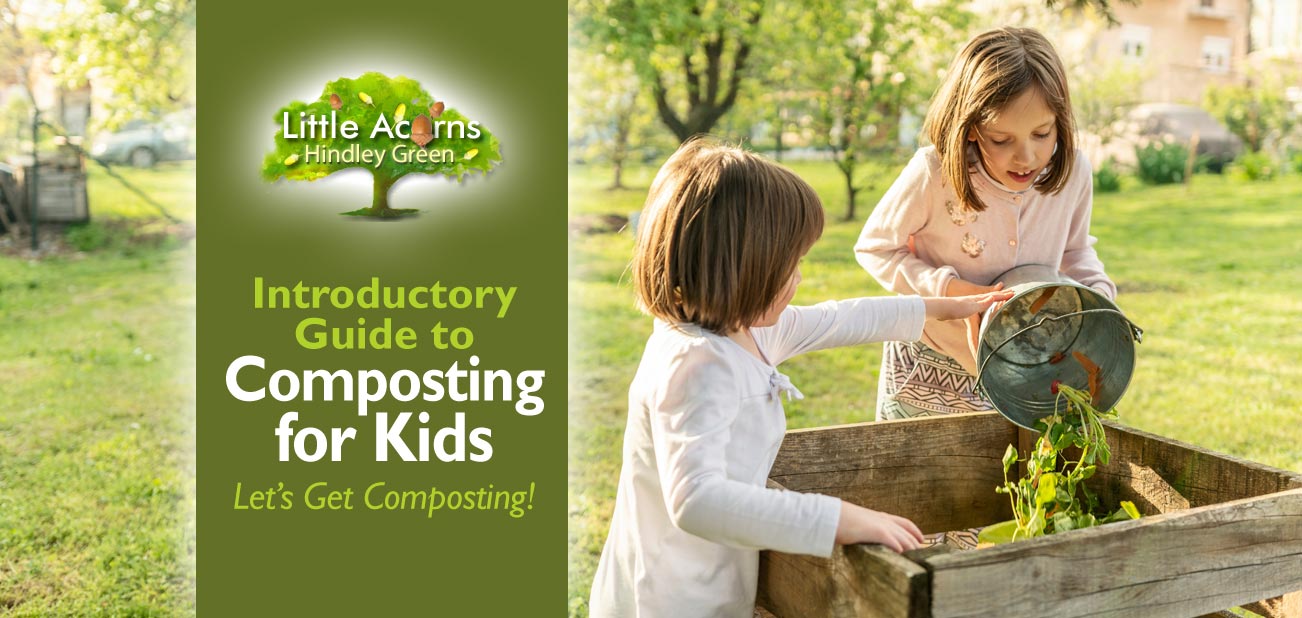
 Autumn brings a variety of new, nature-based activity opportunities for children to enjoy outdoors. Along with an autumn scavenger hunt, there is another activity that is perfect for the season given the abundance of fallen leaves — composting. Composting is a simple activity that not only teaches children new skills and knowledge, but also benefits the natural world. Showing children and under-fives how easy it is to make compost will educate them about the circle of life, teach them the value of recycling, give a home to creatures like minibeasts, and give households a free resource that will nourish plants come springtime. It’s a win-win for children, families, and nature! With that in mind, welcome to today’s introductory guide to composting for kids — let’s get composting! And rest assured that, because this is for children and under-fives, we’ll keep things simple.
Activity Overview
Through this activity, children will learn how to make a compost heap, the simple measures needed to maintain it, the types of things that can be composted, and what the compost can be used for once ready. They’ll discover that things usually discarded can be repurposed, recycled, and given a second life that will benefit nature and the household.
What Will Children Need
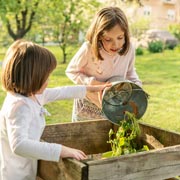 Children will essentially need material to compost and somewhere to compost it. Also, depending on the scale of the compost heap, a spade or gardening trowel will be useful, along with access to water. During the compost preparation, gloves can be worn for protection if preferred, and/or supervising adults will need to ensure that children wash hands with soap and water after working on the task.
What Can Children Compost?
Children and their families can compost an array of things that would otherwise have gone to waste. Key ingredients can include:
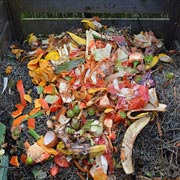 Fresh grass cuttings;
- Fallen/dead leaves and small twigs foraged from the garden or local open space;
- Crushed eggshells;
- Vegetable scraps and fruit peelings;
- Loose coffee grounds and loose tea leaves (empty the contents of any tea bags as the bags themselves often contain microplastics, which do not break down);
- It’s also possible to incorporate small pieces of unlaminated cardboard and shredded paper scattered into the overall organic mix, although see the next section for details to avoid.
Avoid…Avoid including scrap meat, fish, dairy products including cheese, oily foods, pet food, laminated or glossy paper/cardboard, string, tags containing metal rivets, anything containing plastic, and pet litter or waste. After all, you don’t want to attract pests and bad smells, and you only want to use ingredients that are biodegradable. |
How Children Can Get Started
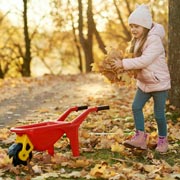 The first task is to choose somewhere for your child’s compost heap. An unused corner of the garden would be perfect for a simple heap, although it’s also possible to make a child’s compost heap in a container like a large pot, a timber packing crate, or even a robust cardboard box if garden space and resources are limited. A parent may need to guide children in this regard.
At the other end of the scale, it’s also possible, of course, to build a larger compost area that has sturdier sides. With the help of an adult, such a construction can be made out of repurposed pallet wood, logs, wire mesh, a crate, or timber sleepers. However, as this particular composting task is a children’s activity, we’ll assume you’ll keep the scale fairly modest and the approach fairly simple. Even at a small scale, high-quality compost is possible with the right approach and ingredients.
What to Do
Whatever the location and style of the compost heap, the approach for making compost is the same.
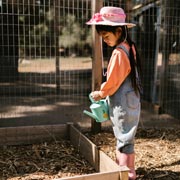 Ideally, the compost heap should contain a layer of garden earth at the base to get things started.
- Children should regularly collect the ‘ingredients’ for the compost heap that we outlined earlier. For example, crushed eggshells, vegetable scraps, fruit peelings, banana skins, foraged autumn leaves, grass cuttings, twigs, and so on. Including a wide mix is important. Once collected, these can be scattered in a layer onto the compost heap, which will build up over time.
- The child should keep it moist by regularly sprinkling water on the pile. This can be done with either a watering can or a wet sponge that can be wrung out over the compost pile.
- The pile should be stirred and mixed once a week, using a spade, gardening trowel, or stick, depending on the size and depth of the heap.
- Take care to avoid hurting any minibeasts that will inevitably move in once the compost heap is established.
First Steps to a Greener Life
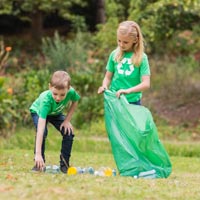 One of the first lessons that children will learn during their composting journey is that what might have been considered rubbish can, in fact, be converted into a valuable resource. All those scraps hold nutrients and minerals that need not be wasted. Instead, they can be recycled and put to new use rather than being discarded and going into landfill.
Recycling is a concept that is becoming more and more important over the years, and composting is an easy and worthwhile way to introduce green values to little ones. Indeed, it may be the first step that sets them on a path towards a more ecologically friendly lifestyle.
What to Expect
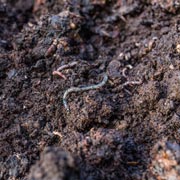 As the compost heap builds up and is mixed over time, the ingredients will gradually biodegrade. Whilst doing so, the pile may appear to shrink and will also darken in colour. Biodegrading is a natural process that is helped by the bacteria, worms, and little bugs that inhabit the mixture.
Indeed, as the composting process unfolds, children will discover some of the little minibeasts that have made the compost heap their home. These are fascinating little creatures that help the compost heap break down. From worms and centipedes to woodlice and beetles, they come in a wide variety of different forms. Another important lesson for children to learn is that the creatures should be treated delicately, with empathy, so they are not unduly disturbed or harmed. Learn more about minibeasts and download a free minibeasts reference poster for your child here.
Eventually, the composting process will result in a rich, crumbly, earth-like compost that’s dark brown in colour. This is packed full of natural goodness that plants will love.
What to Do With the Compost
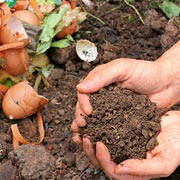 The resulting compost can be used as the soil for potted plants, for growing vegetables and fruits, or mixed around those already in the garden to give them a boost. Compost is rich in nutrients that will greatly enhance the health of growing plants and shrubs, to help them grow and reach their full potential. Plants and flowers will be stronger and will thrive. Fruit and vegetables grown at home will be more bountiful too. All in all, growing plants will become healthier.
Lessons From This Activity
 This activity is not only fun, but will also feed children’s minds. It will teach children new skills, the value of preparation, the importance of patience, and the need to look after nature’s flora and fauna. It teaches children about the natural world, the circle of life, the seasons, how to care for other living things, and the importance of green values. Above all, the exercise demonstrates that if you look after nature, it will look after you. These are all wonderful concepts for children to understand, so it’s crucial to explain them as part of children’s learning journeys during the activity.
So, we encourage families to gather autumn leaves and save those kitchen scraps — they’re a valuable commodity and setting children on their composting path will open children’s eyes to new concepts while combining outdoor exploration, science, recycling, horticulture, and so much more.
Happy Composting, from Little Acorns Nursery
Weekday Childcare Services in Hindley Green, Near Wigan
 At Little Acorns Nursery in Hindley Green, we know how important spending time outdoors, close to nature, is for children. Nature benefits children in so many ways, including physically, mentally, emotionally, spiritually — and even academically (click the bold link to learn more). It’s one of the many reasons we recommend outdoor play and nature-based activities so often on our blog.
Children who attend Little Acorns Nursery in Hindley Green are fortunate to have access to the nursery’s unusually large garden and outdoor area. Various zones allow them to get involved in nature watching, gardening tasks, sensory play, construction, counting activities, creative play, and a wide variety of outdoor play activities. It’s easy to understand why it’s therefore so popular with the nursery children!
Get in touch to find out more about nursery places at Little Acorns or to arrange a visit. Choose a button below to get started — we’ll be delighted to hear from you:
Little Acorns Nursery provides childcare services in Hindley Green, Wigan. As such, we’re also a great match for families in nearby areas like Bolton, Ince-in-Makerfield, Platt Bridge, Westhoughton, Atherton, Leigh, Bickershaw, and Tyldesley.
Safety Note
Supervision from a responsible parent or adult will always be needed for little ones, especially when children are playing and exploring outdoors. Children will need guidance when it comes to outdoor safety, hazards, and hygiene and, indeed, all such guidance will help educate them about potential dangers and the assessment of risks.
 As adults, it’s lovely to reflect back on the type of childhood memories that give us a warm, fuzzy feeling. These are memories that still bring joy when we think about them, even years later. They’re often memories of events and special moments shared with parents and siblings, in times of wonder and togetherness. Sometimes, they might be of a family adventure of some kind — a holiday somewhere wild, an unforgettable activity, or a magical moment that’s simply so wonderful we’ll never forget it. We can think of such memories as almost foundational parts of our childhoods, very much akin to milestones in the progression of our growth as children. These moments are irreplaceable. With that in mind, we’ll explore some ideas today for how to gift your own children such wonderful memories — moments they’ll remember fondly — perhaps for the rest of their lives. What a gift that would be!
 Children’s ears will always prick up when you tell them they’re going on an adventure! These can take many forms, so they are limited only by your imagination, time, and resources as a parent. Need an example? Try taking them on a ramble or hike. Take a picnic! Take rucksacks, suitable footwear, wet weather gear (just in case), something to drink, and a smartphone with a camera for any photos. Maybe first show them a map of where you plan to walk with them. Aim for some interesting places. Viewpoints, interesting landmarks, beautiful countryside, woodlands, and riverside walks are good examples, and will give children something to look forward to on the journey. Ensure there is somewhere to stop for food, drinks, and/or snacks along the way. Maybe build in some activities or games en route too. All such things will make for a really memorable day. Even if they find it hard at first, they will end up with lots of fresh air and exercise, a feeling of accomplishment, and some great memories.
 Next time it’s sunny, and you and your child are out and about in the garden or open space, look out for the big fluffy, white ‘cumulus’ clouds. If there are some gently gliding across the sky, encourage your child to lie on their back, look up, and study them (avoiding looking directly at the sun, of course). Many of these enormous clouds are quite beautiful. Even better, there’s a game you can play together — looking for cloud animal shapes, faces, or even dragons and monsters in the clouds. Such shapes sometimes form naturally as the clouds shift and change formation on the winds high above us. There is even a name for this type of illusion; pareidolia, although it applies to seeing faces and shapes anywhere, not just in clouds. Searching for and finding an animal or face, whether in the clouds, the bark of a tree, or on a rocky formation, is sure to delight any child. It will be something they’re likely to remember and repeat throughout childhood and even into adulthood. Indeed, it’s another magical aspect of childhood and the world around us.
 Setting aside 30 to 60 minutes specifically to witness a sunset with your child is also something that can be magical. It’s also an incredibly simple but powerful activity to do with children. Some sunsets are truly awe-inspiring, with incredible colours, cloud patterns, and shapes that look like they’re something from a fantasy movie or book. If the timing is right, children can even see the distant sun slowly disappear over the horizon as dusk and then nighttime arrive. It is a beautiful thing to witness, and it also teaches children more about the world and our place within the universe. It will be a lovely memory of shared, high-quality family time too, and will also demonstrate to little ones that some of the most magical activities cost no money at all, and do not involve toys or electronic screens.
 Surprise your little ones with a last-minute getaway. Editor’s note: My father did this for us a few times each year when my sister and I were children. He’d come home from work on a Friday evening and excitedly ask the family, “Who wants to go away for the weekend?” and my sister and I would shout, “We do!” with great gusto. We’d quickly pack, and off we’d go. By Friday night, we’d arrive at a campsite, or sometimes a random spot en route, and sleep like babies. After spending the weekend visiting our favourite places, we’d arrive back on Sunday night feeling like we’d been away for a week. Those are still some of my fondest childhood memories. And, it’s the kind of exciting last-minute break that doesn’t cost the Earth and is huge fun — something we could all do for our children occasionally, perhaps.
 On a clear, cloudless night, stargazing somewhere away from neighbourhood lights will open children’s eyes to the magic of the nighttime sky. Even if you spend just 5 or 10 minutes together watching the night sky, you’re bound to bring out the wonder of space in your child’s mind. The Moon, twinkling stars, the little star tinged red (Mars), the pan-shaped form of the Plough (a.k.a. ‘Big Dipper’), and helping your child find the North Star are all things they’ll find fascinating and remember longer-term. Stay watching long enough for them to see little satellites marching their way across the darkness as they loop around the world, nowadays often in the company of others in a satellite ‘constellation’. Even better: help your child spot their first shooting star — and make a wish. Magical!
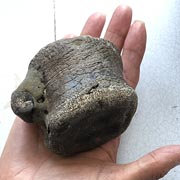 There are many places around England and the UK where fossils can be found if you/your children take the time to look for them. Children love it when they find them (as do many adults), and it’s always incredible to see their reactions when you tell them that this fossilised creature or plant they just found lived literally millions of years ago. It puts things into perspective and opens their eyes and minds to the wonders of Planet Earth and even life itself. Not only that, they have a magical keepsake to remind them of their fossil hunt(s). Try Googling good fossil-hunting locations near you, or
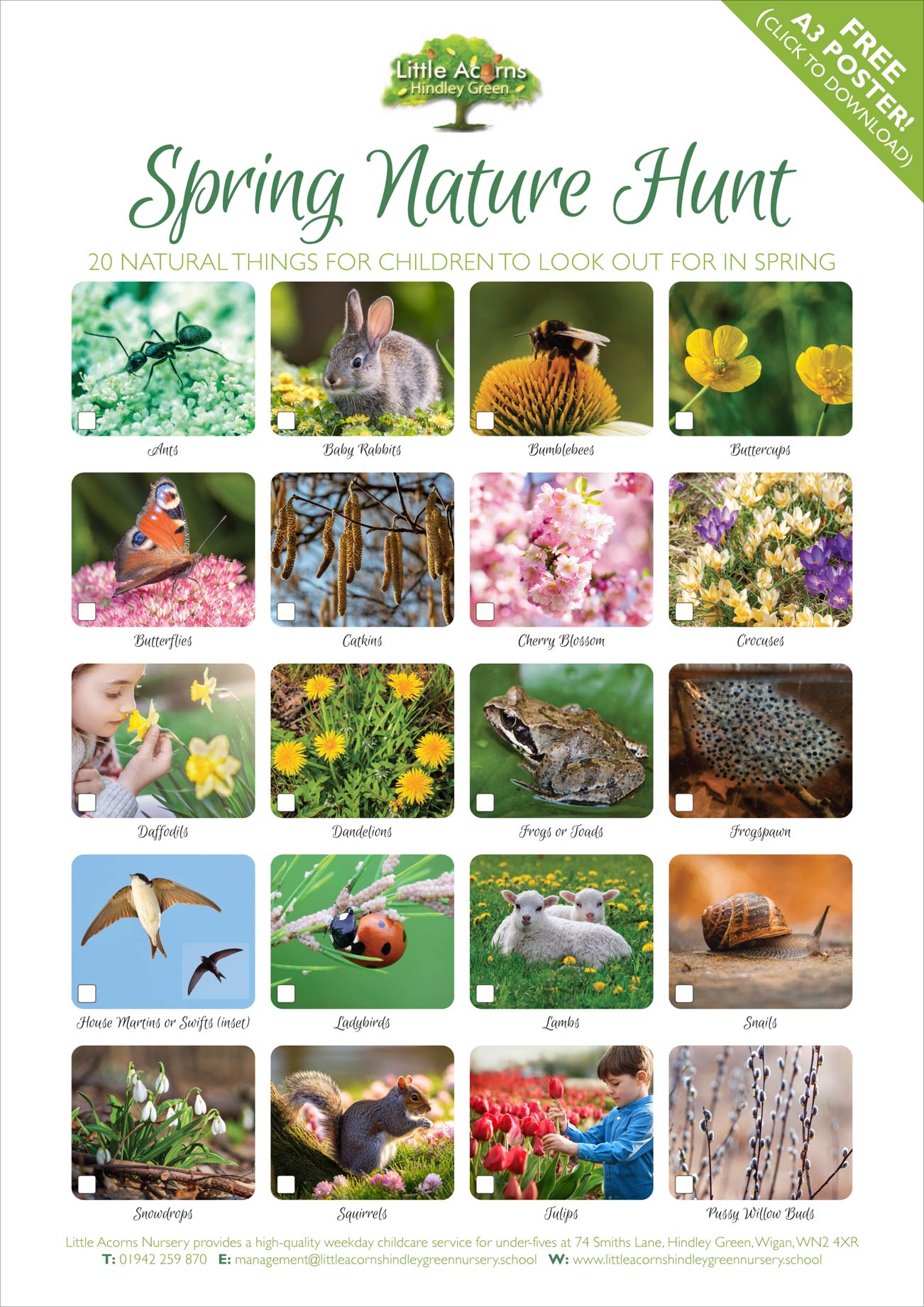
 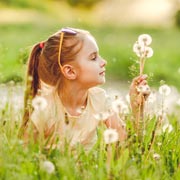 Children are naturally fascinated by the world around them — and especially the natural world. The UK is lucky to be a lush environment with lots of flourishing flora and fauna. So, for little ones, there is so much to see and discover. That’s one of the many reasons we will soon be providing Forest School sessions at Little Acorns Nursery in Hindley Green, in fact. It’s also why we’ve published various nature-based scavenger hunt activity ideas here on this website. So, another interesting, informative, educational, and memorable activity that will enrich your child’s childhood is a nature-based scavenger hunt. Check out our
 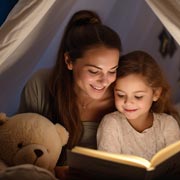 Let’s not forget that magical memories can be made indoors, too! Reading books to children before they go to bed can build lasting memories. Editor’s note: My own children, now in their late twenties, still recall me reading to them every night, as we gradually worked through all the Harry Potter books. This was before they had started making the movies, and I made sure to put on different voices for different characters, whisper when there was a tense moment, or speak more urgently when Harry Potter was in mortal danger. They loved it! And now they’re parents themselves, they’re paying it forwards and reading books in a similar way for their own children. And, not only were those book-reading sessions “an integral part of their childhood” (they tell me), but they’re also incredibly good memories for me, as a parent. It really was magical on so many levels, so it is thoroughly recommended.
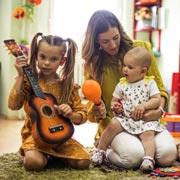 Editor’s note: Another thing my own children remember fondly was singing songs each evening with me when they were very young. These were home-spun songs that we made up as we went along, sung together near bedtime most evenings, along with some basic guitar playing. It was both entertaining and amusing as we took it in turns to make up new, often silly, verses. What’s more, my children described it recently as a ‘free concert every night’, and it’s lovely that they remember it so clearly and fondly over two decades later. So, regularly playing musical instruments and singing together is highly recommended and highly creative for all parties. And, who knows where it could lead — a possible career in music, perhaps!
 We hope you’ve enjoyed our ideas today for creating magical memories for your child. They’re just a starting point, though, to inspire new ideas for families. When high-quality memories are made, they can last a lifetime. Children may well look back on them as integral parts of their childhood, and instantly be transported back in time as they recall them. Such memories can bring togetherness, as well as a warm, fuzzy glow. What’s most important, though, is that the proactive creation of such memorable times lets children know that their happiness is important, they matter, are loved, and, all in all, it really is a wonderful world.
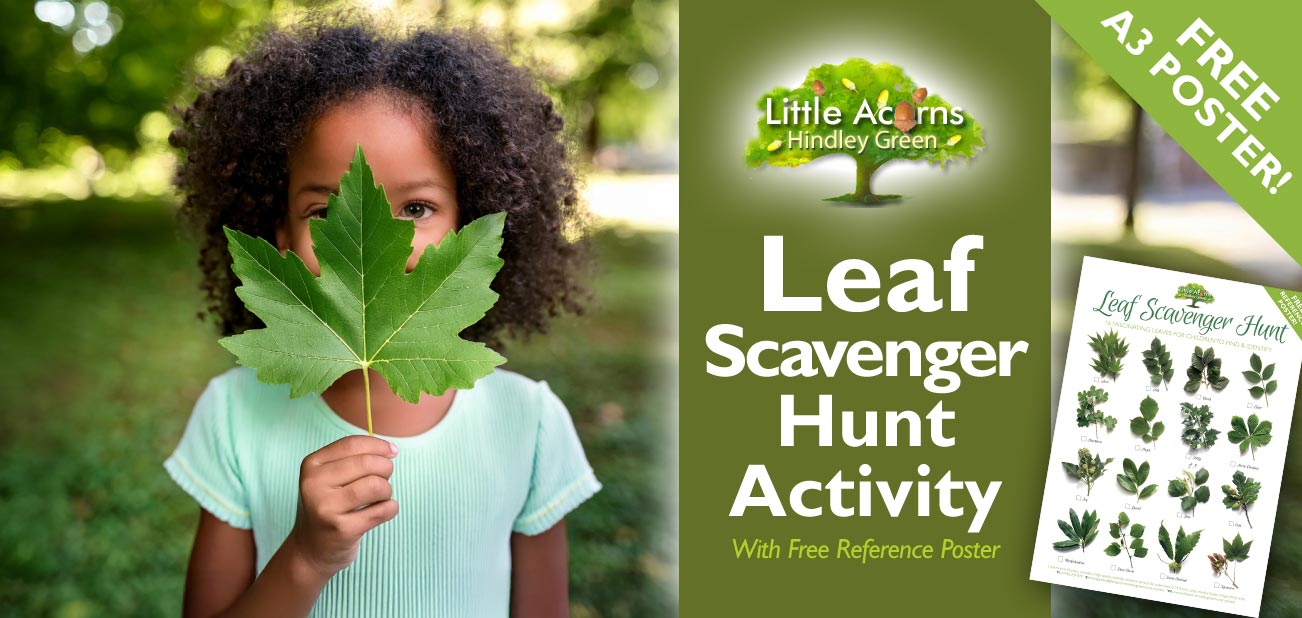
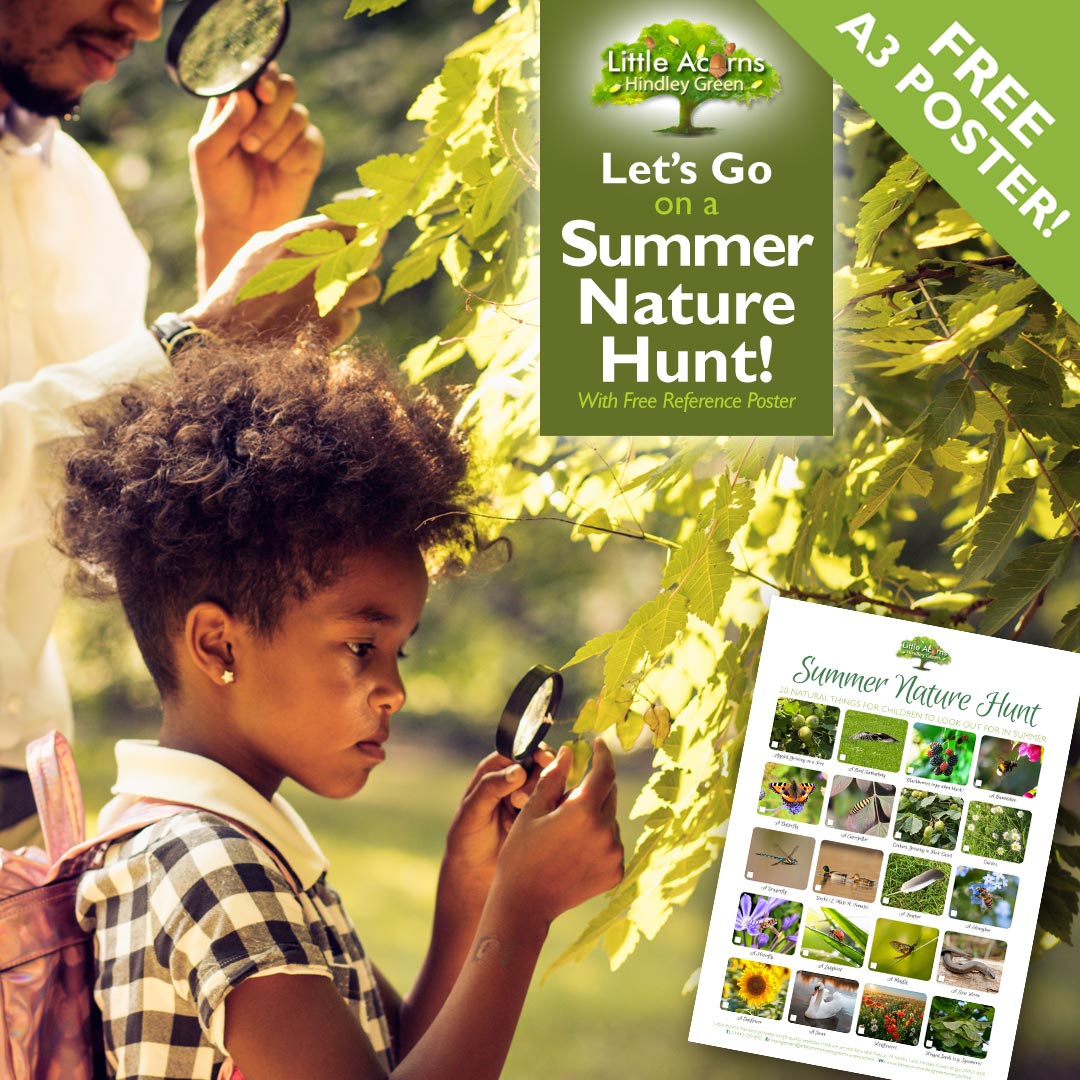
 Wherever you look, nature’s flowers and trees are bursting with life during spring and summer. This got us thinking about the many nature-based activities that are possible for children and under-5s to enjoy at this time of year — under appropriate supervision, of course. One of them is a simple leaf-hunting activity that’ll get little ones exploring the outdoors, enjoying the fresh air, having some fun, and learning about the natural world. With this in mind, we’ve put together a Leaf Scavenger Hunt reference poster for children and families. It can serve as inspiration for some common leaves to look out for during the warmer months of the year. The poster is free to download, right here today, and highlights 16 different types of leaves. Included are oak, sycamore, beech, lime and many more. Children will probably be familiar with some — especially oak leaves with their wonderful little acorns — while others may be unfamiliar. However, all of our examples were sourced on a single morning’s outing, so it’s feasible to find all 16 kinds with a bit of eagle-eyed persistence! So, download the poster for your children, print it out, and explore the outdoors to see how many of the 16 leaf types your little one can find. See if they can identify the differences which make each species of leaf/tree/plant unique — and learn their names if they can. The free identification poster and some help from an adult should help. Have fun out there!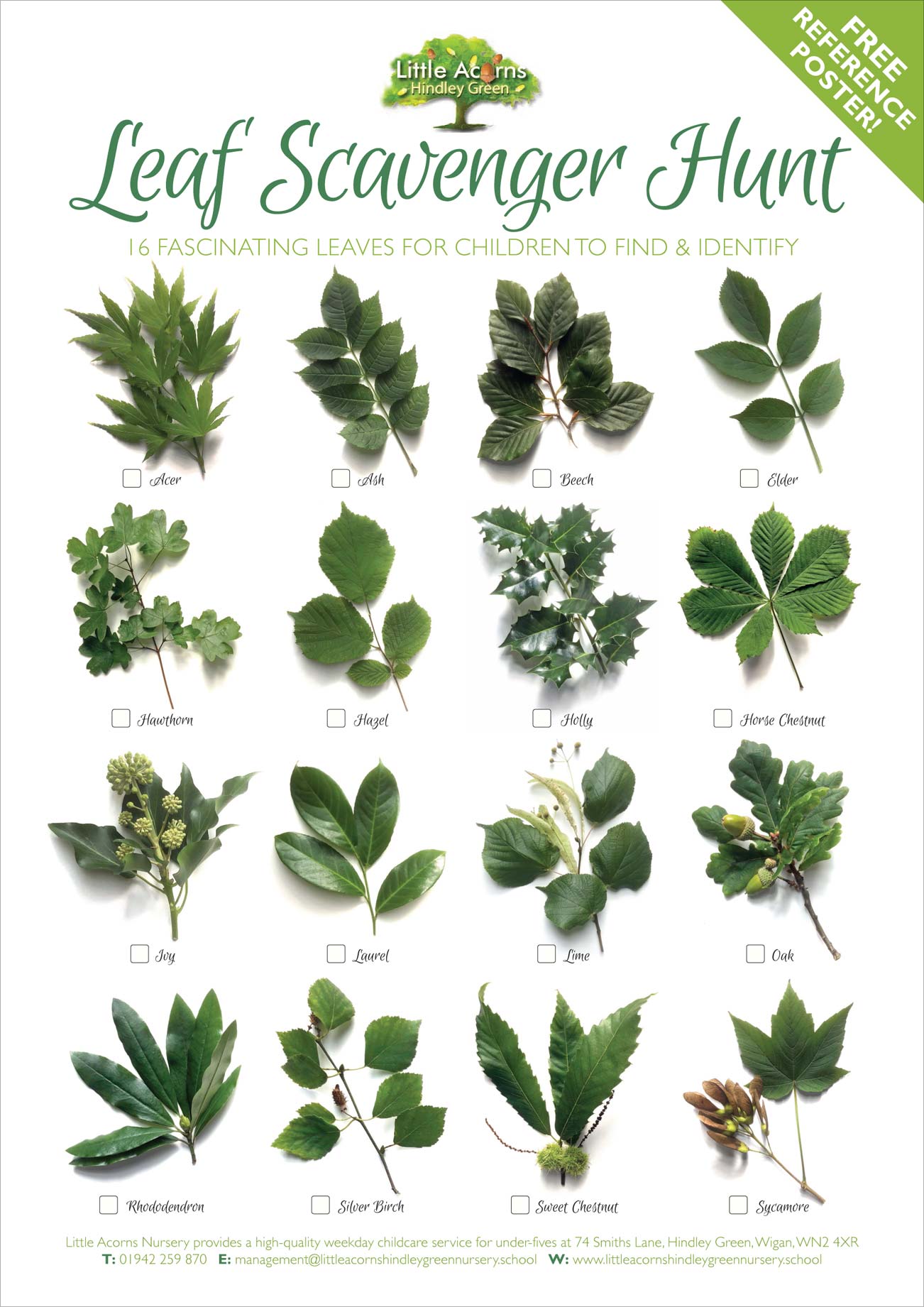
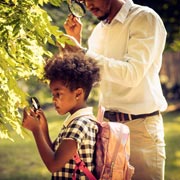 Some of the leaves will be easier to identify than others. For example, Horse Chestnut (a.k.a. ‘conker tree’) leaves are quite distinctive with their fan of multiple sections (see the 2nd row, last image on the right on the poster for our example). In contrast, hazel and lime leaves are quite similar to one another. One easy clue to tell them apart is that lime leaves are slightly shiny, whereas hazel leaves are extremely matt. And, of course, they have very different seeds once those appear (the lime seed clusters are quite beautiful as you can see on the poster in the 3rd row, 2nd image from the right).
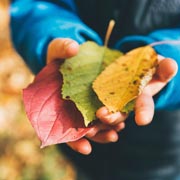 Another interesting factor to point out to children is that some of the leaves come in different colours. Beech leaves, for instance, can be green or deep burgundy, brown or dark purple depending on which variety of beech a child locates. It’s similar for acers, which can be green, yellow, red or a deep purple/maroon. Acers however, are more likely to be found in gardens and parks than in the countryside. Some are a little like miniature sycamores, only rather more delicate and fancy! And, come
  This activity is a great opportunity for children to open their eyes to the natural world. By looking at nature more deeply, they’ll see the finer details that may have been overlooked. Nature is incredibly varied and interesting when you take the time to look closely and discover it properly. It’ll teach children about the natural world, the seasons, the changes in plants and trees at different times of the year, the circle of life, and so much more. Getting out, close to nature, is also incredibly beneficial to children. From busting stress, improving well-being, supporting the EYFS and boosting exercise, to improving concentration and even academic grades,
 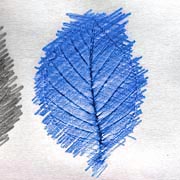 Once children have collected them, leaves can inspire various other creative activity ideas for children. For example, has your child ever tried leaf rubbing (putting a leaf under paper and scribbling over it to reveal the leaf structure), leaf pressing (pressing leaves between pages of a heavy book to allow them to dry and flatten), or leaf printing (painting a leaf with paint then pressing it onto paper to offset the leaf’s form as an image)? These are just a few examples of the
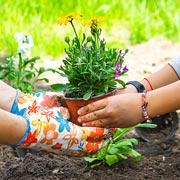 With World Bee Day arriving on the 20th of May and National Children’s Gardening Week arriving on the 24th, it’s an excellent time for a flower-growing activity for children — including under-fives. More specifically, the growing of bee-friendly flowers — from seeds — will be an excellent way to celebrate World Bee Day and support these adorable little creatures. Bees, butterflies, and other pollinators are incredibly important for the world, being largely responsible for pollinating the crops, including nuts, seeds, fruits and vegetables, that we rely on for food. Yet they are under threat with numbers dwindling severely in recent years. Without bees and other pollinators, the world’s animals, plants, trees, and flowers would be in real danger. Today’s bee-friendly flower-growing activity is therefore an incredibly worthwhile one for children to get involved in. It’s fun, highly educational for little ones, and will help to make the world a better place! Little ones, let’s get growing!
 Unless seeds are available from friends and family or harvests from previous years, parents of under-fives will need to source them. However, that’s easy and can be incredibly inexpensive. Most supermarkets sell seed packets and, if not, there is a whole range of online stores to choose from (
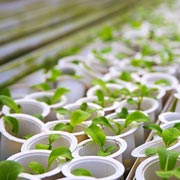 If children are going with our recommended second option, they will first need to read packets to ensure their timing is right. For seed trays, they can use inexpensive, commercially available seed trays or use smaller options like flower pots. Another free alternative is to use repurposed margarine tubs, yoghurt pots, or similar. Whichever option they choose will need drainage holes added underneath by supervising parents plus a drip tray of some kind. Whether that’s a commercial one or something as simple as a saucer is up to families.
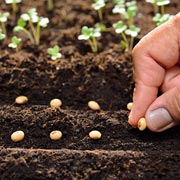 Once the soil is layered into the seed trays or pots, to a level an inch or so below the top, children can indent the soil/compost for the seeds to go into. Seeds can be manually spaced out into these indents so that, once they grow, the individual plants will be easily separated. We suggest scattering a shallow layer of sieved soil or compost over the seeds once placed into the indents and given a sprinkling of water.
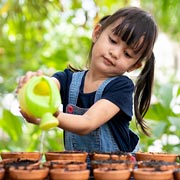 Children should continue to water the seedlings regularly, when needed, and may also have to thin out any ‘clumps’ or plants that are too close together, otherwise, several plants may get tangled and have to compete with one another unnecessarily.
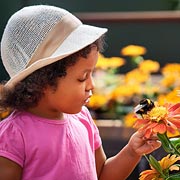
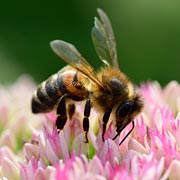 Once flowers appear, children can expect pollinators like honey bees, bumblebees, butterflies, and hoverflies to appear. It’s going to be magical for children when that day first arrives! Bees and the other pollinators truly are delightful and adorable. Children should look but not touch*, after all, bees have important work to do!
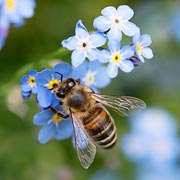 This activity will raise awareness of bees and pollinators in children of all ages. It’s not only a wonderful way to introduce children to these adorable creatures, but also a great opportunity to raise awareness of the plight bees and pollinators are facing. They are under severe pressure from habitat loss, global warming, the use of harmful pesticides/weedkillers, pollution, invasive predators, and many other threats that have made their populations plummet in recent years.

 World Book Day is a special charitable event, celebrated globally, that encourages children of all ages to discover the joy of reading. Why? Because reading has the power to substantially improve children’s lives. Schools, nurseries, and libraries across the nation make the day extra special for children through storytelling sessions, fancy dress, and book-related activities.
 Find time for your little one to read.
 Dress up as a favourite character! There’s no need for elaborate costumes; a simple hat, crown, or themed outfit inspired by a beloved book character can bring your child’s favourite stories to life.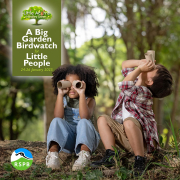

 Families, set your diaries for the wildlife event of the year, which happens this January from Friday the 24th to Sunday the 26th inclusive. It’s free, takes just one hour, and allows children and adults to be part of the world’s biggest garden wildlife survey. During the event, families and individuals across the nation simply count the birds they spot in the garden, park, local green space, or even balcony over the course of 60 minutes. The results of hundreds of thousands of these surveys are compiled by the Royal Society for the Protection of Birds (RSPB) to build a picture of the health of the nation’s bird populations. It’s important scientific and ecological work and children can become citizen scientists if they simply take part. Learn more about the Big Garden Birdwatch and how to take part in today’s guide for families with children.
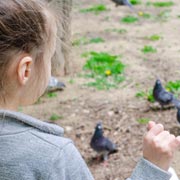
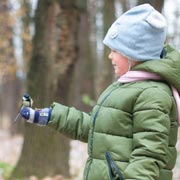 Children will love being involved in this important nature-based activity. They’ll not only play their part in helping birds and nature, but they’ll also have fun and learn something along the way. They will discover some of the many wonderful feathered visitors who live in their neighbourhood and learn about some of the important issues affecting the natural world. They’ll begin to grasp the impact of humans on Britain’s flora and fauna and learn the importance of conservation and looking after the natural world around them. Through this endeavour, they’ll learn how they can make a positive difference. They will also become little citizen scientists! It’s fun, educational, and will give them a wonderful sense of achievement too. It may even change their outlook over the long term and help them think about their own impact on the planet, which is a wonderful outcome. And last but not least,
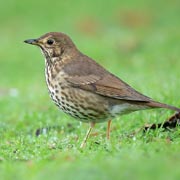 Once the chosen time and date arrive, all you/your children need to do is monitor birds landing on your chosen patch. Count those that actually land rather than any flying otherwise there’s a danger that one bird could be counted multiple times. What you need to record for the survey, though, is the largest number of each bird species that have landed at any one time during the hour. So, for example, if you spot two blackbirds that have landed at the same time in the first half hour, but later in the hour you can see 4 that have landed at the same time, then you need to record “4” for blackbirds.

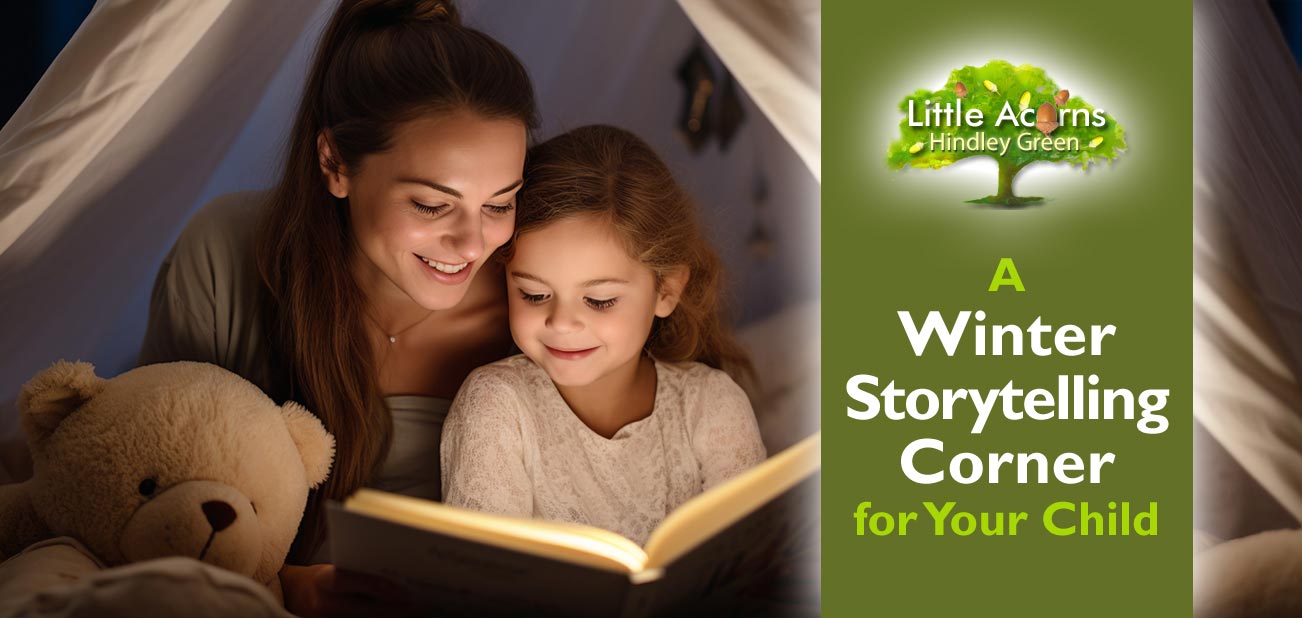
 Once winter arrives in December and cold winds start to breathe the landscape to sleep for a season, little ones will be less inclined to venture outdoors. Parents, too, will no doubt appreciate them avoiding the rain, cold, and inclement conditions that may occur. As such, winter is the perfect time to transform dreary days and dark evenings into a haven of warmth and cosiness indoors. An enchanting children’s activity that goes hand-in-hand with this is that of storytelling. With that in mind, today’s post guides you through the delightful process of creating a Winter Storytelling Corner tailored for the youngest members of the family. A storytelling corner is a wonderful way to make these winter nights cosy, magical, and filled with high-quality shared moments. Shared
 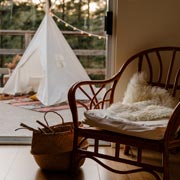 Start by selecting a cosy corner or nook in your home – for example, a secluded and quiet space somewhere that’s away from busy activity, cold draughts and suchlike. It will need to have somewhere comfortable for you and your child(ren) to sit or ‘nest’ once you get to the storytelling part. Once you’ve found somewhere suitable, it could be adorned with soft blankets, plush cushions, and perhaps even a few twinkling fairy lights. The goal is to create an inviting spot that beckons little ones and you, their parent or caregiver, to snuggle up and feel the warmth together as the winter tales unfold.
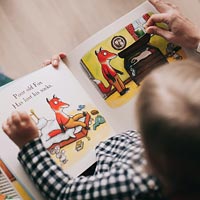 Curate a collection of timeless winter stories that capture the spirit of the season. Consider classics like “The Snowman” by Raymond Briggs or “The Mitten” by Jan Brett. These stories, with their simple yet captivating narratives, are perfect for engaging young minds and sparking their imagination. These are just a couple of examples, though, and there are lots of winter-themed books to choose from, whether online, in book stores, in charity shops, or swapped amongst family or friends.
 Perhaps incorporate simple props that relate to the story. If the tale involves animals, have soft toy animals on hand for little ones to interact with as the story unfolds. Other alternatives are hand puppets and finger puppets. Try using them to act out characters from the stories as you read them, or get your child to do so. Adding an interactive and visual element in this way will encourage children to participate actively and immerse themselves in the storytelling process. This approach can be creative, captivating, and sometimes even comical. As such, this is very entertaining for children and will help to make the whole activity enjoyable and fulfilling.
