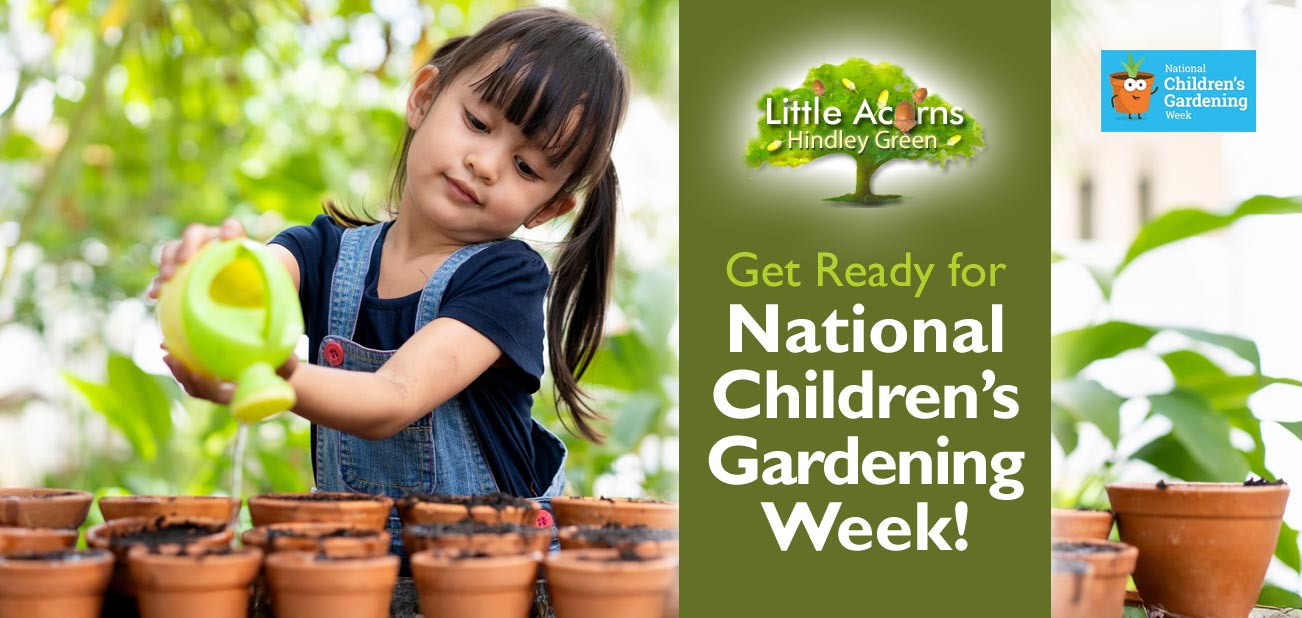
 National Children’s Gardening Week arrives in May and is the perfect opportunity for children to get outdoors and enjoy some wholesome, nature-based activities. Starting towards late May, it’s a time when spring is in full swing, the weather is usually fine, and seeds and plants grow fast in the nourishing sunshine. Embraced by children at homes, in childcare settings, schools and community groups across the Nation, this special week is fun, educational, and hugely worthwhile for children. What’s more, it benefits Greenfingers, the chosen charity supported by the initiative.
“The aim of National Children’s Gardening Week is to inspire children’s curiosity, whilst the warm weather is a great time to see speedy results of seed sowing, planting and other gardening activities.” — The Organiser.
 Many children have an instinctive connection to nature. National Children’s Gardening Week nurtures such instincts by encouraging children to get hands-on in the garden or local green space. As well as helping children discover many new facets about the natural world, activities in this special spring week will also teach them about the circle of life, ecosystems, and a sense of responsibility towards nature. It will also open their eyes to the beauty and wonder of the world as a whole, as well as giving them a greater sense of their place within it. Let’s also not forget that spending time in and around nature is enormously beneficial to children and adults alike. Follow the bold link to learn more.
National Children’s Gardening Week
Let’s take a closer look, now, at National Children’s Gardening Week, its aims, and how it benefits children, nature, and the charity supported by the initiative. We also suggest some exciting gardening-based activities that children can embark on during this wonderful week in mid-spring.
2026 Dates for National Children’s Gardening Week
23 to 31 May 2026
“Children love growing plants and love being involved in the garden, but they’re often impatient, wanting to see instant results. National Children’s Gardening Week aims to capture children’s enthusiasm at a time when results are immediate. National Children’s Gardening Week takes place annually in the ‘warm’ week at the end of May.” — The Organiser.
The Event/National Children’s Gardening Week
There is so much for children and families to do in National Children’s Gardening Week!
Activities & Events in Your Locality
Families will be able to find activities organised in local garden centres — for example, the interactive adventure called The Great Garden Centre Mystery — along with many other events and activities organised by commercial outlets that support the initiative. Click the bold links for more details.
Activities for Children to Do at Home
A wide and varied range of children’s gardening-related activities is possible, whether children access gardens at home or at participating schools and childcare centres.
Simple Activity Ideas
Growing sunflower, fruit, or vegetable seeds is a simple place for children to start. They can start them off in yoghurt pots or flowerpots and, once they’ve grown, transfer them into the garden.
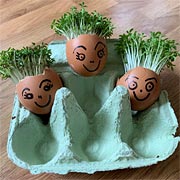 Growing mustard, cress, or microgreens is even more simple and can be accomplished entirely indoors if families have no outdoor access. What’s more, the results are very tasty to eat!
Seedling characters: children can even grow mustard, cress, or microgreen seedlings, so they look like hair growing on a funny character — a cartoon face can be drawn or painted on the pot (or half an eggshell) that holds the sprouting shoots. As the shoots grow, the results become evermore adorable!
Advanced Gardening Activity Ideas for Kids
We have some of our own suggestions too; try some of these fabulous nature-based activities that children can embark on in gardens and open spaces. Follow the bold, green links to read our own, detailed guides for each.
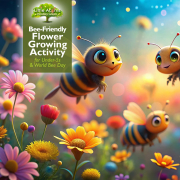 Growing bee-friendly flowers and plants is something children, including under-5s, will find fun, educational, and very rewarding. What’s more, it will help bees and other pollinators, who have become so vulnerable in recent times.
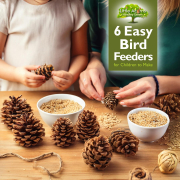 Easy-to-make bird feeders are also something children of all ages will love doing. Not only is it creative, fun, and educational, but it will also help birds, whose numbers have decreased so much in the last few decades.
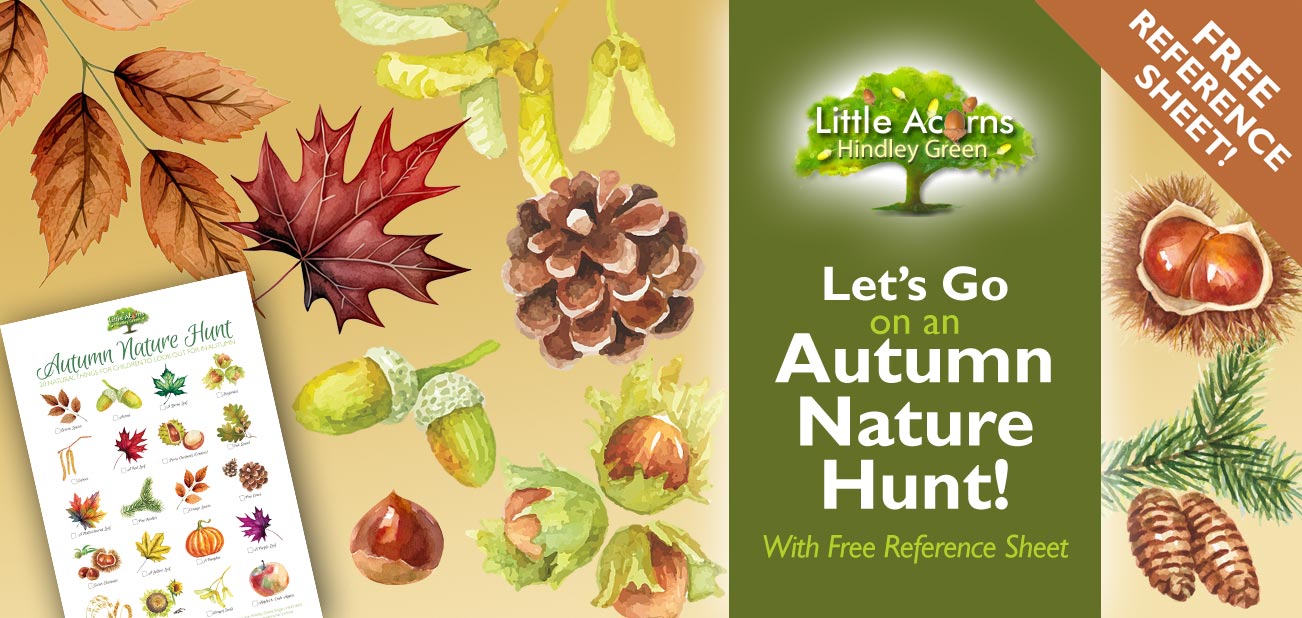
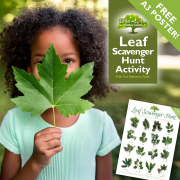 A leaf scavenger hunt is an activity that requires no growing at all, but is challenging and fun. Our guide explains what to do and comes with a free reference poster to get children started.
 Get creative with leaves! Once children have scavenged some suitable leaves, there are many ways they can then turn them into attractive pieces of art, with a little imagination. This is a great nature-based activity that brings out the creativity in children.
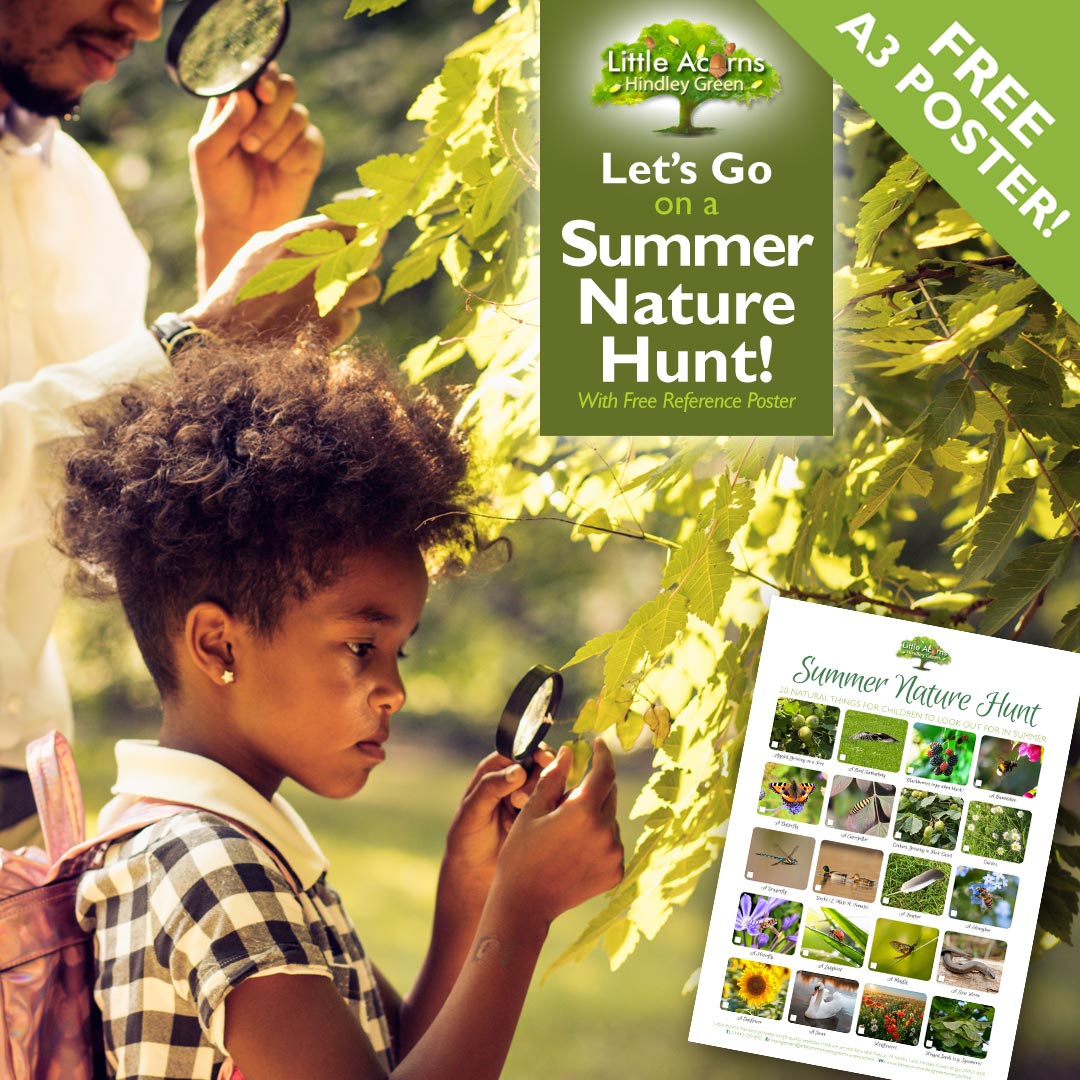
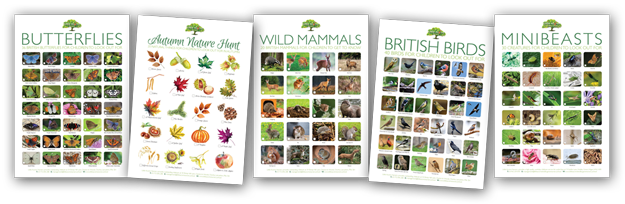
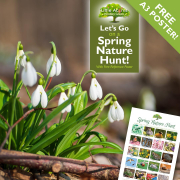 A spring nature hunt will get children out and about in gardens and outdoor spaces, too. The activity will help them use their powers of observation to discover many of the natural wonders of spring. See how many of the natural things they can spot from our free reference poster!
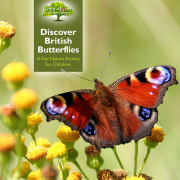 Discovery hunts are also fun and entertaining this spring. If children have completed the spring nature hunt above, they can graduate to finding minibeasts, discovering birds, or spotting beautiful butterflies out there in the garden. These are all fabulous creatures, many of whom are quite beautiful and a sight to behold. Our free reference posters for each will be available if you follow the bold links.
Help children make gardens more wildlife-friendly. This is fun, educational, and great for wildlife, which can otherwise struggle to survive. Families can download a free activity pack for little ones to get started.
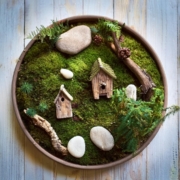 Make a mini garden, also similar to a fairy garden. These are always a huge hit with children, and look magical! Learn how to make a mini garden here.
Flower pressing is simple to accomplish, and will leave children with some beautiful results that will last a lifetime if looked after carefully. Learn how to press flowers here.
The event organisers suggest many more gardening activity ideas here to inspire children and families.
“Kids feel physically and mentally better when they’re surrounded by nature.” — Bleta Daisy.
About the Greenfingers Charity
|
 In our introduction, we mentioned that this fabulous children’s gardening week raises money for Greenfingers. They are a wonderful charity that supports children in hospices. This is achieved by creating beautiful gardens and open spaces where children and their families and friends can spend quality time together. Without the support of Greenfingers, such magical spaces simply wouldn’t exist. Check out
 Happy Gardening, from Little Acorns Nursery
A Weekday Childcare Service in Hindley Green, Wigan
 We hope today’s exploration of National Children’s Gardening Week inspires Hindley Green and Wigan families to get involved and make the most of this fabulous opportunity. Spending time outdoors, close to nature, is incredibly beneficial to children — that’s why we’re incredibly lucky to boast such unusually large and varied outdoor spaces for children at our nursery. Gardening, outdoor play, exploration, and nature-related activities teach little ones new skills and knowledge, as well as facilitating a greater respect and empathy for the beautiful flora and fauna that inhabits our wonderful planet. Indeed, during National Children’s Gardening Week, everyone is a winner!
Little Acorns Nursery is a high-quality nursery in Hindley Green, Wigan, close to Bolton, Ince-in-Makerfield, Platt Bridge, Westhoughton, Atherton, Leigh, Bickershaw, and Tyldesley.
Contact us to find out more about nursery places at Little Acorns — we’ll be delighted to hear from you:
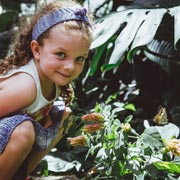 Calling all children and their families — people of all ages are needed this July and August for the world’s biggest wildlife survey — the Big Butterfly Count! So, whether you’re a child or an adult, you can play your part. This is a great activity for under-fives too as it’ll be fun, educational, and incredibly worthwhile. What’s more, they’ll become little citizen scientists by taking part. The nature-based activity takes as little as just 15 minutes and costs nothing at all. Children don’t need any special abilities other than a little patience and good observation — both great skills for them to practise. Let’s take a look and see what the Big Butterfly Count is all about and how children can take part this year.
 The Big Butterfly Count is a nature survey that anyone can take part in during July and August each year. For 2025, it takes place from Friday the 18th of July to Sunday the 10th of August, a period in which temperatures are usually warm and butterfly populations are likely to peak. In essence, all that is required is for butterflies to be counted during a 15-minute period (more detail follows later in this guide). The survey event is open to everyone and, indeed, the more people who take part, the better. So, if you, your child, your family, or your friends want to play a part in protecting butterflies and nature as a whole, please get involved.
 The populations of butterflies can be used as a barometer for the health of pollinator numbers and nature as a whole. With some butterfly species already disappearing from our gardens and countryside and others nearing extinction, there is no time to lose. Only by identifying the issues can we, as a nation, begin to reverse some of the decline. By reversing it, it will be good for butterflies, good for other pollinators like bees, good for nature as a whole — and good for humans too! After all, without pollinators, the supply of foods like cereals, fruit, vegetables and legumes would start to run out. So, taking part in the Big Butterfly Count is extremely worthwhile and we urge little ones and their families to take part.
 First, ensure you have downloaded and printed out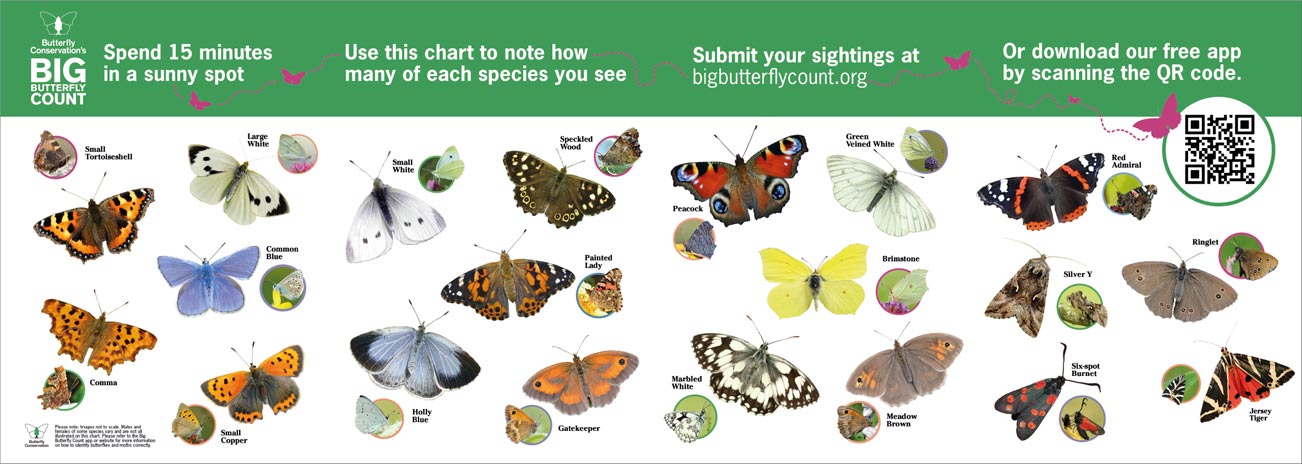
 Choose a spot for your butterfly survey. It should be somewhere outside where butterflies are most likely to be seen. Sunny, sheltered spots are good, particularly where a variety of different sizes and types of flowers or blossoms are in bloom.
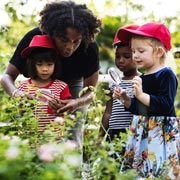 Sometime in the period from Friday the 18th of July to Sunday the 10th of August, you/your child should spend 15 minutes making a note of how many of each type of butterfly you can see. Concentrate only on the species included in the event organiser’s reference from Step 1. You must count how many of each single species you see at the same time. So, if you see three Painted Ladies at the same time, then record that as 3. However, if you see one Painted Lady on three separate occasions during the 15 minutes, that would only count as 1 — otherwise, it could simply be the same butterfly revisiting.
 Did You Know?
 Nature and outdoor play feature significantly in children’s time at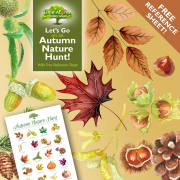


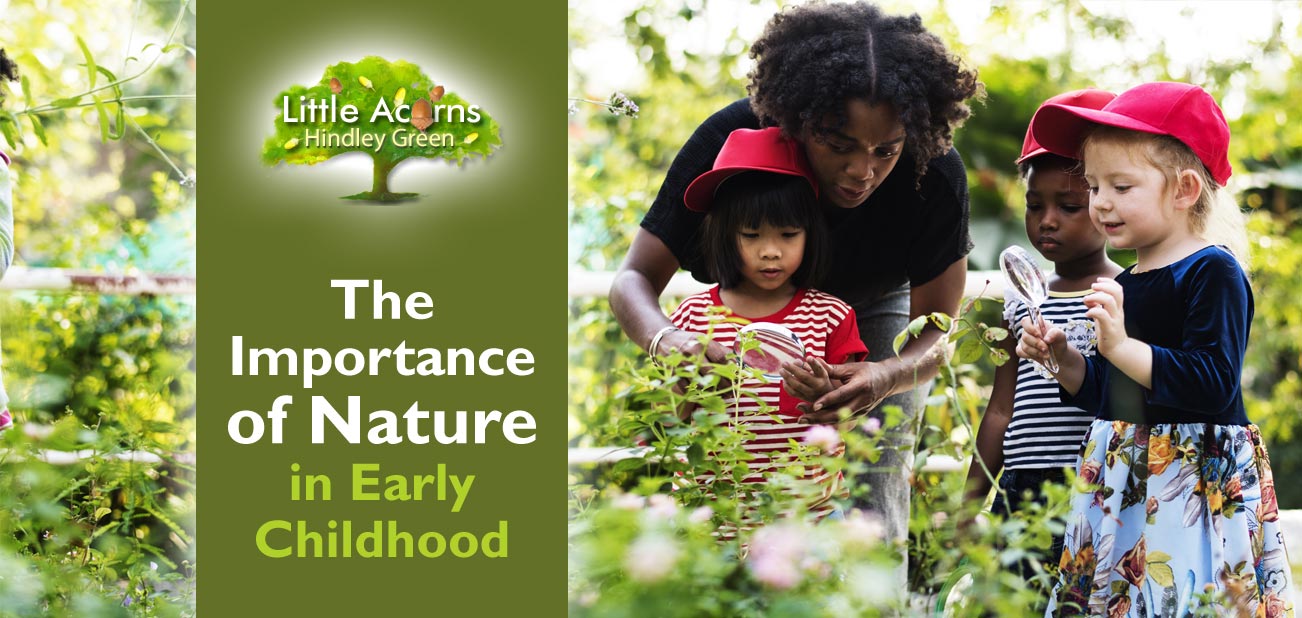
 As parents, we all want the best for our children. We strive to provide them with a nurturing and stimulating environment that supports their growth and development. However, in today’s fast-paced world, it’s easy to overlook the importance of nature in our children’s lives.
 Make time for outdoor play — set aside regular time for outdoor play and exploration. This can include visits to local parks, nature reserves, or your own back garden.