Summer is a wonderful time of year when children can get outdoors to play, explore, discover, and enjoy the freedom of nature. It’s also a time of great abundance, with nature’s riches everywhere we look. Nature’s gifts can be beautiful, fascinating, educational, stimulating, and hugely enriching for little ones. Whether it’s a delightful butterfly flitting through the air, a super-cute bumblebee searching for nectar, or a patch of colourful wildflowers growing in a meadow, nature really is rather magical — and that’s especially so for young children. With that in mind, today’s Summer Nature Hunt activity encourages children to get closer to nature* to discover some of its many delights. When children and adults take time to properly look, nature’s wonders really are incredible. Our suggested activity today comes with a free, downloadable reference poster that highlights 20 wonderful things for little ones to look out for during the summer months. From caterpillars and dragonflies to winged seeds and slow worms, there is a lot for children to discover during this abundant time of year. A summer nature hunt will open their eyes and teach them about the natural world around them, as well as being a fun adventure — enjoy!
Summer — Dates
Summer in the UK is generally the warmest part of the year, but the exact dates vary from year to year depending on whether you are using the meteorological or astronomical calendar.
- According to the astronomical calendar, summer starts on Sunday 21 June for 2026 (the longest day of the year or ‘Summer Solstice’) and ends on Wednesday 23 September (2026’s ‘Autumnal Equinox’ when the day is the same length as the night). The exact date varies a little each year because the solstice and equinox sometimes fall on alternative days due to the Earth’s path as it travels around the Sun.
- According to the meteorological calendar, summer starts at the very beginning of June and ends at the very end of August every year. This particular calendar keeps things simple, using full months. It is used for such things as weather forecasting and, being based on full calendar months, allows scientists to more easily compare climate data from year to year.
Download Your Free Summer Nature Hunt Reference Poster
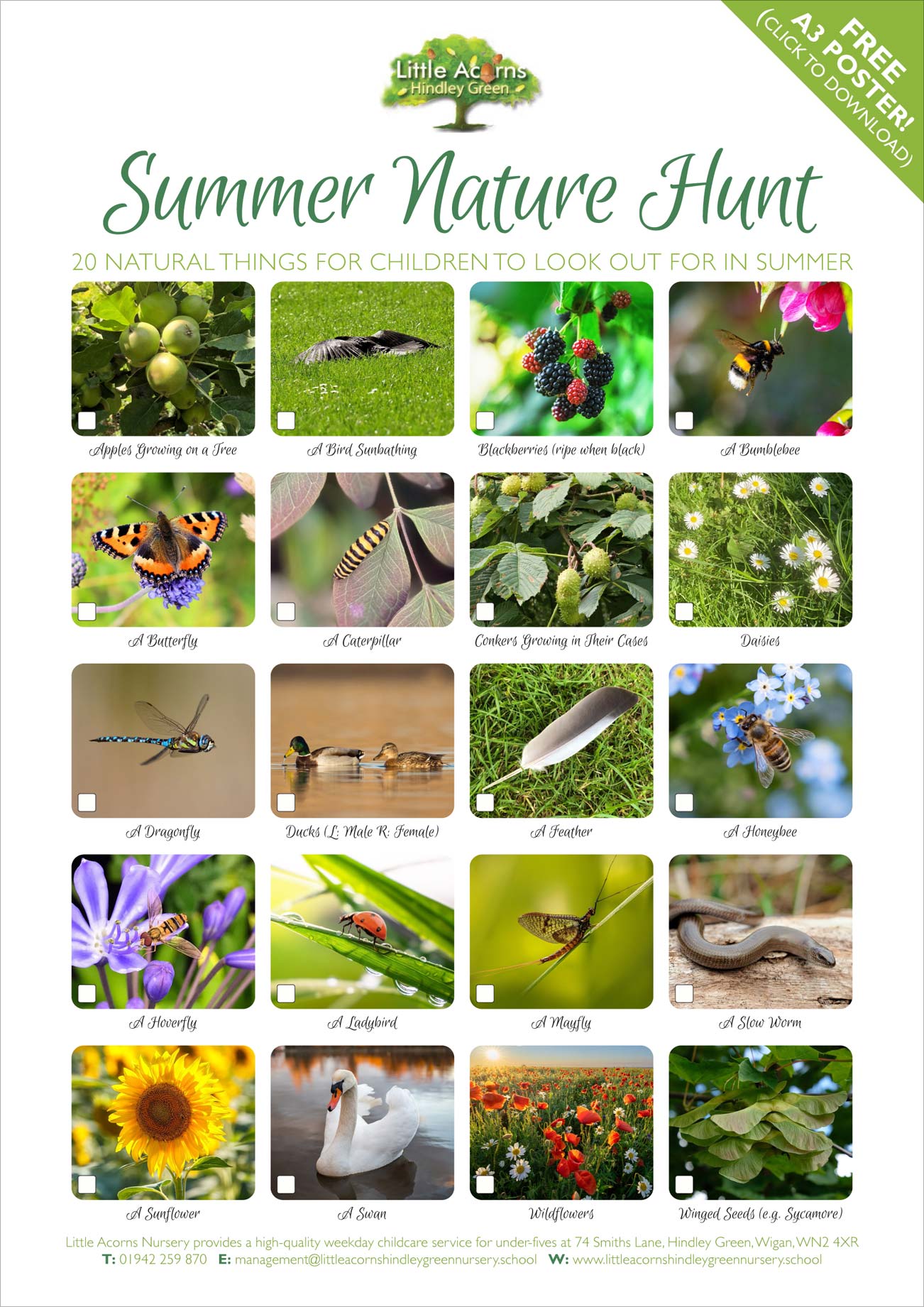
Download your child’s free Summer Nature Hunt reference poster below. Simply click the large preview image to view or download it in high-resolution Acrobat format. We recommend printing it out using your printer’s best settings and paper for the highest-quality results. Posters can be printed at A4 or even A3. For handouts for your child to take with them on a nature hunt, A4 or A5 may suit best. Children can use the little tick boxes to indicate which natural item they have seen during their excursion into the natural world. The activity combines a challenging quest with exploration, discovery, learning, and fun!
How Many Can Your Child Spot?
Can your child find a winged seed, like those from a sycamore tree? Perhaps show them how such seeds spin and travel, often long distances, when falling through the air on the wind — a great example of just one of nature’s magical tricks. Can your little one spot wildflowers, daisies or a wonderful sunflower? How about a bird’s feather, apples growing on a tree, or blackberries growing on a bramble bush? There are also lots of insects to find, such as bees, hoverflies, butterflies, mayflies, and dragonflies. Caterpillars are also fascinating and come in all manner of different forms, including some that are harder to spot if well camouflaged. Then, for the luckiest or most observant young nature watchers, the elusive slow worm is a wonderful creature to discover. Looking more like small snakes, they’re actually legless lizards. There are some birds on the reference poster too — ducks, the magnificent swan who majestically glides through the water, and the amusing sight of a sunbathing bird (rather than being injured, they’re simply warming themselves in the sun).
Nature is So Good for Children
Spending time close to nature is hugely beneficial to children — and adults, in fact. Studies have shown that it benefits people physically, mentally, and spiritually in a huge variety of ways. When little ones spend time in and around nature, stress and anxiety reduce, motor skills improve, knowledge grows, and empathy for other living things increases. What’s more, nature can benefit children and students academically. Indeed, some studies found that even just a view of nature or a natural space can improve academic grades — incredible! It’s a huge topic all on its own, so we wrote a whole article about it — learn more about the enormous benefits and importance of nature to children here. It’s also one of the many reasons why Little Acorns Nursery is starting its own Forest School sessions in and around Hindley Green very soon.
More Nature-Inspired Posters for Your Child to Download (Free)
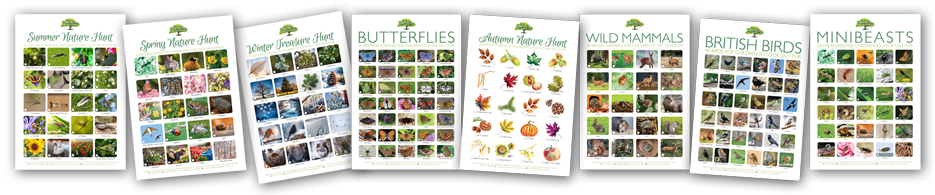
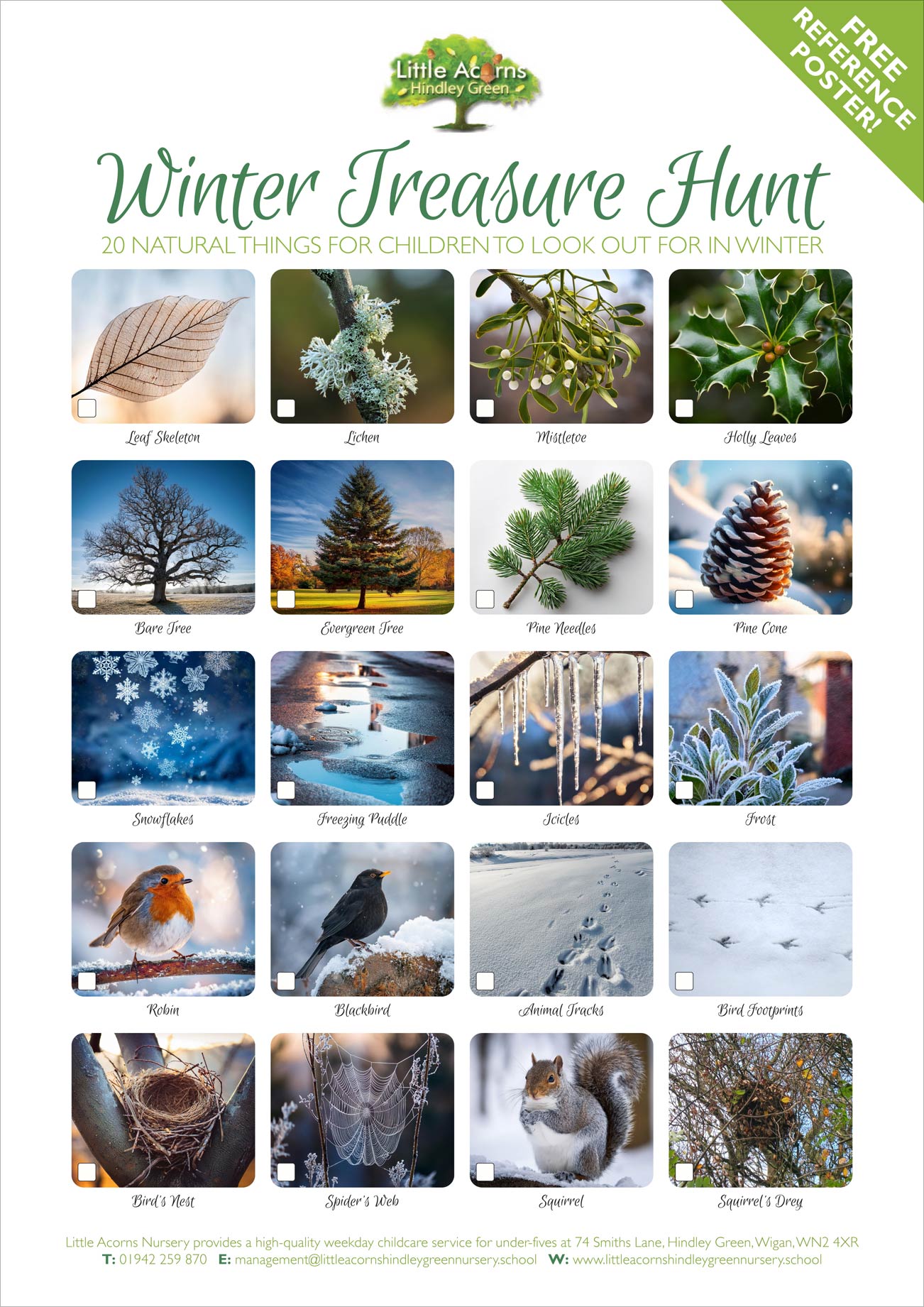
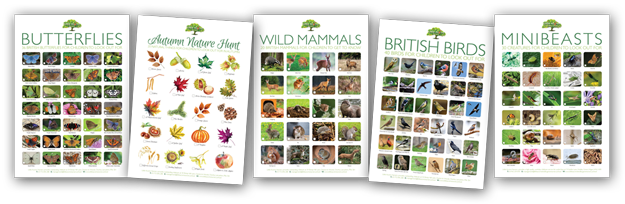
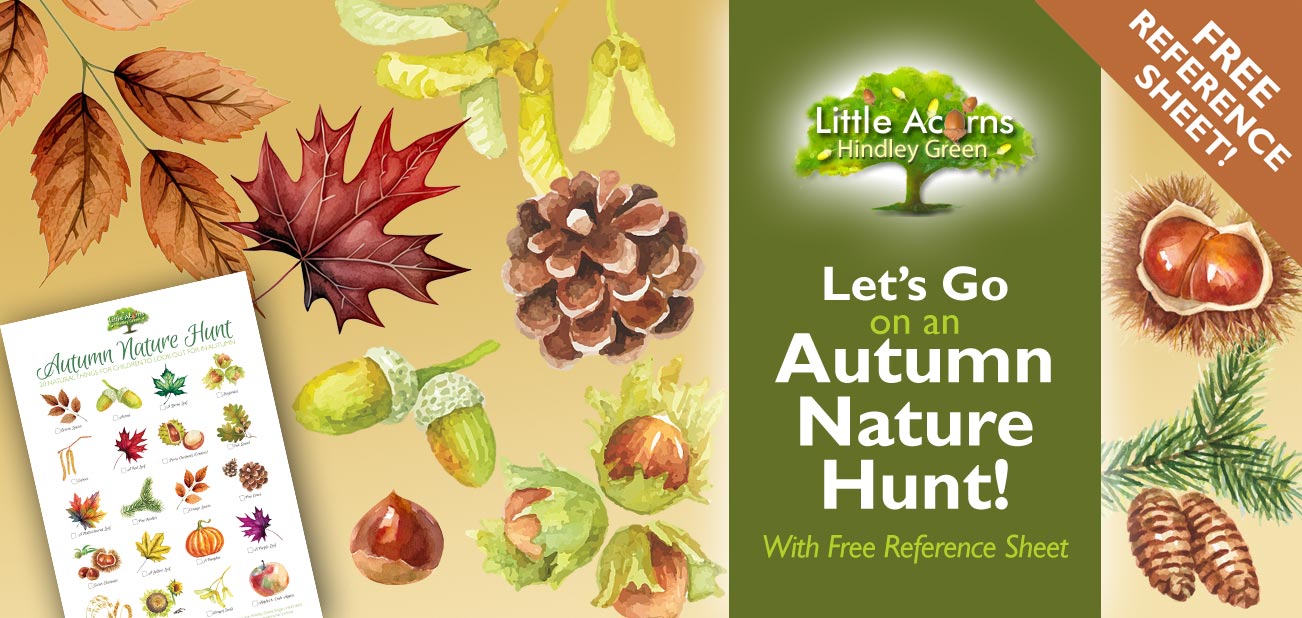
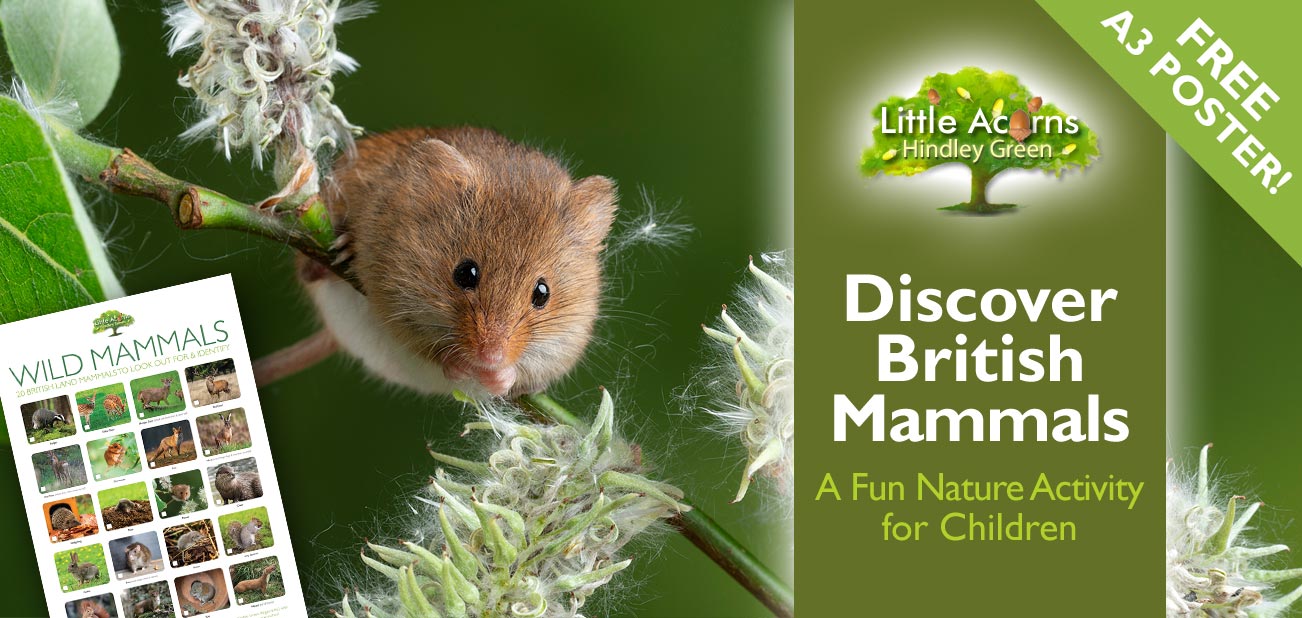
Today’s Summer Nature Hunt activity is just one in a series of nature-inspired activities for children available here on this website. Each comes with its own free reference poster for children and families to print out. So, if exploring nature and learning about the natural world is something you want to encourage your child to do, visit our other nature-inspired activity suggestions today and download your free poster for each. Examples include an autumn nature hunt, winter treasure hunt, and spring nature hunt as well as activities for spotting British birds, minibeasts, mammals, and butterflies. Follow the bold links to learn more and access the free posters — or bookmark them today so you can come back later.
Forest School Sessions Near Wigan
from Little Acorns Nursery, Hindley Green
 At Little Acorns Nursery in Hindley Green, we know how important nature and spending time close to it are for children and under-fives. That’s why we’re lucky to have such extensive outdoor grounds where the children can play, explore, discover, and learn under the watchful eye of our early years professionals. It’s also why we’ll provide Forest School sessions for our nursery children. Learn more about Forest School sessions coming to Little Acorns Nursery in Hindley Green, Wigan, here.
Little Acorns Nursery provides almost year-round nursery and preschool places for babies, toddlers, and children under five in and around Hindley Green, Wigan. We support funded childcare hours and places for eligible children and welcome enquiries from families looking for childcare provision in the area. Please get in touch using an option below to get started. We’ll be delighted to tell you more, show you and your child around, and begin your child’s enrolment.
If you are a family living in Wigan, Bolton, Atherton, Platt Bridge, Westhoughton, Bickershaw, Leigh, Ince-in-Makerfield, Tyldesley, or near Greater Manchester, Little Acorns Nursery in Hindley Green could make a very convenient choice for your weekday childcare. Contact us using one of the above options if you’d like to explore this further — we’d love to hear from you.
* Safety notice: Always ensure that children, especially the youngest, are supervised by a responsible and vigilant adult when they’re playing and exploring outdoors. There are many hazards out there!
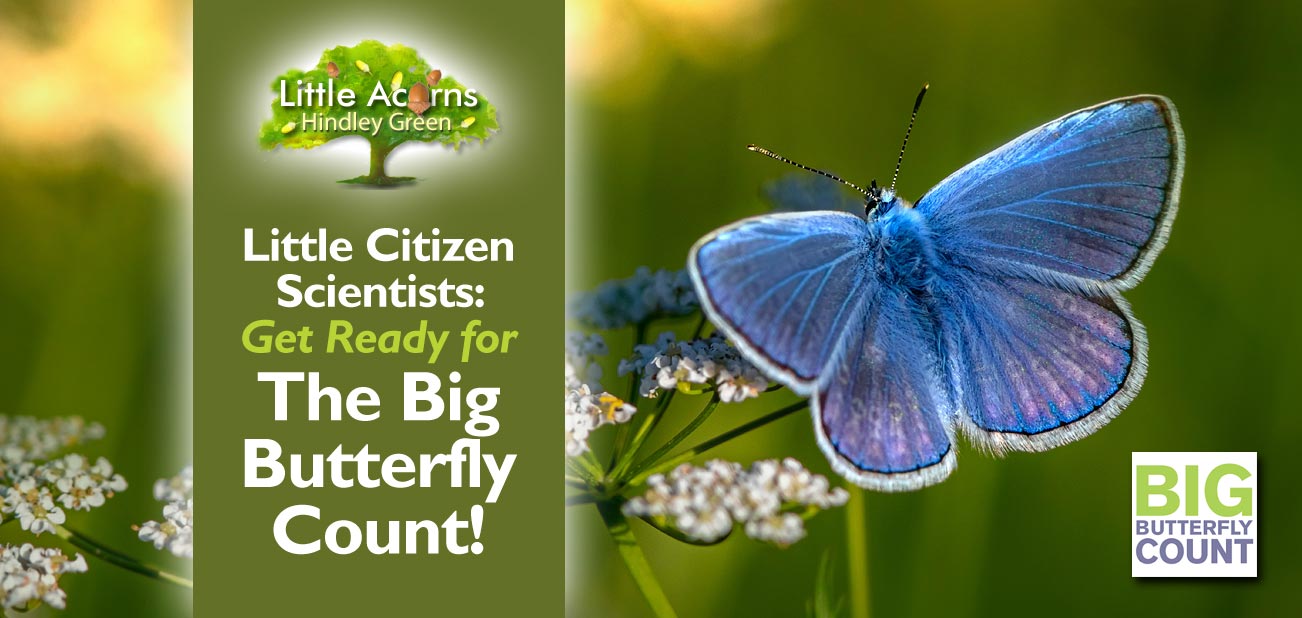
 Calling all children and their families — people of all ages are needed this July and August for the world’s biggest wildlife survey — the Big Butterfly Count! So, whether you’re a child or an adult, you can play your part. This is a great activity for under-fives too as it’ll be fun, educational, and incredibly worthwhile. What’s more, they’ll become little citizen scientists by taking part. The nature-based activity takes as little as just 15 minutes and costs nothing at all. Children don’t need any special abilities other than a little patience and good observation — both great skills for them to practise. Let’s take a look and see what the Big Butterfly Count is all about and how children can take part this year.
 The Big Butterfly Count is a nature survey that anyone can take part in during July and August each year. For 2025, it takes place from Friday the 18th of July to Sunday the 10th of August, a period in which temperatures are usually warm and butterfly populations are likely to peak. In essence, all that is required is for butterflies to be counted during a 15-minute period (more detail follows later in this guide). The survey event is open to everyone and, indeed, the more people who take part, the better. So, if you, your child, your family, or your friends want to play a part in protecting butterflies and nature as a whole, please get involved.
 The populations of butterflies can be used as a barometer for the health of pollinator numbers and nature as a whole. With some butterfly species already disappearing from our gardens and countryside and others nearing extinction, there is no time to lose. Only by identifying the issues can we, as a nation, begin to reverse some of the decline. By reversing it, it will be good for butterflies, good for other pollinators like bees, good for nature as a whole — and good for humans too! After all, without pollinators, the supply of foods like cereals, fruit, vegetables and legumes would start to run out. So, taking part in the Big Butterfly Count is extremely worthwhile and we urge little ones and their families to take part.
 First, ensure you have downloaded and printed out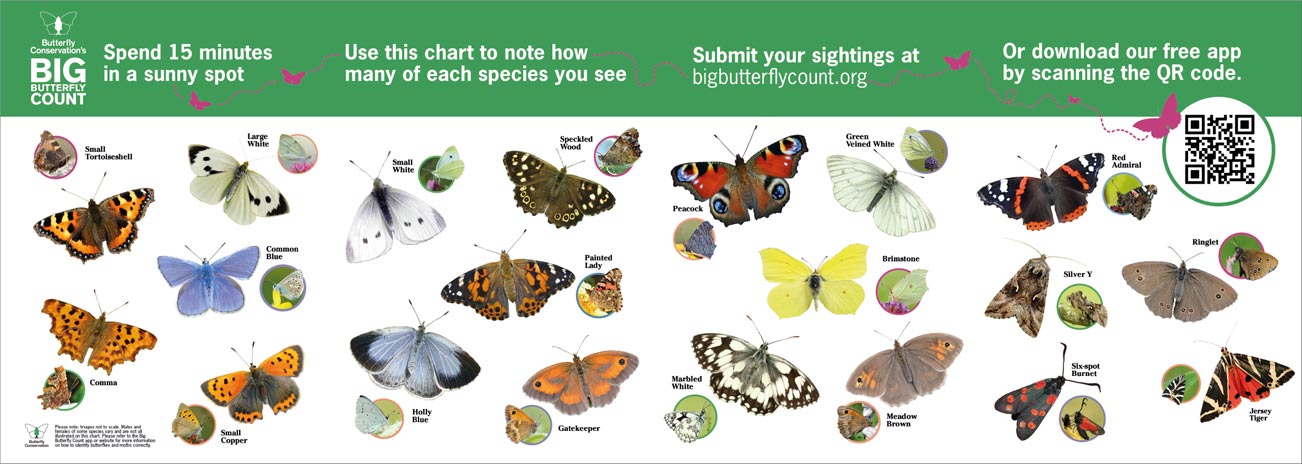
 Choose a spot for your butterfly survey. It should be somewhere outside where butterflies are most likely to be seen. Sunny, sheltered spots are good, particularly where a variety of different sizes and types of flowers or blossoms are in bloom.
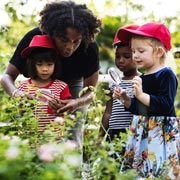 Sometime in the period from Friday the 18th of July to Sunday the 10th of August, you/your child should spend 15 minutes making a note of how many of each type of butterfly you can see. Concentrate only on the species included in the event organiser’s reference from Step 1. You must count how many of each single species you see at the same time. So, if you see three Painted Ladies at the same time, then record that as 3. However, if you see one Painted Lady on three separate occasions during the 15 minutes, that would only count as 1 — otherwise, it could simply be the same butterfly revisiting.
 Did You Know?
 Nature and outdoor play feature significantly in children’s time at
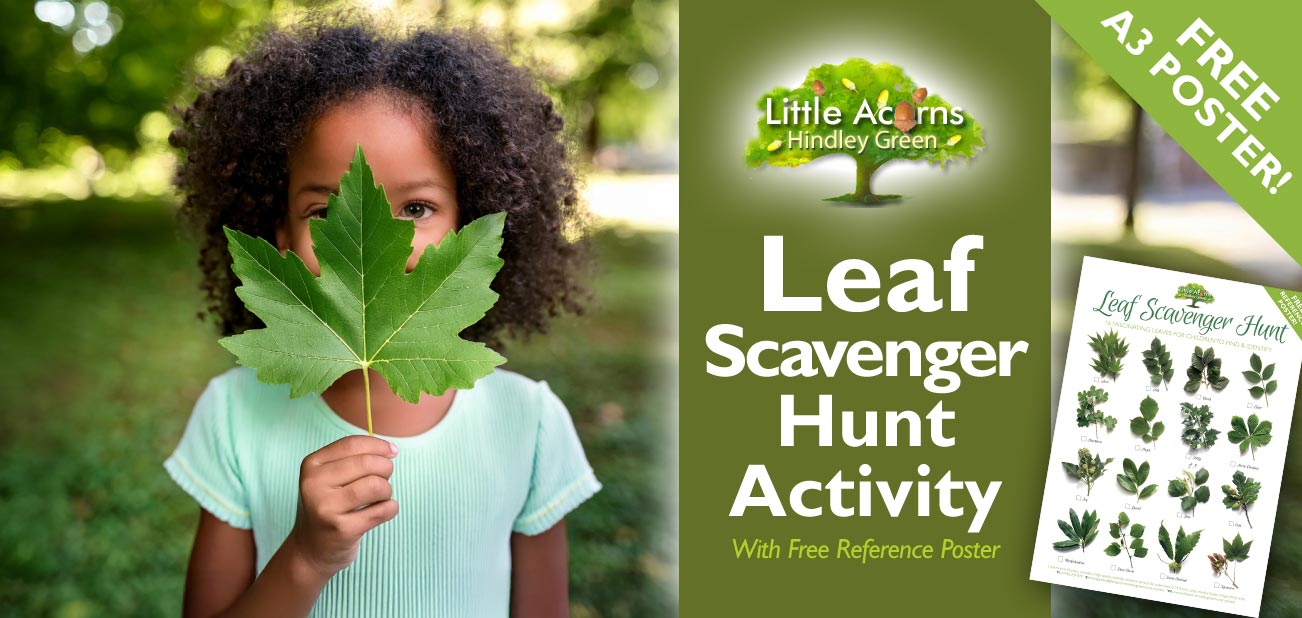
 Wherever you look, nature’s flowers and trees are bursting with life during spring and summer. This got us thinking about the many nature-based activities that are possible for children and under-5s to enjoy at this time of year — under appropriate supervision, of course. One of them is a simple leaf-hunting activity that’ll get little ones exploring the outdoors, enjoying the fresh air, having some fun, and learning about the natural world. With this in mind, we’ve put together a Leaf Scavenger Hunt reference poster for children and families. It can serve as inspiration for some common leaves to look out for during the warmer months of the year. The poster is free to download, right here today, and highlights 16 different types of leaves. Included are oak, sycamore, beech, lime and many more. Children will probably be familiar with some — especially oak leaves with their wonderful little acorns — while others may be unfamiliar. However, all of our examples were sourced on a single morning’s outing, so it’s feasible to find all 16 kinds with a bit of eagle-eyed persistence! So, download the poster for your children, print it out, and explore the outdoors to see how many of the 16 leaf types your little one can find. See if they can identify the differences which make each species of leaf/tree/plant unique — and learn their names if they can. The free identification poster and some help from an adult should help. Have fun out there!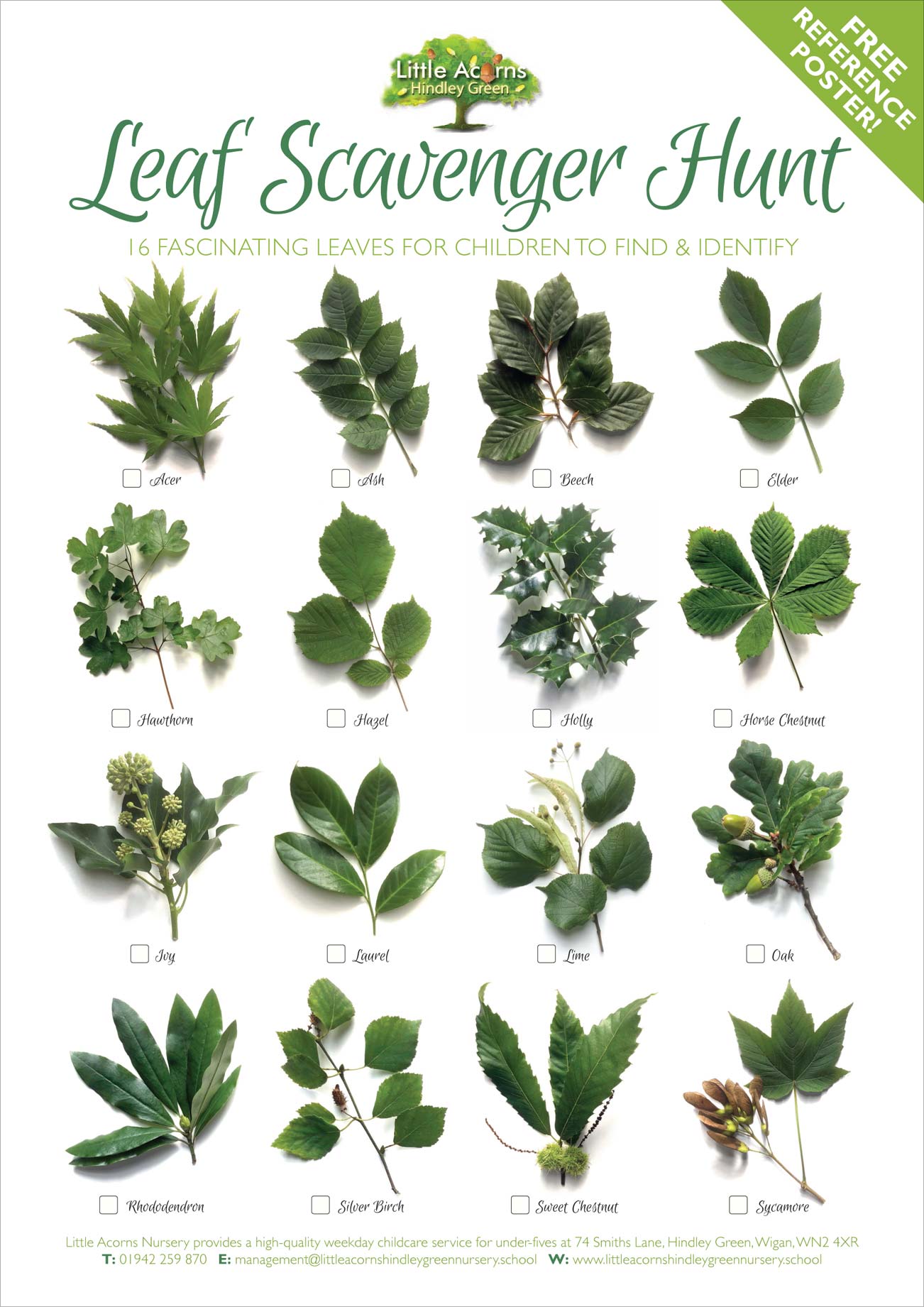
 Some of the leaves will be easier to identify than others. For example, Horse Chestnut (a.k.a. ‘conker tree’) leaves are quite distinctive with their fan of multiple sections (see the 2nd row, last image on the right on the poster for our example). In contrast, hazel and lime leaves are quite similar to one another. One easy clue to tell them apart is that lime leaves are slightly shiny, whereas hazel leaves are extremely matt. And, of course, they have very different seeds once those appear (the lime seed clusters are quite beautiful as you can see on the poster in the 3rd row, 2nd image from the right).
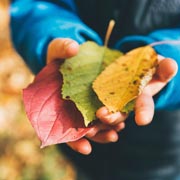 Another interesting factor to point out to children is that some of the leaves come in different colours. Beech leaves, for instance, can be green or deep burgundy, brown or dark purple depending on which variety of beech a child locates. It’s similar for acers, which can be green, yellow, red or a deep purple/maroon. Acers however, are more likely to be found in gardens and parks than in the countryside. Some are a little like miniature sycamores, only rather more delicate and fancy! And, come
 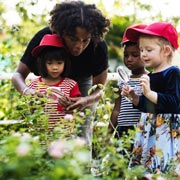 This activity is a great opportunity for children to open their eyes to the natural world. By looking at nature more deeply, they’ll see the finer details that may have been overlooked. Nature is incredibly varied and interesting when you take the time to look closely and discover it properly. It’ll teach children about the natural world, the seasons, the changes in plants and trees at different times of the year, the circle of life, and so much more. Getting out, close to nature, is also incredibly beneficial to children. From busting stress, improving well-being, supporting the EYFS and boosting exercise, to improving concentration and even academic grades,
  Once children have collected them, leaves can inspire various other creative activity ideas for children. For example, has your child ever tried leaf rubbing (putting a leaf under paper and scribbling over it to reveal the leaf structure), leaf pressing (pressing leaves between pages of a heavy book to allow them to dry and flatten), or leaf printing (painting a leaf with paint then pressing it onto paper to offset the leaf’s form as an image)? These are just a few examples of the


 Families, set your diaries for the wildlife event of the year, which happens this January from Friday the 24th to Sunday the 26th inclusive. It’s free, takes just one hour, and allows children and adults to be part of the world’s biggest garden wildlife survey. During the event, families and individuals across the nation simply count the birds they spot in the garden, park, local green space, or even balcony over the course of 60 minutes. The results of hundreds of thousands of these surveys are compiled by the Royal Society for the Protection of Birds (RSPB) to build a picture of the health of the nation’s bird populations. It’s important scientific and ecological work and children can become citizen scientists if they simply take part. Learn more about the Big Garden Birdwatch and how to take part in today’s guide for families with children.
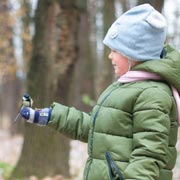 Children will love being involved in this important nature-based activity. They’ll not only play their part in helping birds and nature, but they’ll also have fun and learn something along the way. They will discover some of the many wonderful feathered visitors who live in their neighbourhood and learn about some of the important issues affecting the natural world. They’ll begin to grasp the impact of humans on Britain’s flora and fauna and learn the importance of conservation and looking after the natural world around them. Through this endeavour, they’ll learn how they can make a positive difference. They will also become little citizen scientists! It’s fun, educational, and will give them a wonderful sense of achievement too. It may even change their outlook over the long term and help them think about their own impact on the planet, which is a wonderful outcome. And last but not least,
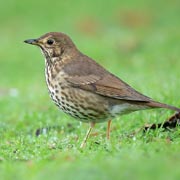 Once the chosen time and date arrive, all you/your children need to do is monitor birds landing on your chosen patch. Count those that actually land rather than any flying otherwise there’s a danger that one bird could be counted multiple times. What you need to record for the survey, though, is the largest number of each bird species that have landed at any one time during the hour. So, for example, if you spot two blackbirds that have landed at the same time in the first half hour, but later in the hour you can see 4 that have landed at the same time, then you need to record “4” for blackbirds.








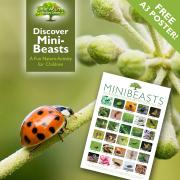
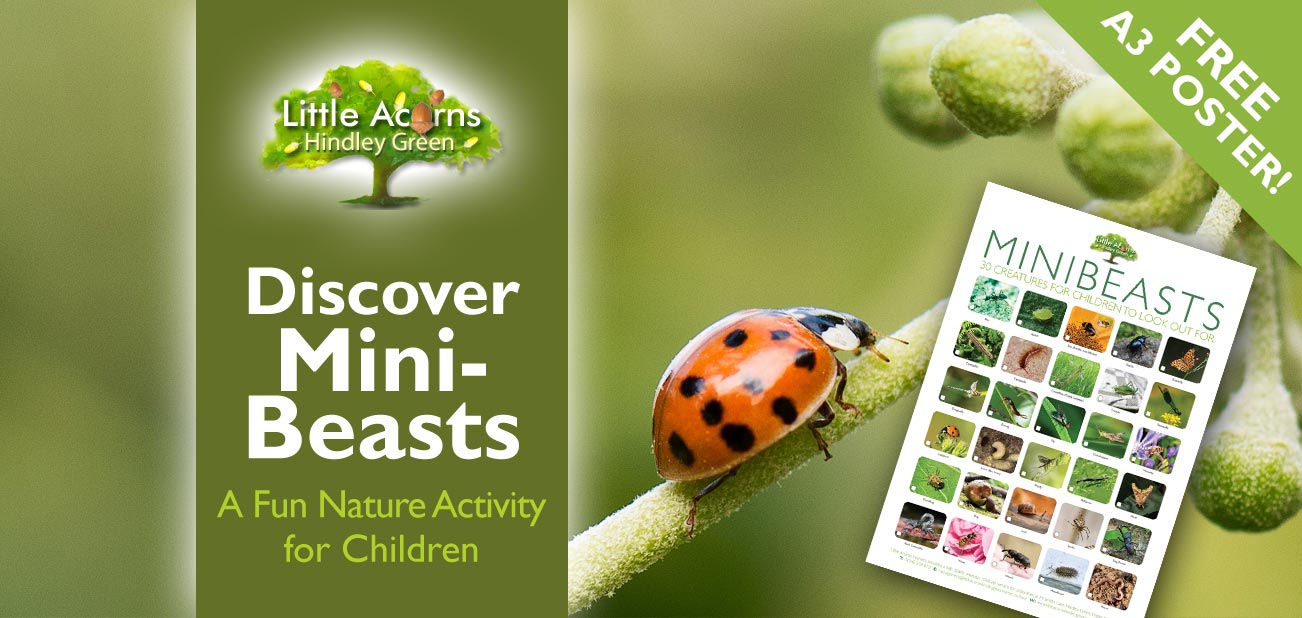
 Today’s ‘Discover Minibeasts’ post is the third in our series of nature-based activities for children. And, as with the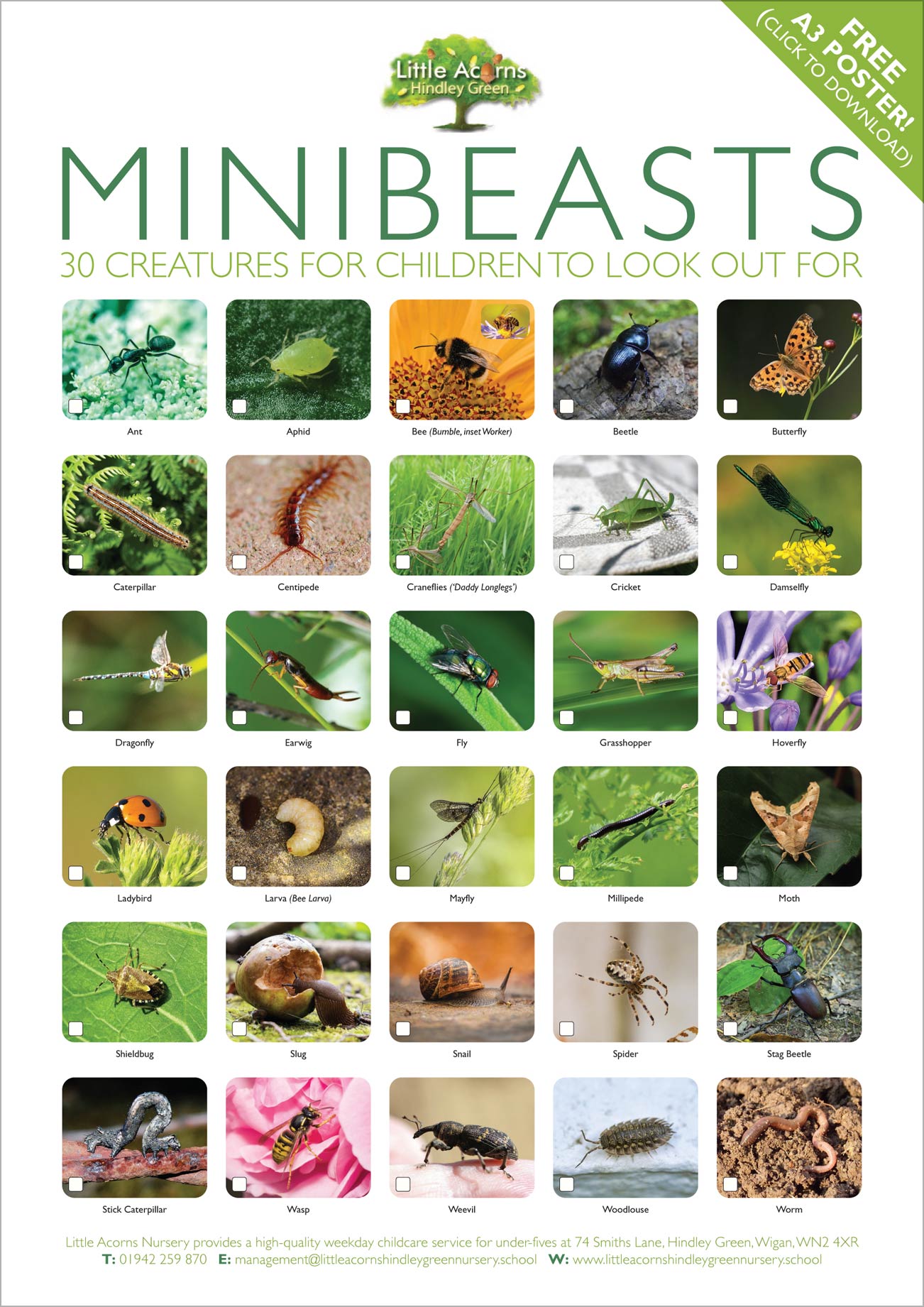
 Today, in a follow-up to the