
Summer is a wonderful time of year when children can get outdoors to play, explore, discover, and enjoy the freedom of nature. It’s also a time of great abundance, with nature’s riches everywhere we look. Nature’s gifts can be beautiful, fascinating, educational, stimulating, and hugely enriching for little ones. Whether it’s a delightful butterfly flitting through the air, a super-cute bumblebee searching for nectar, or a patch of colourful wildflowers growing in a meadow, nature really is rather magical — and that’s especially so for young children. With that in mind, today’s Summer Nature Hunt activity encourages children to get closer to nature* to discover some of its many delights. When children and adults take time to properly look, nature’s wonders really are incredible. Our suggested activity today comes with a free, downloadable reference poster that highlights 20 wonderful things for little ones to look out for during the summer months. From caterpillars and dragonflies to winged seeds and slow worms, there is a lot for children to discover during this abundant time of year. A summer nature hunt will open their eyes and teach them about the natural world around them, as well as being a fun adventure — enjoy!
Summer — Dates
Summer in the UK is generally the warmest part of the year, but the exact dates vary from year to year depending on whether you are using the meteorological or astronomical calendar.
- According to the astronomical calendar, summer starts on Sunday 21 June for 2026 (the longest day of the year or ‘Summer Solstice’) and ends on Wednesday 23 September (2026’s ‘Autumnal Equinox’ when the day is the same length as the night). The exact date varies a little each year because the solstice and equinox sometimes fall on alternative days due to the Earth’s path as it travels around the Sun.
- According to the meteorological calendar, summer starts at the very beginning of June and ends at the very end of August every year. This particular calendar keeps things simple, using full months. It is used for such things as weather forecasting and, being based on full calendar months, allows scientists to more easily compare climate data from year to year.
Download Your Free Summer Nature Hunt Reference Poster
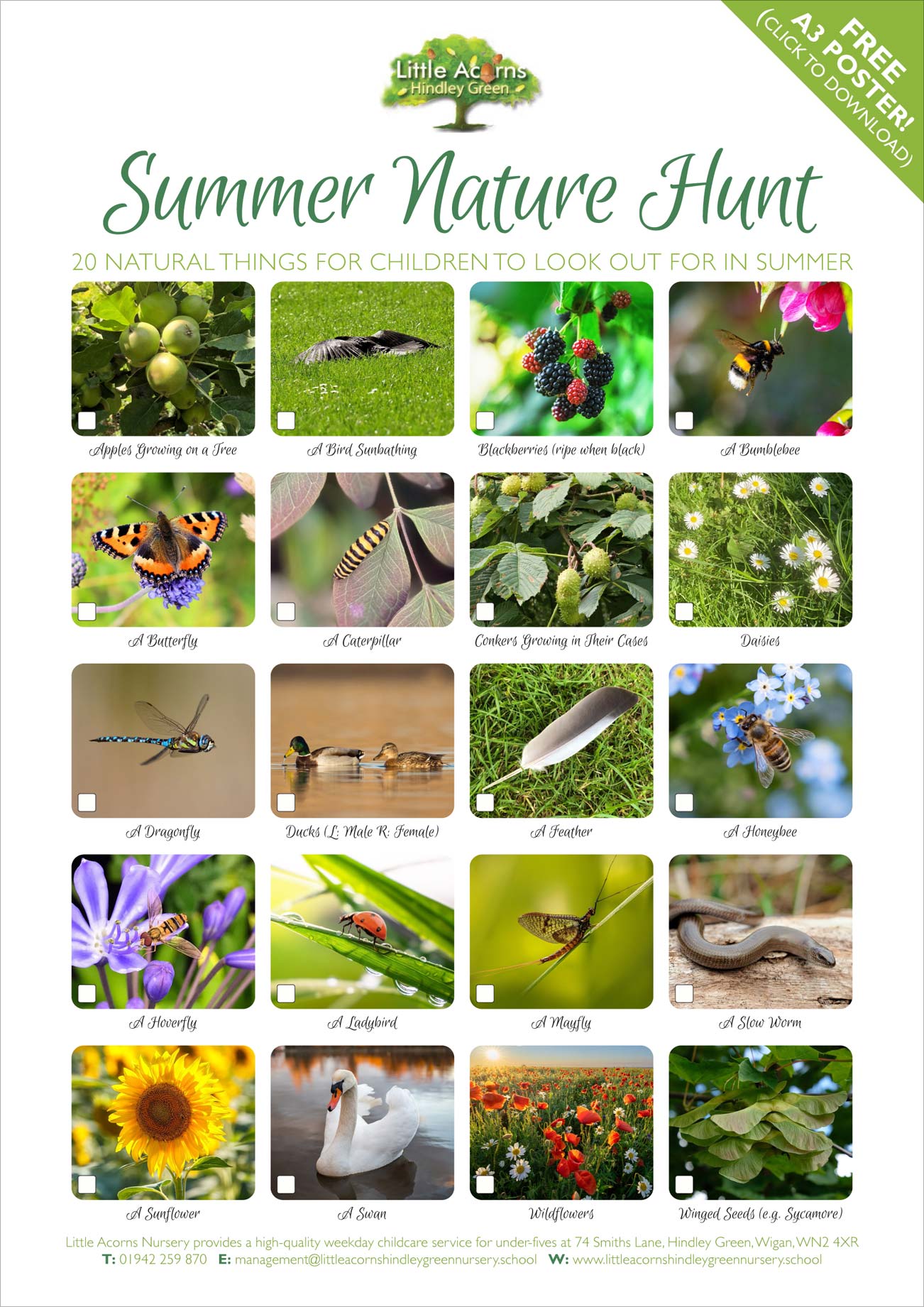
Download your child’s free Summer Nature Hunt reference poster below. Simply click the large preview image to view or download it in high-resolution Acrobat format. We recommend printing it out using your printer’s best settings and paper for the highest-quality results. Posters can be printed at A4 or even A3. For handouts for your child to take with them on a nature hunt, A4 or A5 may suit best. Children can use the little tick boxes to indicate which natural item they have seen during their excursion into the natural world. The activity combines a challenging quest with exploration, discovery, learning, and fun!
How Many Can Your Child Spot?
Can your child find a winged seed, like those from a sycamore tree? Perhaps show them how such seeds spin and travel, often long distances, when falling through the air on the wind — a great example of just one of nature’s magical tricks. Can your little one spot wildflowers, daisies or a wonderful sunflower? How about a bird’s feather, apples growing on a tree, or blackberries growing on a bramble bush? There are also lots of insects to find, such as bees, hoverflies, butterflies, mayflies, and dragonflies. Caterpillars are also fascinating and come in all manner of different forms, including some that are harder to spot if well camouflaged. Then, for the luckiest or most observant young nature watchers, the elusive slow worm is a wonderful creature to discover. Looking more like small snakes, they’re actually legless lizards. There are some birds on the reference poster too — ducks, the magnificent swan who majestically glides through the water, and the amusing sight of a sunbathing bird (rather than being injured, they’re simply warming themselves in the sun).
Nature is So Good for Children
Spending time close to nature is hugely beneficial to children — and adults, in fact. Studies have shown that it benefits people physically, mentally, and spiritually in a huge variety of ways. When little ones spend time in and around nature, stress and anxiety reduce, motor skills improve, knowledge grows, and empathy for other living things increases. What’s more, nature can benefit children and students academically. Indeed, some studies found that even just a view of nature or a natural space can improve academic grades — incredible! It’s a huge topic all on its own, so we wrote a whole article about it — learn more about the enormous benefits and importance of nature to children here. It’s also one of the many reasons why Little Acorns Nursery is starting its own Forest School sessions in and around Hindley Green very soon.
More Nature-Inspired Posters for Your Child to Download (Free)
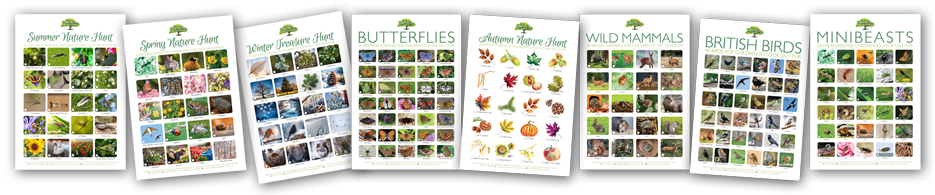
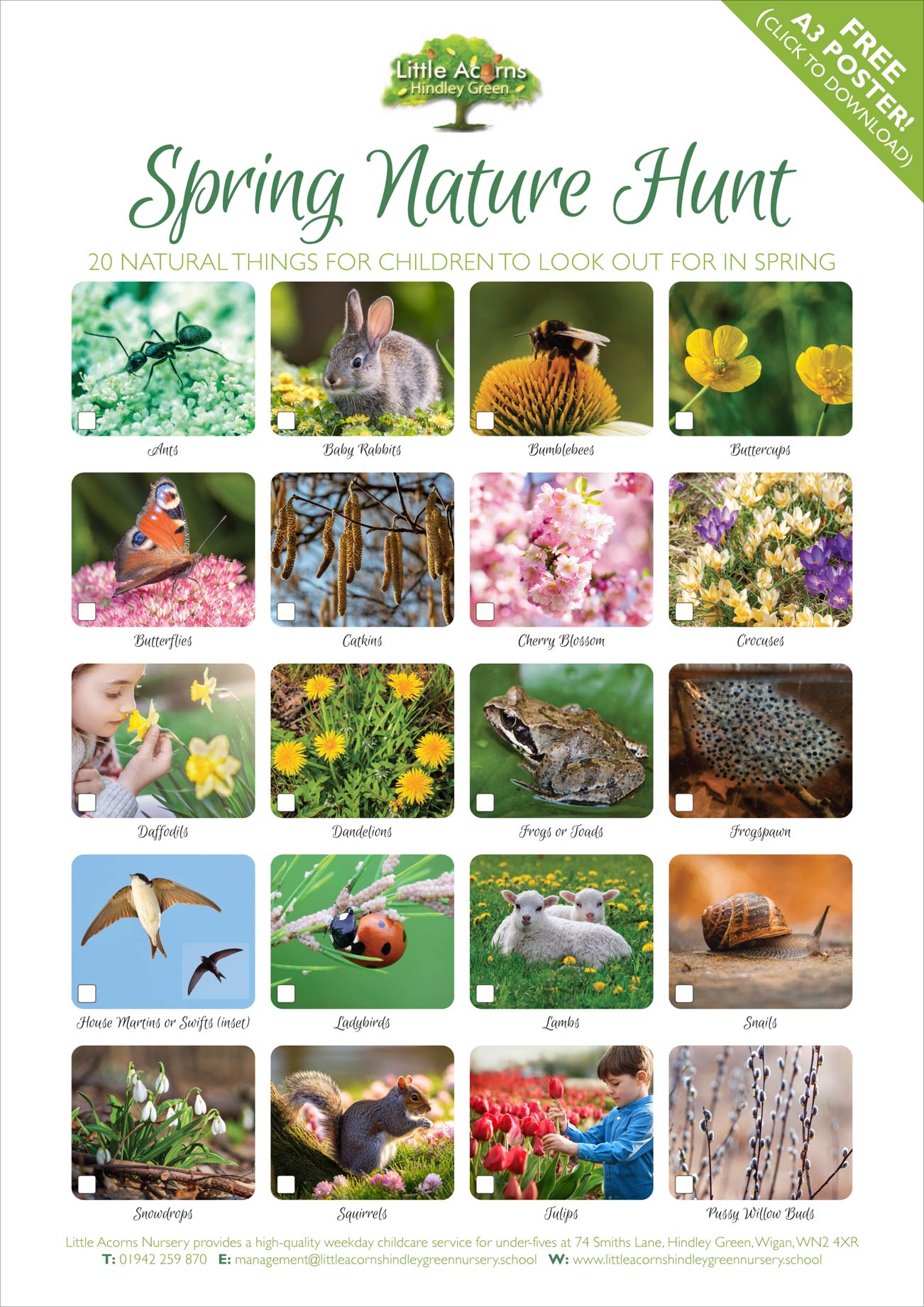
Today’s Summer Nature Hunt activity is just one in a series of nature-inspired activities for children available here on this website. Each comes with its own free reference poster for children and families to print out. So, if exploring nature and learning about the natural world is something you want to encourage your child to do, visit our other nature-inspired activity suggestions today and download your free poster for each. Examples include an autumn nature hunt, winter treasure hunt, and spring nature hunt as well as activities for spotting British birds, minibeasts, mammals, and butterflies. Follow the bold links to learn more and access the free posters — or bookmark them today so you can come back later.
Forest School Sessions Near Wigan
from Little Acorns Nursery, Hindley Green
 At Little Acorns Nursery in Hindley Green, we know how important nature and spending time close to it are for children and under-fives. That’s why we’re lucky to have such extensive outdoor grounds where the children can play, explore, discover, and learn under the watchful eye of our early years professionals. It’s also why we’ll provide Forest School sessions for our nursery children. Learn more about Forest School sessions coming to Little Acorns Nursery in Hindley Green, Wigan, here.
Little Acorns Nursery provides almost year-round nursery and preschool places for babies, toddlers, and children under five in and around Hindley Green, Wigan. We support funded childcare hours and places for eligible children and welcome enquiries from families looking for childcare provision in the area. Please get in touch using an option below to get started. We’ll be delighted to tell you more, show you and your child around, and begin your child’s enrolment.
If you are a family living in Wigan, Bolton, Atherton, Platt Bridge, Westhoughton, Bickershaw, Leigh, Ince-in-Makerfield, Tyldesley, or near Greater Manchester, Little Acorns Nursery in Hindley Green could make a very convenient choice for your weekday childcare. Contact us using one of the above options if you’d like to explore this further — we’d love to hear from you.
* Safety notice: Always ensure that children, especially the youngest, are supervised by a responsible and vigilant adult when they’re playing and exploring outdoors. There are many hazards out there!


 As adults, it’s lovely to reflect back on the type of childhood memories that give us a warm, fuzzy feeling. These are memories that still bring joy when we think about them, even years later. They’re often memories of events and special moments shared with parents and siblings, in times of wonder and togetherness. Sometimes, they might be of a family adventure of some kind — a holiday somewhere wild, an unforgettable activity, or a magical moment that’s simply so wonderful we’ll never forget it. We can think of such memories as almost foundational parts of our childhoods, very much akin to milestones in the progression of our growth as children. These moments are irreplaceable. With that in mind, we’ll explore some ideas today for how to gift your own children such wonderful memories — moments they’ll remember fondly — perhaps for the rest of their lives. What a gift that would be!
 Children’s ears will always prick up when you tell them they’re going on an adventure! These can take many forms, so they are limited only by your imagination, time, and resources as a parent. Need an example? Try taking them on a ramble or hike. Take a picnic! Take rucksacks, suitable footwear, wet weather gear (just in case), something to drink, and a smartphone with a camera for any photos. Maybe first show them a map of where you plan to walk with them. Aim for some interesting places. Viewpoints, interesting landmarks, beautiful countryside, woodlands, and riverside walks are good examples, and will give children something to look forward to on the journey. Ensure there is somewhere to stop for food, drinks, and/or snacks along the way. Maybe build in some activities or games en route too. All such things will make for a really memorable day. Even if they find it hard at first, they will end up with lots of fresh air and exercise, a feeling of accomplishment, and some great memories.
 Next time it’s sunny, and you and your child are out and about in the garden or open space, look out for the big fluffy, white ‘cumulus’ clouds. If there are some gently gliding across the sky, encourage your child to lie on their back, look up, and study them (avoiding looking directly at the sun, of course). Many of these enormous clouds are quite beautiful. Even better, there’s a game you can play together — looking for cloud animal shapes, faces, or even dragons and monsters in the clouds. Such shapes sometimes form naturally as the clouds shift and change formation on the winds high above us. There is even a name for this type of illusion; pareidolia, although it applies to seeing faces and shapes anywhere, not just in clouds. Searching for and finding an animal or face, whether in the clouds, the bark of a tree, or on a rocky formation, is sure to delight any child. It will be something they’re likely to remember and repeat throughout childhood and even into adulthood. Indeed, it’s another magical aspect of childhood and the world around us.
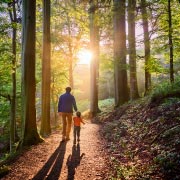 Setting aside 30 to 60 minutes specifically to witness a sunset with your child is also something that can be magical. It’s also an incredibly simple but powerful activity to do with children. Some sunsets are truly awe-inspiring, with incredible colours, cloud patterns, and shapes that look like they’re something from a fantasy movie or book. If the timing is right, children can even see the distant sun slowly disappear over the horizon as dusk and then nighttime arrive. It is a beautiful thing to witness, and it also teaches children more about the world and our place within the universe. It will be a lovely memory of shared, high-quality family time too, and will also demonstrate to little ones that some of the most magical activities cost no money at all, and do not involve toys or electronic screens.
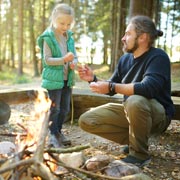 Surprise your little ones with a last-minute getaway. Editor’s note: My father did this for us a few times each year when my sister and I were children. He’d come home from work on a Friday evening and excitedly ask the family, “Who wants to go away for the weekend?” and my sister and I would shout, “We do!” with great gusto. We’d quickly pack, and off we’d go. By Friday night, we’d arrive at a campsite, or sometimes a random spot en route, and sleep like babies. After spending the weekend visiting our favourite places, we’d arrive back on Sunday night feeling like we’d been away for a week. Those are still some of my fondest childhood memories. And, it’s the kind of exciting last-minute break that doesn’t cost the Earth and is huge fun — something we could all do for our children occasionally, perhaps.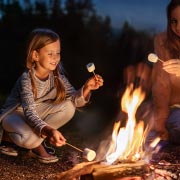
 On a clear, cloudless night, stargazing somewhere away from neighbourhood lights will open children’s eyes to the magic of the nighttime sky. Even if you spend just 5 or 10 minutes together watching the night sky, you’re bound to bring out the wonder of space in your child’s mind. The Moon, twinkling stars, the little star tinged red (Mars), the pan-shaped form of the Plough (a.k.a. ‘Big Dipper’), and helping your child find the North Star are all things they’ll find fascinating and remember longer-term. Stay watching long enough for them to see little satellites marching their way across the darkness as they loop around the world, nowadays often in the company of others in a satellite ‘constellation’. Even better: help your child spot their first shooting star — and make a wish. Magical!
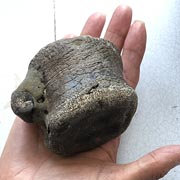 There are many places around England and the UK where fossils can be found if you/your children take the time to look for them. Children love it when they find them (as do many adults), and it’s always incredible to see their reactions when you tell them that this fossilised creature or plant they just found lived literally millions of years ago. It puts things into perspective and opens their eyes and minds to the wonders of Planet Earth and even life itself. Not only that, they have a magical keepsake to remind them of their fossil hunt(s). Try Googling good fossil-hunting locations near you, or
  Children are naturally fascinated by the world around them — and especially the natural world. The UK is lucky to be a lush environment with lots of flourishing flora and fauna. So, for little ones, there is so much to see and discover. That’s one of the many reasons we will soon be providing Forest School sessions at Little Acorns Nursery in Hindley Green, in fact. It’s also why we’ve published various nature-based scavenger hunt activity ideas here on this website. So, another interesting, informative, educational, and memorable activity that will enrich your child’s childhood is a nature-based scavenger hunt. Check out our
 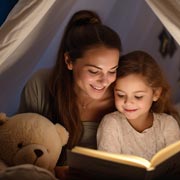 Let’s not forget that magical memories can be made indoors, too! Reading books to children before they go to bed can build lasting memories. Editor’s note: My own children, now in their late twenties, still recall me reading to them every night, as we gradually worked through all the Harry Potter books. This was before they had started making the movies, and I made sure to put on different voices for different characters, whisper when there was a tense moment, or speak more urgently when Harry Potter was in mortal danger. They loved it! And now they’re parents themselves, they’re paying it forwards and reading books in a similar way for their own children. And, not only were those book-reading sessions “an integral part of their childhood” (they tell me), but they’re also incredibly good memories for me, as a parent. It really was magical on so many levels, so it is thoroughly recommended.
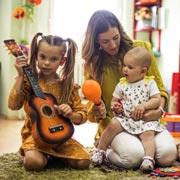 Editor’s note: Another thing my own children remember fondly was singing songs each evening with me when they were very young. These were home-spun songs that we made up as we went along, sung together near bedtime most evenings, along with some basic guitar playing. It was both entertaining and amusing as we took it in turns to make up new, often silly, verses. What’s more, my children described it recently as a ‘free concert every night’, and it’s lovely that they remember it so clearly and fondly over two decades later. So, regularly playing musical instruments and singing together is highly recommended and highly creative for all parties. And, who knows where it could lead — a possible career in music, perhaps!
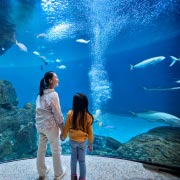 We hope you’ve enjoyed our ideas today for creating magical memories for your child. They’re just a starting point, though, to inspire new ideas for families. When high-quality memories are made, they can last a lifetime. Children may well look back on them as integral parts of their childhood, and instantly be transported back in time as they recall them. Such memories can bring togetherness, as well as a warm, fuzzy glow. What’s most important, though, is that the proactive creation of such memorable times lets children know that their happiness is important, they matter, are loved, and, all in all, it really is a wonderful world.
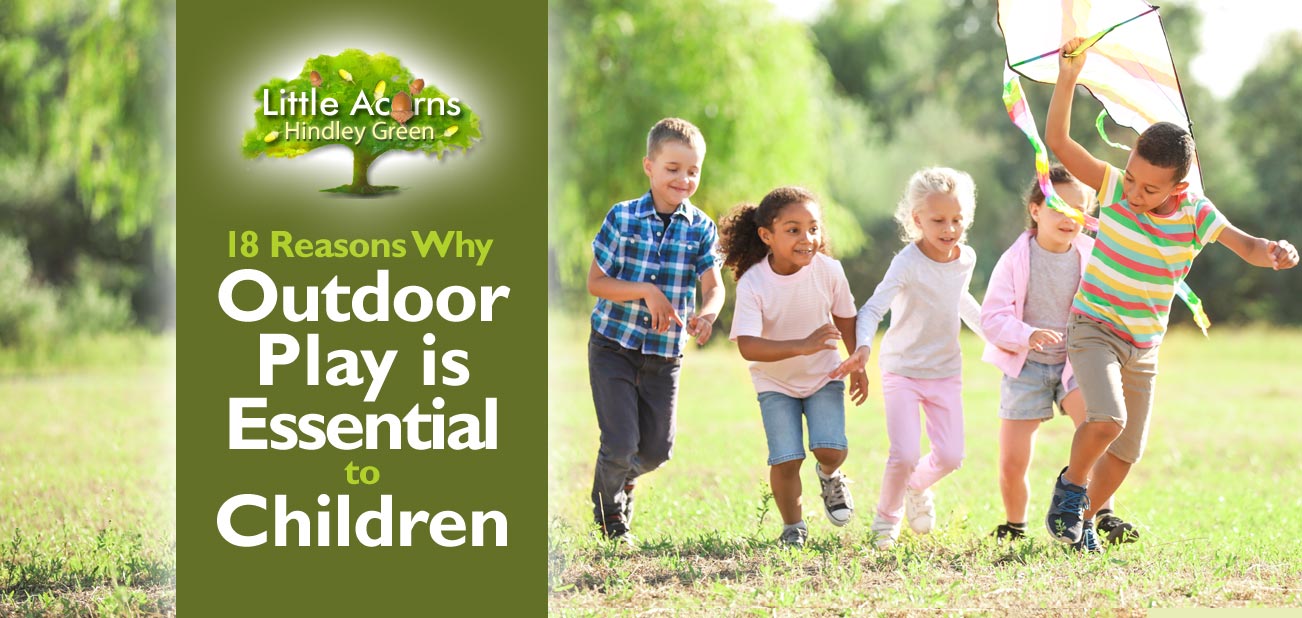
 Outdoor play is one of the truly magical elements of any healthy, fun-filled childhood. At the very least, it gives children the chance for some freedom, fresh air, and adventures that simply aren’t possible indoors. In today’s technological age of electronic screens, however, it’s also something that children have been doing less and less of over the generations. That’s a shame, when you think about it, not least because outdoor play is immense fun and incredibly beneficial to children. In light of this, today’s post explores 18 Reasons Why Outdoor Play is Essential to Children — of all ages. Take a look and see why outdoor play is so good for little ones.
 We mentioned it in our introduction — playing outdoors provides children with wonderful opportunities for real adventures! Whether it’s exploring The Great Outdoors on a family ramble, climbing on playground equipment with friends, embarking on a make-believe quest with the family dog, or making a den with siblings, there are no limits to what’s possible with outdoor play. Indeed, the adventures that are possible through outdoor play are only limited by a child’s imagination! Speaking of which…
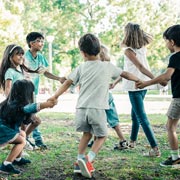 Let’s not forget, too, that playing outdoors is huge fun — and that’s important. Simply put, playing outdoors and giving children space to run around will make them happy. And there’s not much in life that’s more important than a child’s happiness — it’s an essential part of any magical childhood.
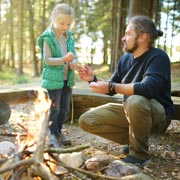 Outdoor play lends itself to the learning of new skills. With such a varied array of activities possible, children will naturally attempt new things, and each of these can be an opportunity to extend their skills. Physical skills might include tying knots, building dens with branches, playing ball games, climbing, racing, and so on. In addition, children will learn softer skills like teamwork, cooperation, strategy, critical thinking, leadership, and role play. What’s more, all of this will happen instinctively — such is the power of outdoor play.
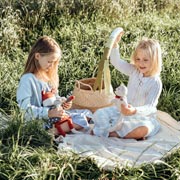 Children who regularly play outdoors will inevitably meet other children and encounter new dynamics. These will help them make new social connections, and immersive activities will deepen existing friendships. Playing outdoors is a great way, therefore, to strengthen and extend a child’s social circle, and boost social skills like teamwork, leadership, cooperation, brain storming, and so on.
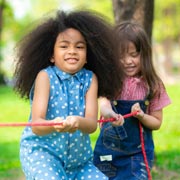 The often high-octane activities associated with outdoor play will also help children boost strength, fitness, motor, and coordination skills. By exposing themselves to different terrains, environments, tasks, games, and equipment outdoors, they will increase the variety of motor skills they need to accomplish activities. Running, jumping, hopping, constructing, chasing, and climbing will all help improve them physically, in so many ways that may not be possible indoors. What’s more, such things will help children protect themselves from harm, as well as empower them physically.
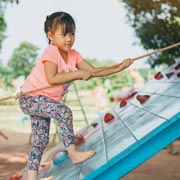 Playing outdoors, with adult oversight, is the perfect opportunity for children to begin learning how to assess risk. Whether it’s safely navigating outdoor play equipment, stepping over undulating ground, climbing a tree, or playing fast-paced ball games, children will soon learn when and how they need to assess possible risks. It’s a skill that, once learned, will keep them safer from harm, so is incredibly important.
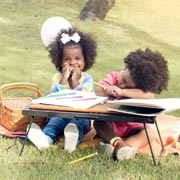 All these new skills and enhancements make under-5s well-equipped when the time comes to leave preschool and begin school. Through outdoor play, they’ll have greater independence, confidence, communication and social skills, and physical skills, to name just a few. What a great way to help them hit the ground running from the moment they begin school!
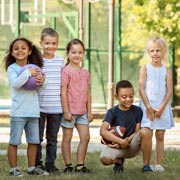 All in all, outdoor play prepares children for life. Through greater independence, better confidence, raised self-esteem, and new tools, skills and knowledge at their disposal, children can go forward with new vigour and thrive. Such is the power of outdoor play.
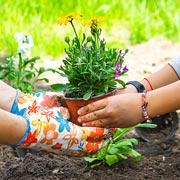 With World Bee Day arriving on the 20th of May and National Children’s Gardening Week arriving on the 24th, it’s an excellent time for a flower-growing activity for children — including under-fives. More specifically, the growing of bee-friendly flowers — from seeds — will be an excellent way to celebrate World Bee Day and support these adorable little creatures. Bees, butterflies, and other pollinators are incredibly important for the world, being largely responsible for pollinating the crops, including nuts, seeds, fruits and vegetables, that we rely on for food. Yet they are under threat with numbers dwindling severely in recent years. Without bees and other pollinators, the world’s animals, plants, trees, and flowers would be in real danger. Today’s bee-friendly flower-growing activity is therefore an incredibly worthwhile one for children to get involved in. It’s fun, highly educational for little ones, and will help to make the world a better place! Little ones, let’s get growing!
 Unless seeds are available from friends and family or harvests from previous years, parents of under-fives will need to source them. However, that’s easy and can be incredibly inexpensive. Most supermarkets sell seed packets and, if not, there is a whole range of online stores to choose from (
 If children are going with our recommended second option, they will first need to read packets to ensure their timing is right. For seed trays, they can use inexpensive, commercially available seed trays or use smaller options like flower pots. Another free alternative is to use repurposed margarine tubs, yoghurt pots, or similar. Whichever option they choose will need drainage holes added underneath by supervising parents plus a drip tray of some kind. Whether that’s a commercial one or something as simple as a saucer is up to families.
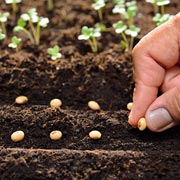 Once the soil is layered into the seed trays or pots, to a level an inch or so below the top, children can indent the soil/compost for the seeds to go into. Seeds can be manually spaced out into these indents so that, once they grow, the individual plants will be easily separated. We suggest scattering a shallow layer of sieved soil or compost over the seeds once placed into the indents and given a sprinkling of water.
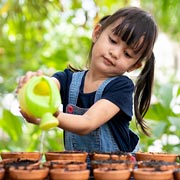 Children should continue to water the seedlings regularly, when needed, and may also have to thin out any ‘clumps’ or plants that are too close together, otherwise, several plants may get tangled and have to compete with one another unnecessarily.
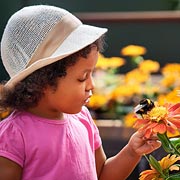
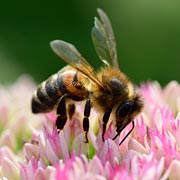 Once flowers appear, children can expect pollinators like honey bees, bumblebees, butterflies, and hoverflies to appear. It’s going to be magical for children when that day first arrives! Bees and the other pollinators truly are delightful and adorable. Children should look but not touch*, after all, bees have important work to do!
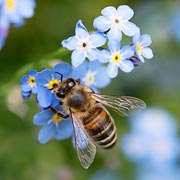 This activity will raise awareness of bees and pollinators in children of all ages. It’s not only a wonderful way to introduce children to these adorable creatures, but also a great opportunity to raise awareness of the plight bees and pollinators are facing. They are under severe pressure from habitat loss, global warming, the use of harmful pesticides/weedkillers, pollution, invasive predators, and many other threats that have made their populations plummet in recent years.

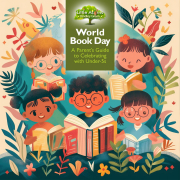

 World Book Day is a special charitable event, celebrated globally, that encourages children of all ages to discover the joy of reading. Why? Because reading has the power to substantially improve children’s lives. Schools, nurseries, and libraries across the nation make the day extra special for children through storytelling sessions, fancy dress, and book-related activities.
 Find time for your little one to read.
 Dress up as a favourite character! There’s no need for elaborate costumes; a simple hat, crown, or themed outfit inspired by a beloved book character can bring your child’s favourite stories to life.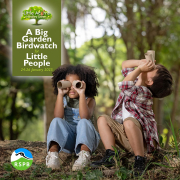

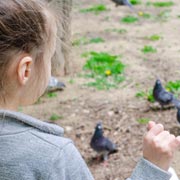 Families, set your diaries for the wildlife event of the year, which happens this January from Friday the 24th to Sunday the 26th inclusive. It’s free, takes just one hour, and allows children and adults to be part of the world’s biggest garden wildlife survey. During the event, families and individuals across the nation simply count the birds they spot in the garden, park, local green space, or even balcony over the course of 60 minutes. The results of hundreds of thousands of these surveys are compiled by the Royal Society for the Protection of Birds (RSPB) to build a picture of the health of the nation’s bird populations. It’s important scientific and ecological work and children can become citizen scientists if they simply take part. Learn more about the Big Garden Birdwatch and how to take part in today’s guide for families with children.
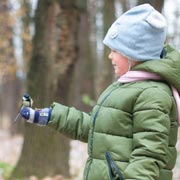 Children will love being involved in this important nature-based activity. They’ll not only play their part in helping birds and nature, but they’ll also have fun and learn something along the way. They will discover some of the many wonderful feathered visitors who live in their neighbourhood and learn about some of the important issues affecting the natural world. They’ll begin to grasp the impact of humans on Britain’s flora and fauna and learn the importance of conservation and looking after the natural world around them. Through this endeavour, they’ll learn how they can make a positive difference. They will also become little citizen scientists! It’s fun, educational, and will give them a wonderful sense of achievement too. It may even change their outlook over the long term and help them think about their own impact on the planet, which is a wonderful outcome. And last but not least,
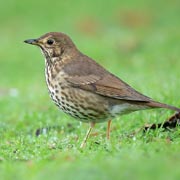 Once the chosen time and date arrive, all you/your children need to do is monitor birds landing on your chosen patch. Count those that actually land rather than any flying otherwise there’s a danger that one bird could be counted multiple times. What you need to record for the survey, though, is the largest number of each bird species that have landed at any one time during the hour. So, for example, if you spot two blackbirds that have landed at the same time in the first half hour, but later in the hour you can see 4 that have landed at the same time, then you need to record “4” for blackbirds.

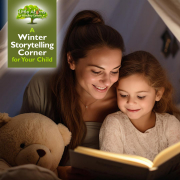
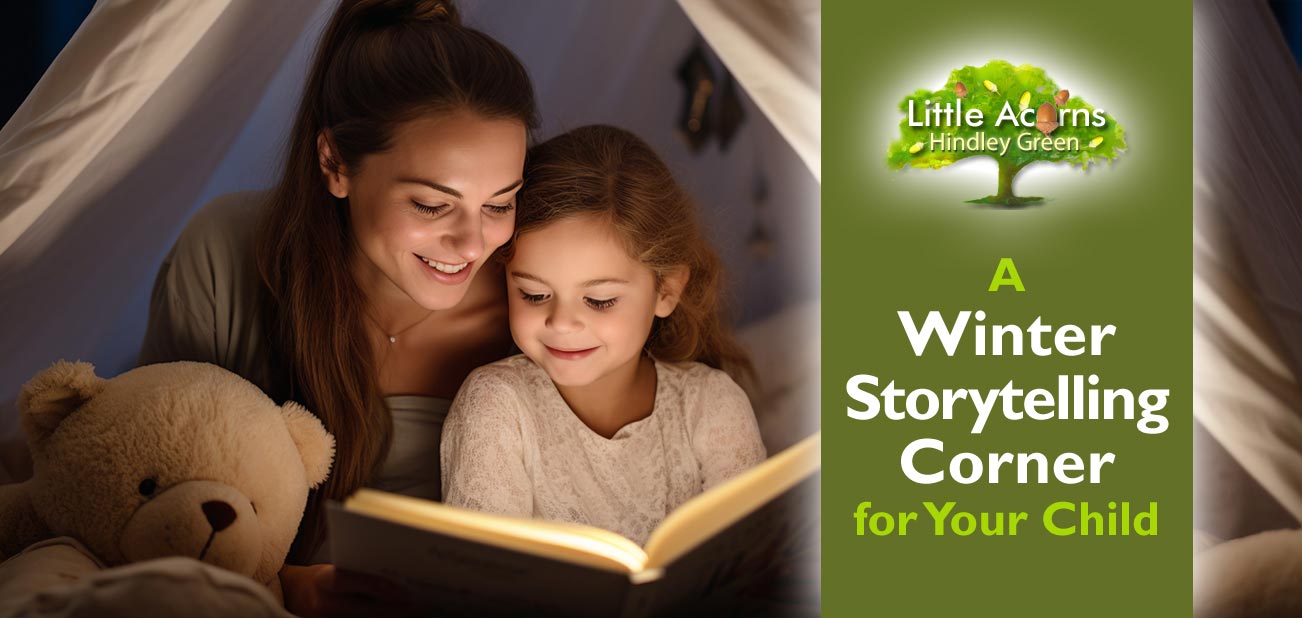
 Once winter arrives in December and cold winds start to breathe the landscape to sleep for a season, little ones will be less inclined to venture outdoors. Parents, too, will no doubt appreciate them avoiding the rain, cold, and inclement conditions that may occur. As such, winter is the perfect time to transform dreary days and dark evenings into a haven of warmth and cosiness indoors. An enchanting children’s activity that goes hand-in-hand with this is that of storytelling. With that in mind, today’s post guides you through the delightful process of creating a Winter Storytelling Corner tailored for the youngest members of the family. A storytelling corner is a wonderful way to make these winter nights cosy, magical, and filled with high-quality shared moments. Shared
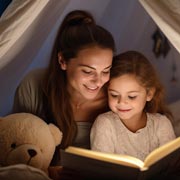
 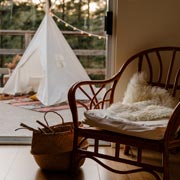 Start by selecting a cosy corner or nook in your home – for example, a secluded and quiet space somewhere that’s away from busy activity, cold draughts and suchlike. It will need to have somewhere comfortable for you and your child(ren) to sit or ‘nest’ once you get to the storytelling part. Once you’ve found somewhere suitable, it could be adorned with soft blankets, plush cushions, and perhaps even a few twinkling fairy lights. The goal is to create an inviting spot that beckons little ones and you, their parent or caregiver, to snuggle up and feel the warmth together as the winter tales unfold.
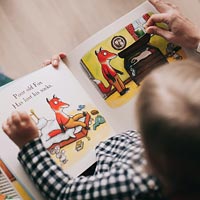 Curate a collection of timeless winter stories that capture the spirit of the season. Consider classics like “The Snowman” by Raymond Briggs or “The Mitten” by Jan Brett. These stories, with their simple yet captivating narratives, are perfect for engaging young minds and sparking their imagination. These are just a couple of examples, though, and there are lots of winter-themed books to choose from, whether online, in book stores, in charity shops, or swapped amongst family or friends.
 Perhaps incorporate simple props that relate to the story. If the tale involves animals, have soft toy animals on hand for little ones to interact with as the story unfolds. Other alternatives are hand puppets and finger puppets. Try using them to act out characters from the stories as you read them, or get your child to do so. Adding an interactive and visual element in this way will encourage children to participate actively and immerse themselves in the storytelling process. This approach can be creative, captivating, and sometimes even comical. As such, this is very entertaining for children and will help to make the whole activity enjoyable and fulfilling.
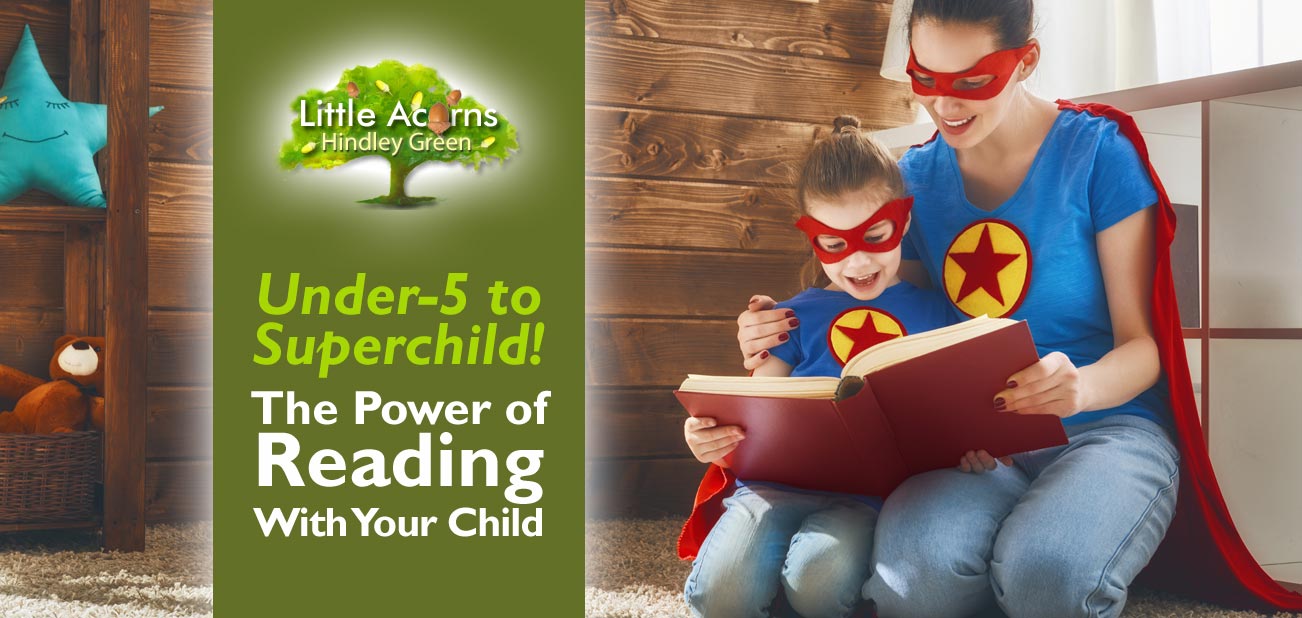
 In the journey of childhood development, there is a simple yet powerful tool that supercharges learning, imagination and even life outcomes: reading with your child. While a magical connection with books is a cherished tradition in many families, it is also a proven way to optimise a child’s cognitive and emotional development — and even to give some a social boost. With that in mind, we explore today the incredible benefits of reading with children in the early years and learn how study after study has proven how transformational it is to their lives.
 One of the most notable benefits of early reading is the rapid expansion of a child’s vocabulary. Indeed, research suggests that children who are exposed to a diverse range of words in books tend to perform better in language assessments, spelling, and overall literacy development. With reading to children opening up whole new worlds of information and vocabulary to them, this positive outcome makes total sense.
 Reading with children also contributes to the development of enhanced empathy and emotional intelligence. Stories often feature characters experiencing a variety of emotions, and by engaging with these stories, children learn to empathise and connect with the feelings of others. That’s because exposure to complex characters and their emotional experiences in books helps children better understand and relate to the emotions of people in their real lives.
 Reading is not just about the words on the page; it’s also about the quality time you spend together. The connection you build during reading sessions is priceless, fostering stronger bonds between you and your child.
