

 Wherever you look, nature’s flowers and trees are bursting with life during spring and summer. This got us thinking about the many nature-based activities that are possible for children and under-5s to enjoy at this time of year — under appropriate supervision, of course. One of them is a simple leaf-hunting activity that’ll get little ones exploring the outdoors, enjoying the fresh air, having some fun, and learning about the natural world. With this in mind, we’ve put together a Leaf Scavenger Hunt reference poster for children and families. It can serve as inspiration for some common leaves to look out for during the warmer months of the year. The poster is free to download, right here today, and highlights 16 different types of leaves. Included are oak, sycamore, beech, lime and many more. Children will probably be familiar with some — especially oak leaves with their wonderful little acorns — while others may be unfamiliar. However, all of our examples were sourced on a single morning’s outing, so it’s feasible to find all 16 kinds with a bit of eagle-eyed persistence! So, download the poster for your children, print it out, and explore the outdoors to see how many of the 16 leaf types your little one can find. See if they can identify the differences which make each species of leaf/tree/plant unique — and learn their names if they can. The free identification poster and some help from an adult should help. Have fun out there!
Download the Free Leaf Scavenger Hunt Poster
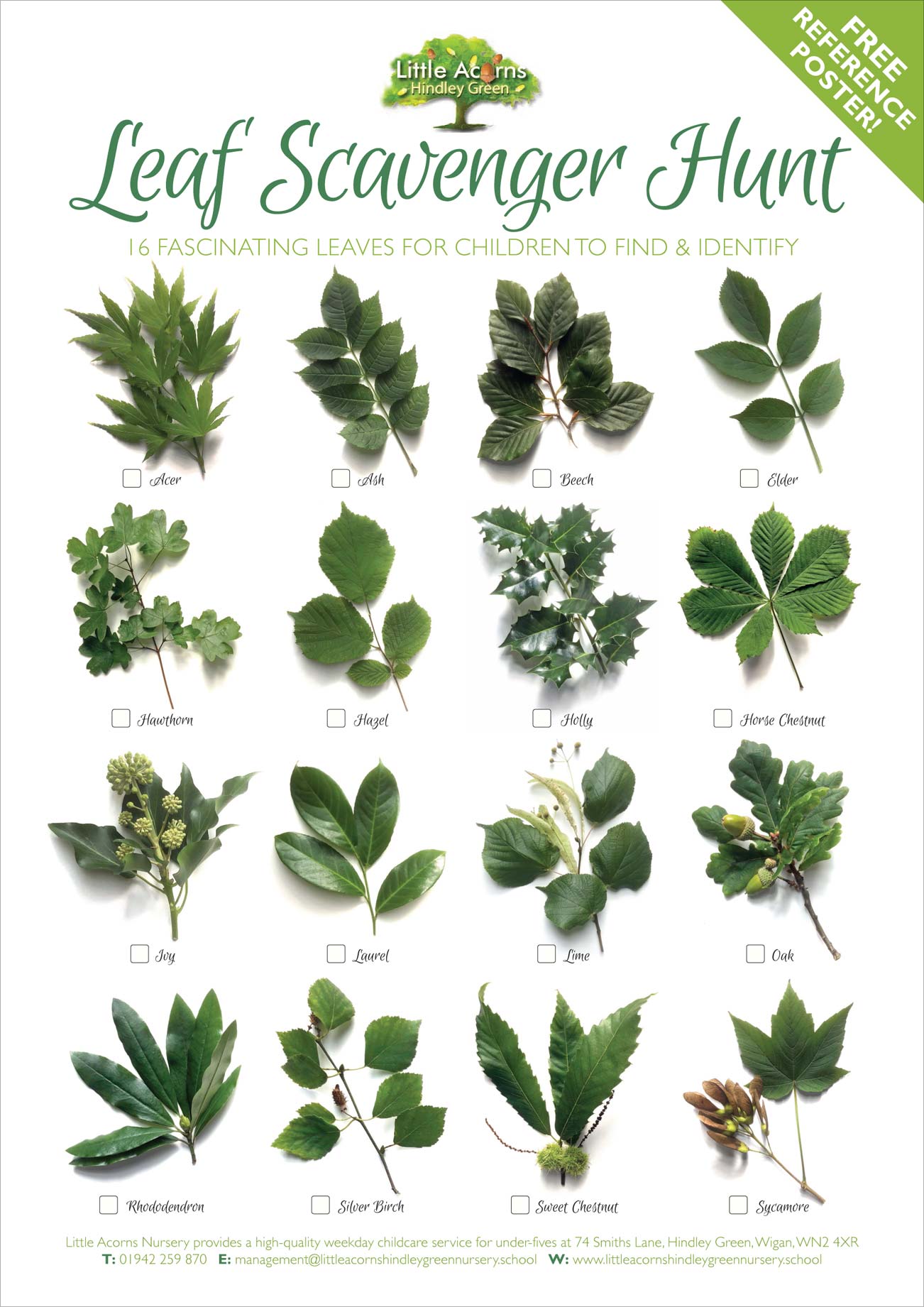
Download a high-resolution version of the reference poster by clicking the preview image below (left- or right-click, depending on your specific browser settings). Children can also zoom in on their device’s screen if they would like to see more detail.
Identification Tips
 Some of the leaves will be easier to identify than others. For example, Horse Chestnut (a.k.a. ‘conker tree’) leaves are quite distinctive with their fan of multiple sections (see the 2nd row, last image on the right on the poster for our example). In contrast, hazel and lime leaves are quite similar to one another. One easy clue to tell them apart is that lime leaves are slightly shiny, whereas hazel leaves are extremely matt. And, of course, they have very different seeds once those appear (the lime seed clusters are quite beautiful as you can see on the poster in the 3rd row, 2nd image from the right).
Ash and Elder may initially also be harder to tell apart. However, children will soon note that Ash leaves have many more ‘compound’ leaves on each stem (up to 15) compared to Elder leaves, which tend to have between just 5 and 7. See the top row of the poster to compare them.
Ivy leaves, meanwhile, are one of the more distinctive leaves that often form a blanket over tree trunks, buildings, or garden sheds. Children can tell they’re ivy easily as they have clusters of unique flowers brimming with pollinators from summer onwards (see the first image on the 3rd row).
Leaves are Not Only Green
 Another interesting factor to point out to children is that some of the leaves come in different colours. Beech leaves, for instance, can be green or deep burgundy, brown or dark purple depending on which variety of beech a child locates. It’s similar for acers, which can be green, yellow, red or a deep purple/maroon. Acers however, are more likely to be found in gardens and parks than in the countryside. Some are a little like miniature sycamores, only rather more delicate and fancy! And, come autumn, they also have ‘winged’ seeds like sycamores. Soon after this, deciduous leaves will turn brown for the autumn leaving only evergreens remaining green — as the name suggests — over the winter. Nature is fascinating and very educational!
The Wonders of Nature
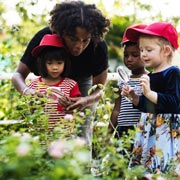 This activity is a great opportunity for children to open their eyes to the natural world. By looking at nature more deeply, they’ll see the finer details that may have been overlooked. Nature is incredibly varied and interesting when you take the time to look closely and discover it properly. It’ll teach children about the natural world, the seasons, the changes in plants and trees at different times of the year, the circle of life, and so much more. Getting out, close to nature, is also incredibly beneficial to children. From busting stress, improving well-being, supporting the EYFS and boosting exercise, to improving concentration and even academic grades, nature’s benefits are immense for children as well as adults. Click the bold green link to learn more.
So, download the free Leaves Scavenger Hunt reference poster today and get outdoors to explore, discover, learn, and have fun with your little one in the Great Outdoors. It’s called Great for a good reason — enjoy!
More Leaf Activity Ideas!
 Once children have collected them, leaves can inspire various other creative activity ideas for children. For example, has your child ever tried leaf rubbing (putting a leaf under paper and scribbling over it to reveal the leaf structure), leaf pressing (pressing leaves between pages of a heavy book to allow them to dry and flatten), or leaf printing (painting a leaf with paint then pressing it onto paper to offset the leaf’s form as an image)? These are just a few examples of the fun and creative activities children can do with leaves. Follow the bold green link for lots more!
Little Acorns Nursery: Weekday Childcare in Hindley Green, Wigan


Little Acorns is a nursery in Hindley Green, near Wigan, Greater Manchester. Recognised by Ofsted as a Good Provider, the setting offers high-quality weekday childcare from 7:30 am to 6 pm throughout the year (excludes bank holidays and one week over Christmas). Our extended opening hours provide convenience for working parents who need wraparound care for children. We also support free childcare hours for eligible children including babies as young as just 9 months, via the government’s childcare funding schemes. If you’d like to explore the possibility of your child attending this fabulous setting, please get in touch by using one of the options below. We’ll be delighted to meet both you and your child, show you around the setting, and answer any questions. Please choose a button to get started:
Little Acorns Nursery is located in Hindley Green, so it may also be a convenient choice for families requiring childcare near Wigan, Atherton, Leigh, Ince-in-Makerfield, Platt Bridge, Westhoughton, Bickershaw, Tyldesley, and Bolton.
Parental Supervision & Safety Reminder
Some leaves, like holly leaves, require particular care as they are usually very prickly. Other leaves may also present a hazard for some other reason. Examples include possible choking hazards (toddlers and the youngest children should steer clear of acorns, for example) or poisonous berries that can appear on some trees and bushes at certain times of the year. So, adult supervision is essential for this activity, especially for the youngest. Young children should be accompanied when outside exploring parks and the countryside (we plan to write a separate blog post about child safety outdoors, so watch this space). They should also be taught to keep their hands away from their mouths and wash them thoroughly with soap and water once outdoor activities are over.
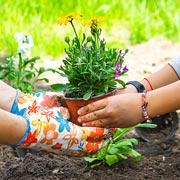 With World Bee Day arriving on the 20th of May and National Children’s Gardening Week arriving on the 24th, it’s an excellent time for a flower-growing activity for children — including under-fives. More specifically, the growing of bee-friendly flowers — from seeds — will be an excellent way to celebrate World Bee Day and support these adorable little creatures. Bees, butterflies, and other pollinators are incredibly important for the world, being largely responsible for pollinating the crops, including nuts, seeds, fruits and vegetables, that we rely on for food. Yet they are under threat with numbers dwindling severely in recent years. Without bees and other pollinators, the world’s animals, plants, trees, and flowers would be in real danger. Today’s bee-friendly flower-growing activity is therefore an incredibly worthwhile one for children to get involved in. It’s fun, highly educational for little ones, and will help to make the world a better place! Little ones, let’s get growing!
 Unless seeds are available from friends and family or harvests from previous years, parents of under-fives will need to source them. However, that’s easy and can be incredibly inexpensive. Most supermarkets sell seed packets and, if not, there is a whole range of online stores to choose from (
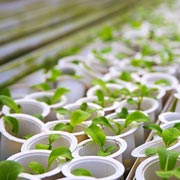 If children are going with our recommended second option, they will first need to read packets to ensure their timing is right. For seed trays, they can use inexpensive, commercially available seed trays or use smaller options like flower pots. Another free alternative is to use repurposed margarine tubs, yoghurt pots, or similar. Whichever option they choose will need drainage holes added underneath by supervising parents plus a drip tray of some kind. Whether that’s a commercial one or something as simple as a saucer is up to families.
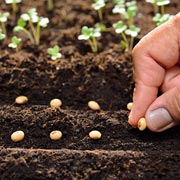 Once the soil is layered into the seed trays or pots, to a level an inch or so below the top, children can indent the soil/compost for the seeds to go into. Seeds can be manually spaced out into these indents so that, once they grow, the individual plants will be easily separated. We suggest scattering a shallow layer of sieved soil or compost over the seeds once placed into the indents and given a sprinkling of water.
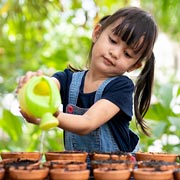 Children should continue to water the seedlings regularly, when needed, and may also have to thin out any ‘clumps’ or plants that are too close together, otherwise, several plants may get tangled and have to compete with one another unnecessarily.
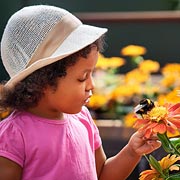
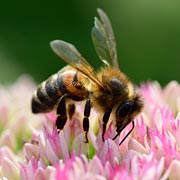 Once flowers appear, children can expect pollinators like honey bees, bumblebees, butterflies, and hoverflies to appear. It’s going to be magical for children when that day first arrives! Bees and the other pollinators truly are delightful and adorable. Children should look but not touch*, after all, bees have important work to do!
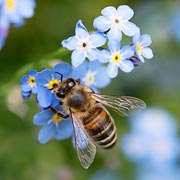 This activity will raise awareness of bees and pollinators in children of all ages. It’s not only a wonderful way to introduce children to these adorable creatures, but also a great opportunity to raise awareness of the plight bees and pollinators are facing. They are under severe pressure from habitat loss, global warming, the use of harmful pesticides/weedkillers, pollution, invasive predators, and many other threats that have made their populations plummet in recent years.

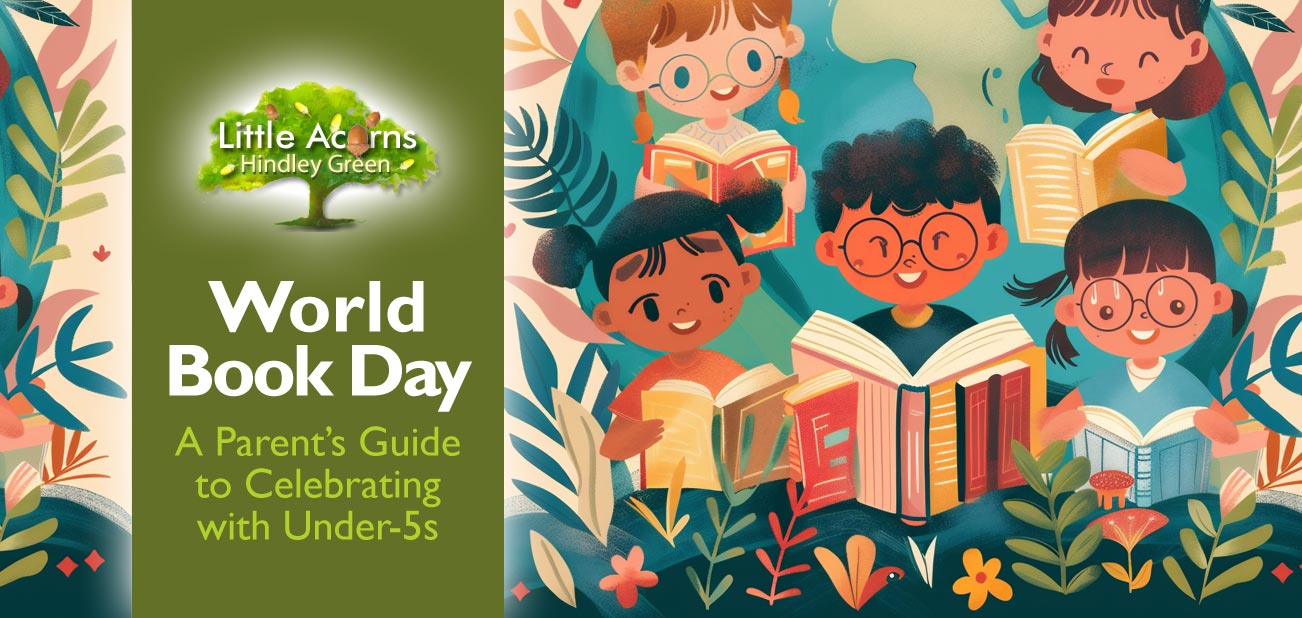
 World Book Day is a special charitable event, celebrated globally, that encourages children of all ages to discover the joy of reading. Why? Because reading has the power to substantially improve children’s lives. Schools, nurseries, and libraries across the nation make the day extra special for children through storytelling sessions, fancy dress, and book-related activities.
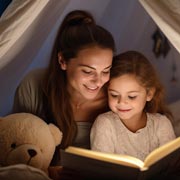
 Find time for your little one to read.
 Dress up as a favourite character! There’s no need for elaborate costumes; a simple hat, crown, or themed outfit inspired by a beloved book character can bring your child’s favourite stories to life.

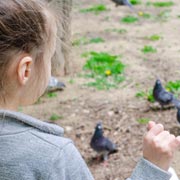 Families, set your diaries for the wildlife event of the year, which happens this January from Friday the 24th to Sunday the 26th inclusive. It’s free, takes just one hour, and allows children and adults to be part of the world’s biggest garden wildlife survey. During the event, families and individuals across the nation simply count the birds they spot in the garden, park, local green space, or even balcony over the course of 60 minutes. The results of hundreds of thousands of these surveys are compiled by the Royal Society for the Protection of Birds (RSPB) to build a picture of the health of the nation’s bird populations. It’s important scientific and ecological work and children can become citizen scientists if they simply take part. Learn more about the Big Garden Birdwatch and how to take part in today’s guide for families with children.
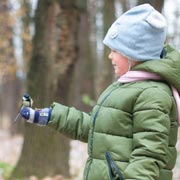 Children will love being involved in this important nature-based activity. They’ll not only play their part in helping birds and nature, but they’ll also have fun and learn something along the way. They will discover some of the many wonderful feathered visitors who live in their neighbourhood and learn about some of the important issues affecting the natural world. They’ll begin to grasp the impact of humans on Britain’s flora and fauna and learn the importance of conservation and looking after the natural world around them. Through this endeavour, they’ll learn how they can make a positive difference. They will also become little citizen scientists! It’s fun, educational, and will give them a wonderful sense of achievement too. It may even change their outlook over the long term and help them think about their own impact on the planet, which is a wonderful outcome. And last but not least,
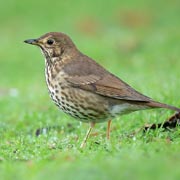 Once the chosen time and date arrive, all you/your children need to do is monitor birds landing on your chosen patch. Count those that actually land rather than any flying otherwise there’s a danger that one bird could be counted multiple times. What you need to record for the survey, though, is the largest number of each bird species that have landed at any one time during the hour. So, for example, if you spot two blackbirds that have landed at the same time in the first half hour, but later in the hour you can see 4 that have landed at the same time, then you need to record “4” for blackbirds.

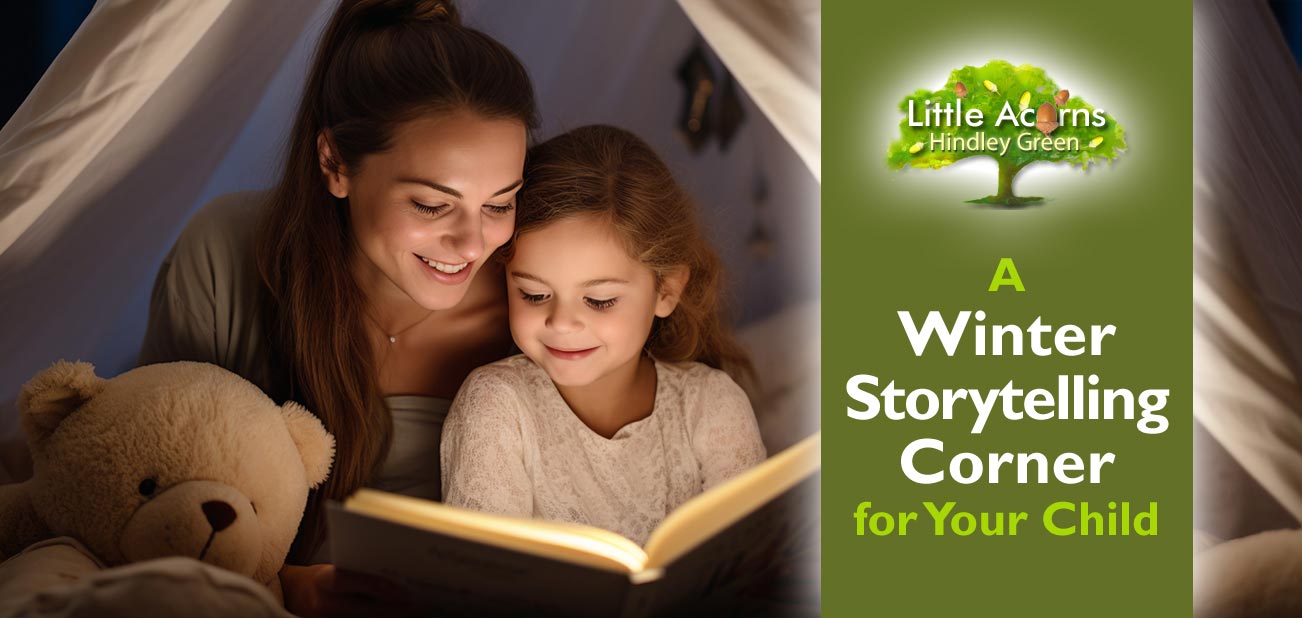
 Once winter arrives in December and cold winds start to breathe the landscape to sleep for a season, little ones will be less inclined to venture outdoors. Parents, too, will no doubt appreciate them avoiding the rain, cold, and inclement conditions that may occur. As such, winter is the perfect time to transform dreary days and dark evenings into a haven of warmth and cosiness indoors. An enchanting children’s activity that goes hand-in-hand with this is that of storytelling. With that in mind, today’s post guides you through the delightful process of creating a Winter Storytelling Corner tailored for the youngest members of the family. A storytelling corner is a wonderful way to make these winter nights cosy, magical, and filled with high-quality shared moments. Shared
  Start by selecting a cosy corner or nook in your home – for example, a secluded and quiet space somewhere that’s away from busy activity, cold draughts and suchlike. It will need to have somewhere comfortable for you and your child(ren) to sit or ‘nest’ once you get to the storytelling part. Once you’ve found somewhere suitable, it could be adorned with soft blankets, plush cushions, and perhaps even a few twinkling fairy lights. The goal is to create an inviting spot that beckons little ones and you, their parent or caregiver, to snuggle up and feel the warmth together as the winter tales unfold.
 Curate a collection of timeless winter stories that capture the spirit of the season. Consider classics like “The Snowman” by Raymond Briggs or “The Mitten” by Jan Brett. These stories, with their simple yet captivating narratives, are perfect for engaging young minds and sparking their imagination. These are just a couple of examples, though, and there are lots of winter-themed books to choose from, whether online, in book stores, in charity shops, or swapped amongst family or friends.
 Perhaps incorporate simple props that relate to the story. If the tale involves animals, have soft toy animals on hand for little ones to interact with as the story unfolds. Other alternatives are hand puppets and finger puppets. Try using them to act out characters from the stories as you read them, or get your child to do so. Adding an interactive and visual element in this way will encourage children to participate actively and immerse themselves in the storytelling process. This approach can be creative, captivating, and sometimes even comical. As such, this is very entertaining for children and will help to make the whole activity enjoyable and fulfilling.
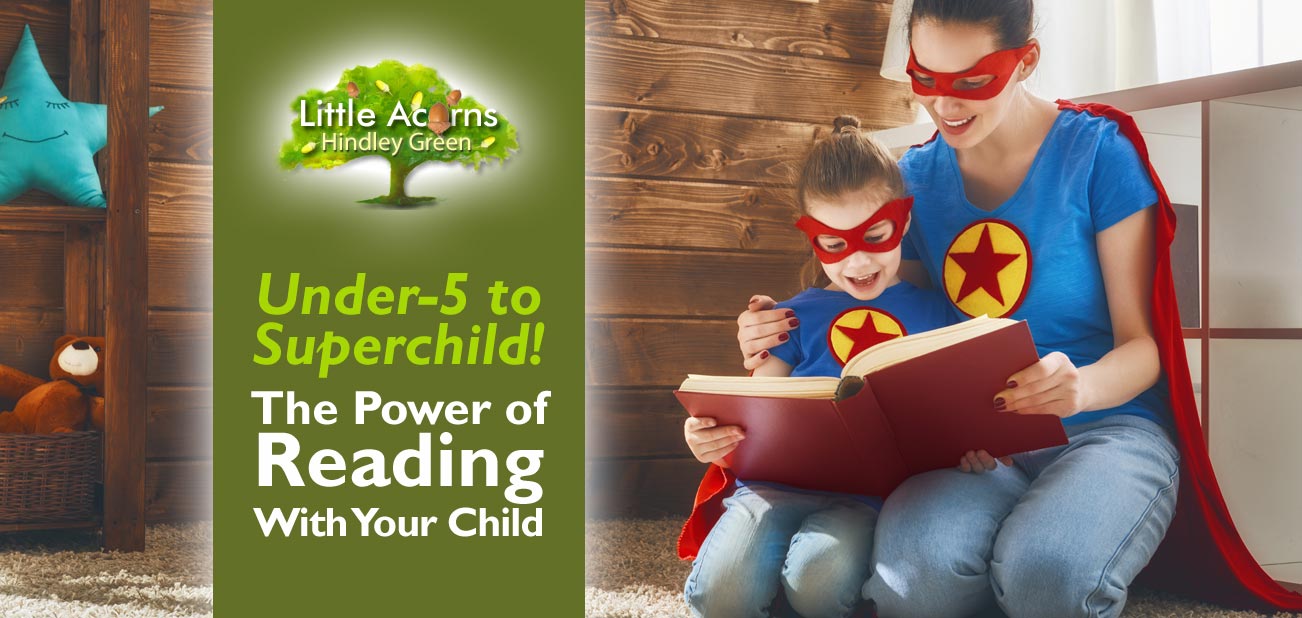
 In the journey of childhood development, there is a simple yet powerful tool that supercharges learning, imagination and even life outcomes: reading with your child. While a magical connection with books is a cherished tradition in many families, it is also a proven way to optimise a child’s cognitive and emotional development — and even to give some a social boost. With that in mind, we explore today the incredible benefits of reading with children in the early years and learn how study after study has proven how transformational it is to their lives.
 One of the most notable benefits of early reading is the rapid expansion of a child’s vocabulary. Indeed, research suggests that children who are exposed to a diverse range of words in books tend to perform better in language assessments, spelling, and overall literacy development. With reading to children opening up whole new worlds of information and vocabulary to them, this positive outcome makes total sense.
 Reading with children also contributes to the development of enhanced empathy and emotional intelligence. Stories often feature characters experiencing a variety of emotions, and by engaging with these stories, children learn to empathise and connect with the feelings of others. That’s because exposure to complex characters and their emotional experiences in books helps children better understand and relate to the emotions of people in their real lives.
 Reading is not just about the words on the page; it’s also about the quality time you spend together. The connection you build during reading sessions is priceless, fostering stronger bonds between you and your child.
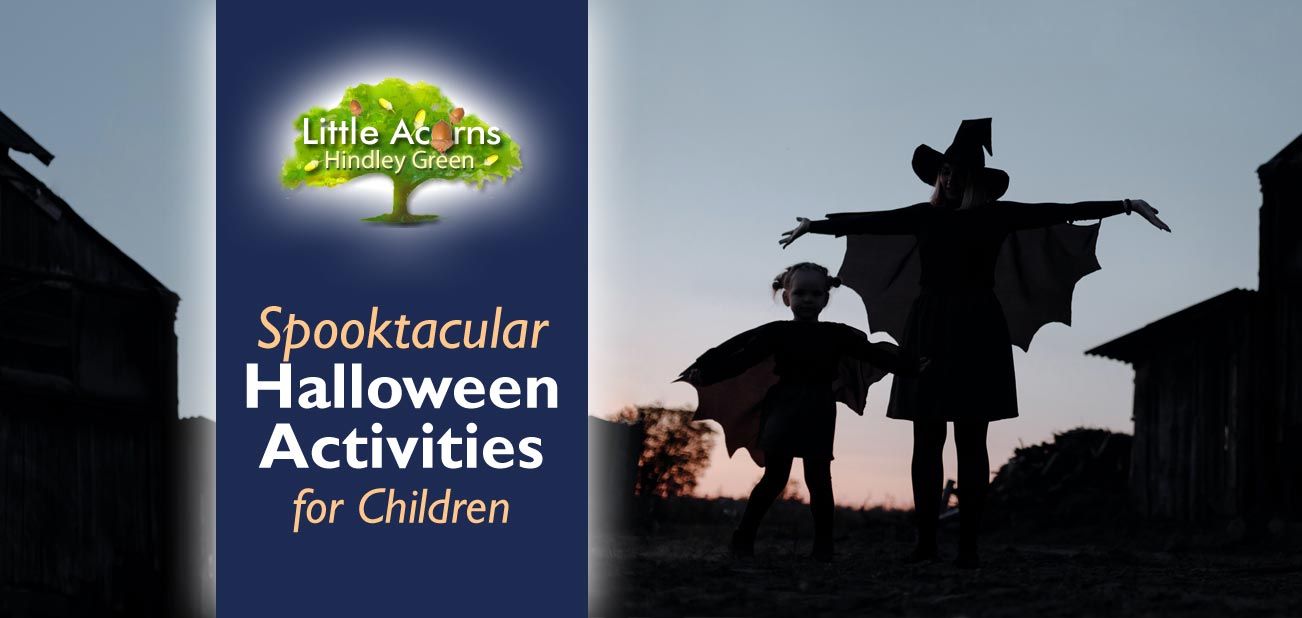
 Autumn’s arrival means that Halloween is just around the corner, coming on the 31st of October each year. The run-up to that date is a great time to start preparing for some fun Halloween activities for children to take part in. Whether dressing up for Halloween-themed parties, putting carved pumpkin lanterns and spooky decorations out at night, or playing Trick or treat locally, children of all ages will find Halloween a time of unique fun! It’s also a great opportunity for children to strengthen bonds with friends and for families to start getting creative! With that in mind, here are our top picks for spooktacular Halloween activities for kids!
 Dressing up in Halloween costumes is hugely popular amongst children. While purchasing costumes from stores is quick and easy, encouraging children to make their own Halloween costumes (with adult supervision) is likely to be not only cheaper but also much more fun. They’ll also be able to get creative and learn new skills in the process.
 Kids will also love dressing up as spiders. All they need is some black tights — or a pair of skinny trousers — and a black top that’s belted at the waist and then stuffed to make the ‘spider body’ fat. Extra spider legs can be made by stuffing more black tights and attaching them to the belt.
 Your children can take this a step further and add Halloween-themed food into the mix, so there’s something to nibble too!
 The Halloween tradition of ‘tick or treating’ has its roots in Medieval times. It is a playful remnant of the practice of “souling,” where the poor would go door-to-door during what was then known as ‘Allhallowtide’ (around All Saints’ Day and All Souls’ Day) asking for food in exchange for prayers for the deceased. Over the years, this evolved into what we now know as Trick or treat. Children, usually in full Halloween fancy dress, knock on neighbourhood doors and say Trick or treat? Then, homeowners typically give them sweets or other treats — or become the target of a playful trick from the children! It’s great fun for little ones, especially if one or more neighbourhood parents can organise the evening in advance. By doing so, the neighbours are warned and can opt out if they prefer. In this way, lots of fun, laughter and treats will ensue and nobody gets a trick that they weren’t expecting!
 Many towns and villages will have ‘pumpkin patches’ during October. These are typically found on local farms and similar that set a field aside, chock-full of pumpkins. Families can come along and children will be able to scour the field and pick their favourite pumpkin. They can take it home in exchange, usually, for an affordable fee. Such pumpkin patches often also have wonderful photo opportunities where children can pose amongst pumpkin displays. In this way, children enjoy a morning or afternoon activity at the farm and end up with a hand-picked pumpkin too.
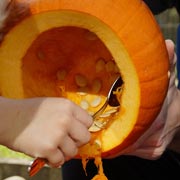 Hollowing out and carving spooky and creative faces into pumpkins is a classic Halloween activity enjoyed by thousands of families each year. For safety purposes, supervising adults will need to do any carving, though, as it’ll likely involve the use of a sharp knife. They can also loosen the seeds and flesh and then, if able, children can help to scoop it out. Once hollowed out and eyes, nose and mouth have been carved, children can have great fun decorating the outside and turning the pumpkin into a lantern using tea lights (again, under adult supervision or using LED lights for safety purposes). Nothing quite says ‘Halloween’ like a pumpkin face that glows in the garden at night. Children will naturally love the whole experience, end result, and feeling of accomplishment associated with this activity.
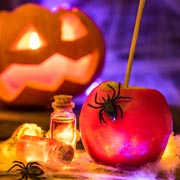 Families can combine all or just some of these Halloween activities into one event by hosting their very own Halloween party for friends, relatives and neighbours. With spooky fancy dress costumes, Halloween-themed decorations, flickering pumpkin lanterns, and themed food and drinks, it’s sure to be huge fun and a spooktacular evening for everyone! Ghostly music and ghoulish games can be added to the event too, perhaps along with a period where children and adults can tell spooky stories and ghost tales. What’s not to love?

