


Starting school is a huge milestone for families. If you’re a parent or guardian of a child who will soon reach the age of 3 in the UK, you’ll need to make an application for your child’s primary school very soon. Today’s guide is designed to help you understand just about everything you need to know about the process of obtaining a school place for your child and what to expect on National Offer Day — specifically for primary school places.
Primary School Offers Day: 16 April*
There are two key ‘school offers’ days each year. The first arrives usually on the 1st of March* and is for secondary school places. The second, which we’ll focus on in today’s guide, usually arrives on the 16th of April* each year and pertains to offers for primary school places in the UK.
* The exact date may be slightly later if the usual ‘offer’ date coincides with a public holiday or weekend. In such cases, the offer date will be delayed until the next working day. Note, too, that applying late, by post, or ‘in-year’ (for a start date other than in the September term) is likely to result in offers being received at a later date.
Apply for a Primary School Place at the Right Time
Whether you want your under-five child to start school at 4 or 5 (see below), you should make the application for a school place when they are 3 or, at the very latest, when they have just turned 4.
Should Children Start School at 4 or 5?
Starting Primary School at Age 4
Most children in the UK start in ‘Reception’ year at primary/infant school at the age of 4. This is before the age required by law and usually starts in the September term. For these children, families will need to have applied for their place between September of the previous year and the 15th of January in the year they begin.
Deferring until Age 5
However, children born between the 1st of April and the 31st of August can legally begin school a little later if their parent/guardian/carer so chooses. This could be, for example, if the child’s parents believe the child is not yet ready for the challenges associated with school.
What Does the Law Say About Starting School?
The law states that children reach what’s known as Compulsory School Age in the UK on the 31st of either December, March or August following their fifth birthday (whichever arrives soonest). It’s worth noting, however, that schools and admission authorities have the right to decide whether children starting at five (rather than four) will begin in Reception year one year later than most other children of their age, or skip Reception completely and go straight into Year One with their matching age group. The child’s best interests will affect the decision, including factors like their individual needs and abilities. More information about deferring until five is available here.
Applying for a Primary School Place
You can register an interest directly with your primary school of choice and indeed they can usually give you information about how to apply. However, registering an interest does not guarantee your child a place even if the school is attached to the nursery/preschool your child already attends. Ultimately you normally need to make the formal application through your local authority and this is usually best done online, as outlined below.
To start an application for primary school for your child, go to this Gov.uk address, enter your postcode, and click the green ‘Find’ button. The site will then match you with your local authority. For example, for those near our nursery in Hindley Green near Wigan, it resulted in a button linked to Wigan Metropolitan Borough Council’s ‘Primary School Admissions’ page. This, as per its equivalents for other areas, gives lots of information about applying for a primary school place together with all the appropriate hyperlinks for applications, appeals, further information, and suchlike.
As part of your application, you will have the opportunity to confirm, in order, your topmost preferred primary schools. Subject to there being available spaces, the order of your preferences will be taken into consideration when places are allocated. However, other factors outlined later in this guide are also likely to affect your child’s offer.
Applying Late
If you miss the 15th of January deadline for standard primary school places with a September term start, the local authority’s site will give you access to a ‘late application form’. Note, however, that applying after the 15th of January means your application will be processed after those received on time. The effect this will have on your application is that you will have a lower chance of getting a place at your preferred school — as many places are likely to have been allocated before the local authority came to process your (late) application.
Changing Your Mind
For anyone who changes their mind about their preferred school choice(s), your local authority website will also give you options and guidance. This may include online options but some may also require the use of a late application form which, if used after the 15th of January, may also give you a lower chance of receiving an offer for your child’s preferred school.
Criteria Affecting Primary School Offers
Local authorities will first process applications made on time, so those stand the best chance of success. Late applications will be processed after all the ‘on time’ applications have been allocated places.
Either way, the criteria affecting whether a child receives a primary school place at their preferred school may also include factors like the following:
- Their home’s proximity to the selected primary school;
- Whether your child has a sibling already at the school;
- Whether you, the parent, have worked at the school (2+ years);
- Whether it’s a faith school matching your child’s religion;
- Whether the child is eligible for the Pupil Premium or Service Pupil Premium.
- … and other potential factors.
If, for any reason, your child is not offered a place at any of your preferred primary schools, your local authority will have to offer you a place at an alternative school. This will usually be the closest available school to your child’s home. However, it’s worth noting that such a scenario is quite rare, with only 1.4% of applicants not receiving offers from one of their ‘preferred’ schools in 2023.
Primary School Offers & National Offer Day
The majority of applicants, particularly those who applied on time, will receive primary school offers on National Offer Day, which arrives on 16 April or soon afterwards if that falls on a weekend or public holiday. Those who included an email address as part of their application will receive offers during that day while those who are informed via post may receive offers via 2nd Class post a couple of days or so later. However, some local authorities also allow parents to log into a portal to view primary school offers.
Accepting, Rejecting or Appealing a Primary School Offer
Primary school offer confirmations will include a deadline by which the offer must be accepted if that’s the parent’s intention. Failure to accept an offer by that date may mean that the primary school place is instead offered to someone else, for example, a child on a waiting list for that school (we’ll come to waiting lists shortly).
If you are one of the small proportion of families who did not receive an offer from a preferred primary school, you can appeal the decision and offer confirmations will include details about the appeals process. Learn more about appeals here. However, it’s usually wise to first accept any offer provided so that, if your appeal is rejected, your child has a school place to fall back on. Doing so should not affect the outcome of your appeal.
Waiting Lists
Waiting lists are an option for those families who:
- don’t receive an offer for a preferred primary school, or;
- receive no school offer at all (rare), or;
- decide they simply want to switch to a different primary school for one reason or another.
To apply to be put on a school’s waiting list, contact your local authority and perhaps also register your interest directly with the school itself, so they are aware. Having an existing school offer/place does not preclude you from going on an alternative school’s waiting list, by the way.
Good Luck from Little Acorns Nursery School, Hindley Green, Wigan
We hope you receive the ideal primary school place for your child when the offer day finally arrives.


The staff at Little Acorns Nursery in Hindley Green wish all families with children starting primary/infant school the best of luck on primary school offers day. We do hope everyone receives an offer for their preferred school.
We’re convinced that all preschoolers leaving Little Acorns to begin school will have the very best start, having become as ‘school-ready’ as possible during their time with us. This preparation will help them to really hit the ground running from the moment they arrive at school. For tips on how best to prepare your child for starting school, don’t miss our guide Tips for a Smooth Transition to Reception.
Meanwhile, if you have a baby, toddler or preschooler that requires high-quality childcare and a good ‘early years’ education near Hindley Green, Wigan, get in touch:
As well as offering a high-quality childcare service in Hindley Green, Wigan, WN2, we are also conveniently located for families in Bickershaw, Leigh, Atherton, Westhoughton, Ince-in-Makerfield, Platt Bridge, Tyldesley, and Bolton.
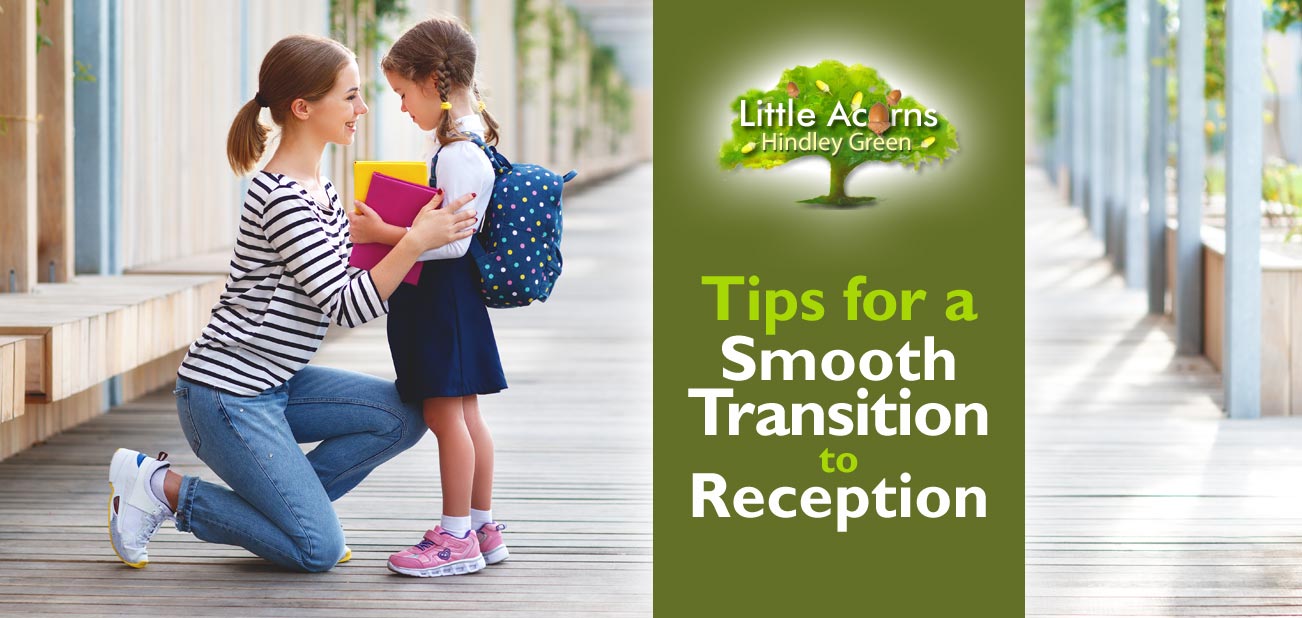
 The transition from preschool to Reception marks a significant milestone in any child’s life. It can be emotional for parents and, for children, it can be a period filled with excitement, curiosity, and perhaps a bit of apprehension. Ensuring a smooth transition involves a combination of careful planning, practical strategies and emotional support. With that in mind, today’s guide outlines more than twenty simple, actionable ways to ensure your child has a seamless transition and a positive start to school life.
 Use positive reinforcement to create a positive association with the idea of school. For example, highlight the exciting aspects of learning, making friends, playing new games, and discovering new things.
 Organise play dates with future classmates to build social connections before the first day. Encourage interactions with other children to develop essential social skills. Attending a nursery, preschool, or playgroup will provide excellent opportunities for this.
 Foster self-reliance by allowing your child to perform simple tasks like dressing themselves, tidying up, using the toilet, and organising themselves. Also, assign small responsibilities to them at home to instil a sense of accountability and responsibility. Such skills will serve them well once at school.
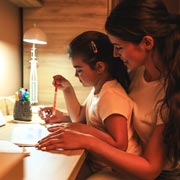 Read age-appropriate books together, particularly those that introduce topics they’ll be introduced to in Reception class. This not only sparks excitement and teaches them new things but also helps children understand what to expect. Instil a love for reading through interactive reading sessions. Visit the library too and explore a variety of books.
 Ensure that your child understands basic time concepts, such as morning, afternoon, and evening. This, in tandem with our next tip below, will help your child better understand the structure of the school day.
 Ensure your child can manage basic self-care tasks independently. Such skills will be invaluable to them once they have started school.
 Ensure sufficient sleep by establishing a calming bedtime routine. This not only gets them used to a pattern but will also help them to maintain focus and energy levels once at school.
 The journey from preschool to the first day of school is a significant milestone for both parent and child. Preparing children for school involves a holistic approach that addresses emotional, social, and practical aspects. By incorporating these strategies into your family’s daily routine, you can contribute to a positive and confident transition for your child and set the stage for the most successful start to their school journey.
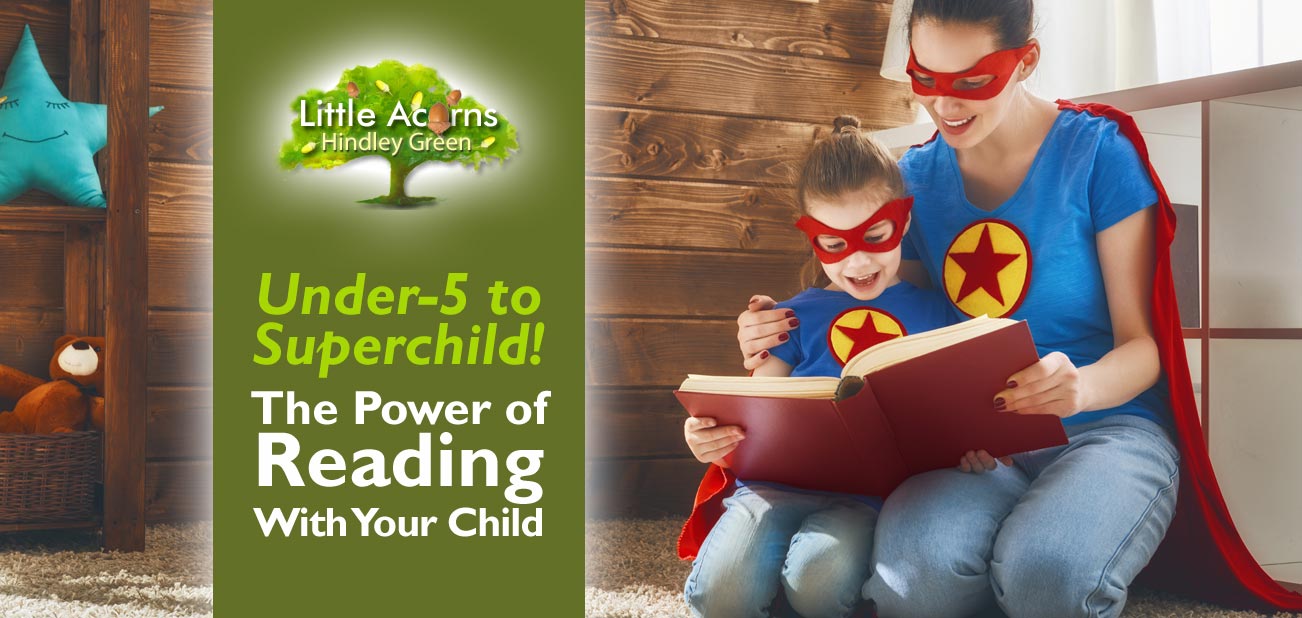
 In the journey of childhood development, there is a simple yet powerful tool that supercharges learning, imagination and even life outcomes: reading with your child. While a magical connection with books is a cherished tradition in many families, it is also a proven way to optimise a child’s cognitive and emotional development — and even to give some a social boost. With that in mind, we explore today the incredible benefits of reading with children in the early years and learn how study after study has proven how transformational it is to their lives.
 One of the most notable benefits of early reading is the rapid expansion of a child’s vocabulary. Indeed, research suggests that children who are exposed to a diverse range of words in books tend to perform better in language assessments, spelling, and overall literacy development. With reading to children opening up whole new worlds of information and vocabulary to them, this positive outcome makes total sense.
 Reading with children also contributes to the development of enhanced empathy and emotional intelligence. Stories often feature characters experiencing a variety of emotions, and by engaging with these stories, children learn to empathise and connect with the feelings of others. That’s because exposure to complex characters and their emotional experiences in books helps children better understand and relate to the emotions of people in their real lives.
 Reading is not just about the words on the page; it’s also about the quality time you spend together. The connection you build during reading sessions is priceless, fostering stronger bonds between you and your child.
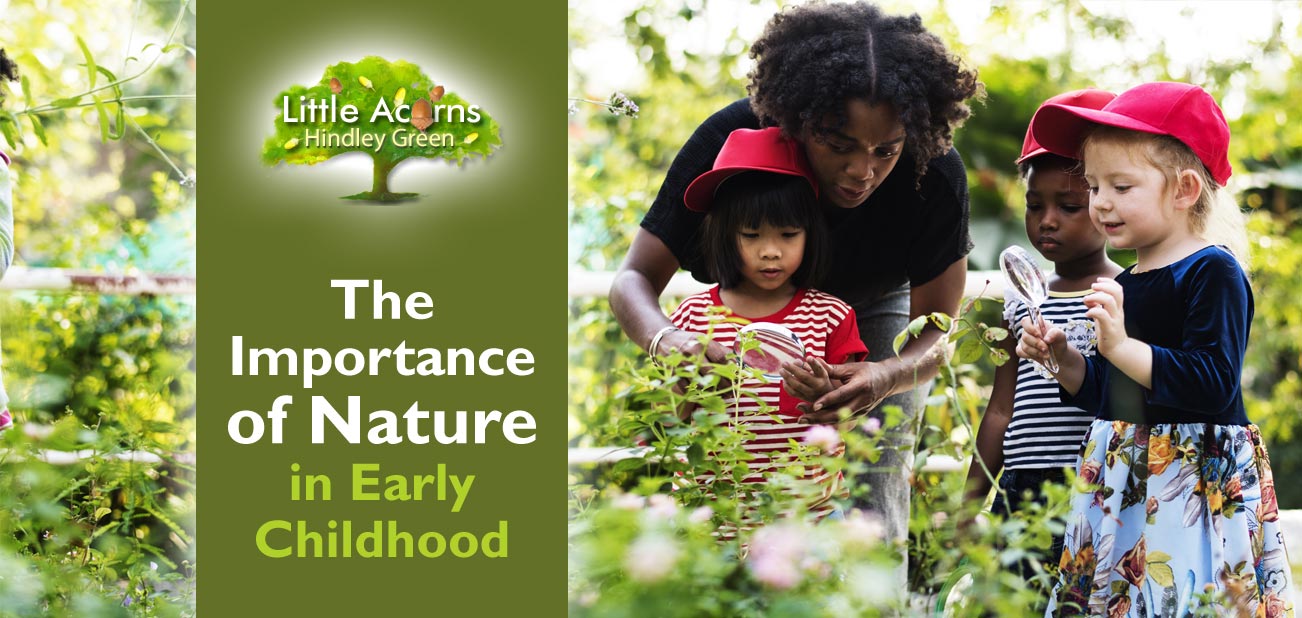
 As parents, we all want the best for our children. We strive to provide them with a nurturing and stimulating environment that supports their growth and development. However, in today’s fast-paced world, it’s easy to overlook the importance of nature in our children’s lives.
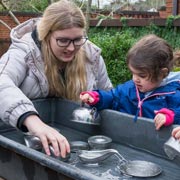
 Make time for outdoor play — set aside regular time for outdoor play and exploration. This can include visits to local parks, nature reserves, or your own back garden.
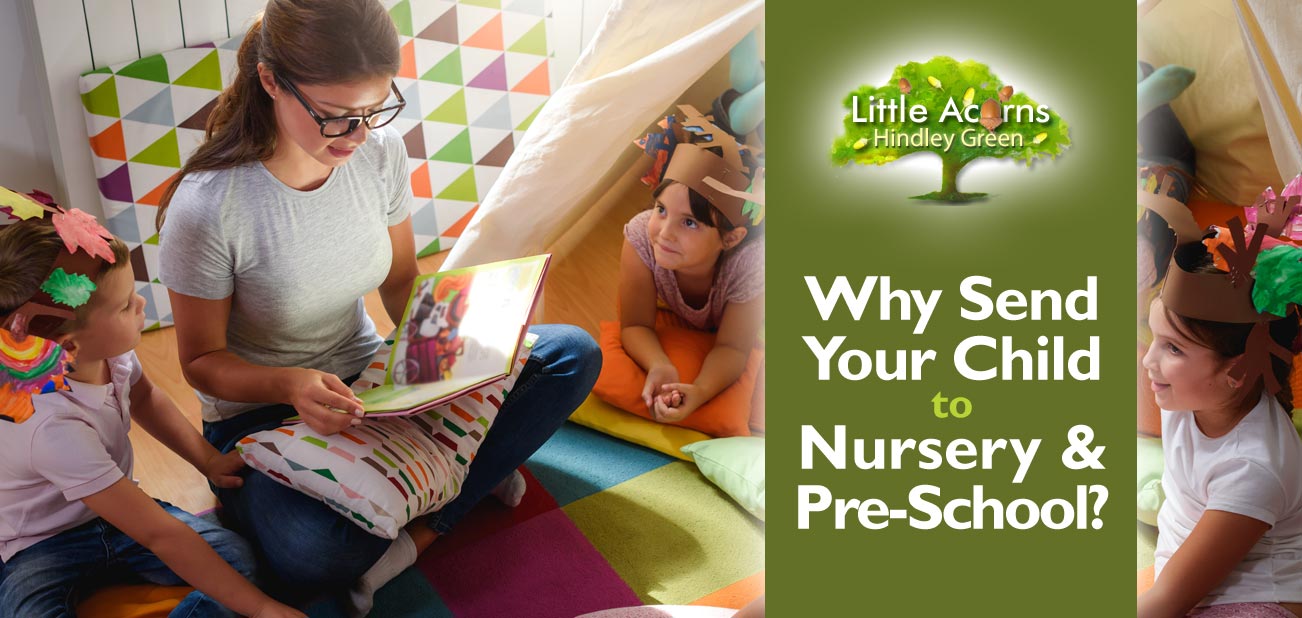
 Some may be surprised to learn that nurseries/pre-schools like Little Acorns are not simply “childcare services”. We’re way more than just a crèche, playgroup or a group of nannies or childminders. In reality, our services extend way beyond simply looking after children while parents go to work, although of course we do that too. The truth is that we benefit little ones and their families in a whole range of additional, often profound, ways and that’s what we look at today.
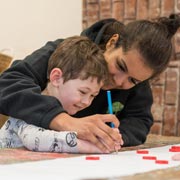 First of all, a Key Person will be allocated to your child on Day 1 when they start at the nursery. The Key Person is a childcare professional that will look out for the child’s wellbeing in all manner of different ways. One of the most important is in the monitoring of the little one’s progress in terms of learning and development. From the day they help to settle the child into the nursery to the day they leave for school, the child’s Key Person will be there to ensure that all the child’s individual needs are being met and that they are fulfilling their fullest potential in every area. Part of that will be the oversight of the bespoke early years education programme, which we’ll come to next.
 At Little Acorns Nursery, a bespoke early years learning and development programme will be designed and implemented to suit the strengths and any challenges for each individual child. This is orchestrated by the child’s Key Person and nursery staff and, where needed, through cooperation with any external professionals, e.g. for children that have any special educational or developmental needs. The learning and development programme is tailored to them and them only. Using this approach bolsters the child’s stronger areas, so they can be further strengthened, and addresses any weaker areas that may require extra focus. It is also adapted as time goes by, as progress is made by the child. In this way, every child gets to achieve personal bests and optimal outcomes in every area of their learning and development.
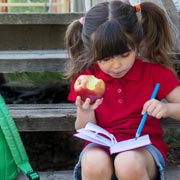 All of this nurturing, education and facilitation of their personal development does one other crucial thing too; it sets them up well for when they leave us around the age of five to start at primary school. By giving them the skills and tools they will need in every area, they are in a better position to absolutely thrive once they start school, right from day one. Indeed, many studies have shown that children who receive a good early years education go on to be higher achievers both at school and in their working lives. That’s gold dust, right there. Let’s take a closer look …
 ‘Hygge’, pronounced ‘Hue-gah’, is another exciting initiative happening at Little Acorns Nursery in Hindley Green. If you’ve not heard of it, rest assured that it’s something that children will absolutely love and will benefit them in many ways. It’s also something that we’ll be pioneering in the area, so you may not find it in other nurseries and pre-schools around Wigan right now.
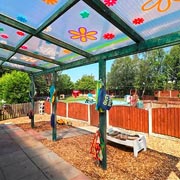 Everything at Little Acorns Nursery is there for a reason. It’s all been carefully brainstormed, pre-planned and implemented with utmost care. Whether it’s the introduction of Hygge, the addition of a new piece of equipment, or the purchasing of a specific toy or learning device, everything at Little Acorns has a purpose and is there to benefit the children.
 Parents of children at Little Acorns Nursery also give us great feedback about the wonderful childcare provision at the setting. Browse the site for full examples of parent feedback received (it’s scattered around the site) but, to give you a taster, comments include, “My girls absolutely adore this nursery but most of all they adore the staff”, “thank-you for the bottom of my heart for what you have done for my girls”, “I couldn’t recommend this nursery enough, they care and love the children like their own and I couldn’t of ever felt more comfortable leaving my children with a nicer set of girls.”, “I would not hesitate to recommend this nursery to anyone!”, “You should all be very proud of the work you do. It really means so much to us every time we see those small steps forward and we appreciate it.”, and “If I ever had any more children, without a doubt they will be coming to this nursery even if I moved 500 miles away!”.
 Starting nursery or pre-school is a real milestone for children and parents alike. As well as being exciting, though, transitioning to nursery or pre-school can be daunting for the little ones. The researching of childcare settings, checking Ofsted reports and appraising recommendations from friends is all very well, but that’s only the first step. The transition will be smoother for the children themselves if a few golden rules are followed. That’s precisely where today’s guide comes in, with our 20 Ways to Prepare Under-5s for Nursery. Take a look.
 Arrange a visit of your chosen or short-listed nurseries/pre-schools. Good settings (like Little Acorns Nursery) will be happy to give you and your child a guided tour. It’s best to go during an actual session, so that you can both see the setting in action on a standard day. Bear in mind that it can also be a chance for your child to become more familiar with the setting. If they later go on to start at the nursery, they will then already be aware of what the rooms look like, where the toilets are, who their carers are, and so on. Show them the play areas inside and out and let them see the other children having fun.
 There are several things you can also do around preparing your child for eating at nursery/pre-school. For starters, get your little one used to eating in a group of other children — perhaps with friends or related children at first. Also practise cutlery skills with your child, so they’re more able to eat independently when they start.
 Pre-joining visits and settling-in sessions are a great way for children to make friends at the setting, but parents can also orchestrate this outside of the nursery or pre-school. For example, by finding out which friends and neighbours send their children to the setting, they can then suggest some play dates with those children. Little ones will then see one or more friendly little faces welcoming them, right from the outset, once they start at the setting. It’s a good opportunity for children to learn the art of socialising. It’s also good for parents to network in this way, so they can compare notes and perhaps pool information they might otherwise have missed.
 Whether your child is potty/toilet trained or still in nappies, teach them to help themselves in this type of area. If they are not yet toilet trained and are ready for it, begin to teach them. It’ll stand them in better stead once they start at nursery/pre-school. If they are newly toilet trained, though, reinforce that accidents do happen and that the childcare staff are used to it and will help change them if so.
 A little independence will go a long way for them once children start at nursery or pre-school. Personal hygiene and toilet training is just one of many things they can help themselves with if they’re shown how.
 Childcare providers are more than just babysitters or a crèche. Settings like Little Acorn Nursery and many others offer a full early years education too. It’s very high quality, covering pretty much every aspect of early years learning and development and the all-important
  In the month or weeks leading up to your child’s start date, it’s a great idea to try to mimic the timings at the nursery, so that the routine is pre-embedded. So, try to get them used to getting up and getting dressed etc. at the same time as the nursery and they can even have a restful nap at the same time as nap sessions at the setting. An appropriate bedtime routine is also important, so that your child is energised and not tired once they begin at the nursery.
 Ensure that you are familiar with the pick-up and drop-off times as well as the nursery’s security arrangements should someone else be picking your child up instead of you.
 When the big day arrives for your child, don’t let on if you’re anxious or sad otherwise your child may pick up on it and become upset. So, keep it casual and don’t make a fuss when you drop them off for the first time. Staff and any friends they’ve previously made as part of your planning above are sure to welcome them. Chances are, they’ll run off into the nursery with a friend and have great fun right away anyway!
 Parents* of under-fives may have heard nurseries, pre-schools, childcare professionals and other parents referring to “the EYFS”. However, what is it, and how does it affect your children? Well,
  For early years practitioners in England, following the EYFS framework is not optional. It is actually enshrined in law in England, via Section 39 of the Childcare Act 2006, so is an important and binding entity. (Other parts of the UK have similar equivalents).
 Ensuring high levels of safeguarding, welfare and happiness for every child at an early years setting;
 Communication and Language;
 As they work towards their individual goals, assessments will be made, for each child, on a continuous basis. By assessing the children, the learning and development programme and the goals themselves can be tailored and fine-tuned along the way, as required. This will optimise each child’s progress and achievements.
 Ensure those who have access to children are suitable, safe, pre-vetted people;
 What’s more, the boost in the child’s success is clear to see at all stages — in the short term, medium term and long term — right into adulthood. When parents are actively involved in a child’s education, that child will do better at nursery and pre-school, achieve better grades at school and go on to have more success in higher education and, ultimately, in their careers. It’s incredible, therefore, just how powerful proactive parental involvement in a child’s education can be. Let’s take a closer look at the findings.
 The studies conclude that parents can help children — and boost their potential for success — in several impactful ways. We have picked out a few of the most powerful and easy-to-accomplish ways below.
 To illustrate that point, just reading with them regularly can boost their language skills by a staggering 20% (we’ll write a separate post about the benefits of reading with children in due course).
 This is all backed up by
 At Little Acorns Nursery in Hindley Green, we’re embracing Hygge (pronounced “Hue-gah”), which is becoming very popular around the globe. But what is Hygge and why are we embracing it? This article explains everything and you’ll soon see why Hygge is a very good thing for everyone at the nursery, including both children and staff. Take a look …
 Hygge has been described as resulting in “comfortable conviviality” i.e. friendliness and warmth that makes everyone feel welcome and happy. It’s also been described as “the pursuit of everyday happiness … basically like a hug, just without the physical touch.”
 There will be twinkly ‘mood’ lighting instead of harsh fluorescent lighting. Rooms will have real plants that bring nature indoors, natural materials and objects like wood, wicker, pine cones and pebbles. There will be calming music and perhaps even scent in the air. There will be cosy corners, dens and even teepees where children can ‘nest’ while they read, play or converse. Hygge gives a room a lovely atmosphere, often with flickering candles (or, at the nursery, the warm-coloured LED equivalents, for safety purposes).
 Embracing all these aspects of Hygge will make children feel really at home, safe, relaxed, cosy and content. Their day will feel fulfilling and enriched. It will be calm and peaceful whilst also embracing nature both outside and indoors. Friendships will deepen as small groups of children play, converse, read or simply ‘be’ in the many cosy nooks and dens available to them. They are also free to have some solo time where they can explore a particular interest, relax with a book or engage in an activity in a calm and comfortable corner. Whatever they’re doing, children will enjoy and benefit from the mood lighting, calming surroundings, relaxing music and suchlike.
 Hygge is like a warm cloak that softly embraces every child, allowing him or her to quietly blossom, learn and develop in the most homely and relaxed of atmospheres. With Hygge, they can embrace and naturally absorb everything that’s so good about the Hygge lifestyle, including it’s almost magical effects that will bring out the wonder in every child. Hygge instinctively appeals to a child’s very heart and soul, allowing their learning and development to blossom and thrive in the most natural of ways.
 gives babies, toddlers and preschoolers the very best start in life and in their early years education. If you are looking for

