 Parents* of under-fives may have heard nurseries, pre-schools, childcare professionals and other parents referring to “the EYFS”. However, what is it, and how does it affect your children? Well, the full description of the EYFS is over 50 pages long — but few of us have time for that. So today, we give you our Quick Guide to the EYFS, so you can get a good overview of it and learn how it applies to your child — all in just five minutes or so.
What is the EYFS?
Firstly, EYFS stands for Early Years Foundation Stage. In essence, it’s a carefully-specified ‘framework’ or ‘methodology’ around which the entire approach to early years learning, development and care is built. It covers babies, from birth, and children aged up to 5. We explain what the framework covers in more detail, together with its aims, later in this guide.
Is the EYFS Optional?
 For early years practitioners in England, following the EYFS framework is not optional. It is actually enshrined in law in England, via Section 39 of the Childcare Act 2006, so is an important and binding entity. (Other parts of the UK have similar equivalents).
Nurseries, pre-schools, childminders and other early years providers have to abide by the rules and approach outlined, in detail, within the EYFS guidance. This is a way to ensure that high standards of early years education, childcare provision and safeguarding are followed and maintained, for the well-being of the children.
Where Does Ofsted Come Into It?
Adherence of childcare and early years providers to the rules, methodologies, guidance, recommendations and measures specified in the EYFS framework is monitored by Ofsted, the UK Government’s Office for Standards in Education, Children’s Services and Skills. Ofsted monitors all early years providers in England, each of which must be registered with them and follow the EYFS rules. Regular visits and inspections take place and, indeed, this is where ‘Ofsted reports’ for early years settings come from.
What are the Main Aims of the EYFS?
The EYFS framework recognises that every child is unique and aims to maximise their well-being, skills, knowledge and life-long potential. This is done by:
 Ensuring high levels of safeguarding, welfare and happiness for every child at an early years setting;
- Ensuring that every child feels valued and experiences equal opportunities;
- Ensuring that the early years education and care for each child is consistent and of high quality;
- Helping children achieve personal bests, in a wide variety of skills;
- Helping them to build their knowledge of a wide range of topics and of the world;
- Giving them every opportunity to prepare thoroughly for the transition to school once they leave their early years setting;
- Encouraging a close partnership and common aims between early years practitioners and the parents of the children. Read more about the importance of parental involvement in early years education here.
 Ensuring high levels of safeguarding, welfare and happiness for every child at an early years setting;
By close and careful nurturing of every aspect of children’s early learning and development, those children build the foundations for the very best start in life. It is then that they are they likely to reach their fullest potential, in the short, medium and long term.
What Form Does the EYFS Framework Take?
The EYFS framework consists of 4 key components:
- A programme governing every aspect of every child’s unique learning and development — effectively being their own bespoke curriculum;
- Learning goals, tailored to every child, to bring out their best in every area;
- Continuous assessment of every child, to ensure they progress towards their goals, through the learning and development plan that’s tailored to each of them;
- A safeguarding and welfare framework i.e. statutory requirements and guidelines designed to ensure the safety and well-being of children at early years settings.
We’ll take each in turn to give a bit more detail …
1. The EYFS Learning & Development Programmes
This element is, in effect, the curriculum and covers 7 areas of their learning and development:
- Communication and Language;
- Physical Development;
- Personal, Social and Emotional Development;
- Literacy;
- Mathematics;
- Understanding the World;
- Expressive Arts and Design.
 Communication and Language;
The 7 core areas are designed for each child in a very structured way and approached through play, exploration, active learning, creativity and critical thinking. We’ll go into much more detail about the 7 areas of the EYFS curriculum in a separate, future post in due course.
2. The EYFS Goals
A set of goals, tailored for each child, is generated for each of the 7 areas of their learning and development. Childcare professionals – and ideally parents at home too – will help children work towards those goals.
3. EYFS Child Assessments
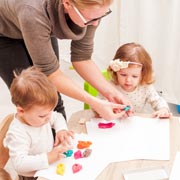 As they work towards their individual goals, assessments will be made, for each child, on a continuous basis. By assessing the children, the learning and development programme and the goals themselves can be tailored and fine-tuned along the way, as required. This will optimise each child’s progress and achievements.
Children also receive a ‘Progress Check at 2’ report as part of this, the age of two being an important developmental milestone when it comes to learning and development. Similarly, each child will have an ‘Early Years Foundation Stage Profile’ (EYFSP) compiled for them as they approach the age of five. This will be useful information ready for when the child leaves the early years setting to begin school.
We’ll perhaps write separate, more detailed posts about some of the above in due course.
4. EYFS Safeguarding & Welfare Specifications
Another key and crucial element of the EYFS relates to the safeguarding and welfare of each child. The EYFS specifies statutory requirements for early years settings in this regard. In essence, early years and childcare providers have to do everything they can to keep children safe, happy and well — of course. For example, specifications within the EYFS framework require settings and providers to:
- Ensure those who have access to children are suitable, safe, pre-vetted people;
- Ensure staff are trained and suitably qualified;
- Appoint a ‘Key Person’ to oversee and monitor the learning and development of each child;
- Maintain minimum staff-to-child ratios;
- Promote good health at the setting, including the administration of medicines;
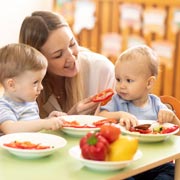
- Foster a good approach to children’s eating and drinking;
- Provide adequately in regard to instances of injury, accident or illness;
- Provide a safe premises with appropriate Health & Safety levels and protocols all in place;
- Provide sufficient levels of space and activity opportunities both indoors and outside;
- Ensure only the ‘right’ people can enter the premises and access the children;
- Provide appropriate levels of support for children with special educational needs or disabilities;
- and more!
 Ensure those who have access to children are suitable, safe, pre-vetted people;
Overall, the EYFS is a framework that is designed to provide a safe, stimulating, and nurturing environment for children to learn and develop in their early years. It recognises that children learn best through play and practical, hands-on experiences. It focuses on the individual needs and interests of each child and provides a complete, holistic approach to their learning and development. Learn more about what to expect for your child from the EYFS here (Acrobat PDF document).
A High Quality Nursery & Pre-School in Hindley Green, near Wigan
We wholeheartedly support the aims and implementation of the EYFS at Little Acorns Nursery in Hindley Green. If you are considering enrolling your child at our nursery or pre-school, we would be happy to give you and your child a tour and answer any questions you may have. We can also provide information on the various childcare funding options that are available to eligible families. You can register your child, schedule a visit, or contact us using the buttons below.
Little Acorns is a wonderful nursery & pre-school in Hindley Green and may also suit those looking for the best childcare service near Wigan, Bickershaw, Leigh, Atherton, Westhoughton, Ince-in-Makerfield, Platt Bridge, Tyldesley, Bolton and Greater Manchester.
* We use the term ‘parents’ for the sake of brevity. In the context of this article and website, it is also a placeholder for the main carer(s) or guardian(s) of children.
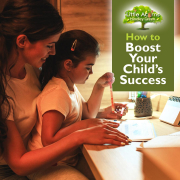
 What’s more, the boost in the child’s success is clear to see at all stages — in the short term, medium term and long term — right into adulthood. When parents are actively involved in a child’s education, that child will do better at nursery and pre-school, achieve better grades at school and go on to have more success in higher education and, ultimately, in their careers. It’s incredible, therefore, just how powerful proactive parental involvement in a child’s education can be. Let’s take a closer look at the findings.
 The studies conclude that parents can help children — and boost their potential for success — in several impactful ways. We have picked out a few of the most powerful and easy-to-accomplish ways below.
 To illustrate that point, just reading with them regularly can boost their language skills by a staggering 20% (we’ll write a separate post about the benefits of reading with children in due course).
 This is all backed up by
 There are lots of free or assisted funding schemes for childcare and these are especially useful to parents looking to keep childcare costs down. With increased inflation and the cost of living crisis in Britain, such schemes have probably never been more welcome. Today we’ll take a condensed look at the main childcare funding options available to parents, particularly those of children under five, although many schemes also help children substantially older.
 Although the Childcare Vouchers Scheme closed to new applicants on 4th October 2018, childcare vouchers are still available to those who enrolled before the deadline, so long as they continue to meet eligibility requirements. For those that do, childcare vouchers help to cut the cost of childcare for children aged up to 15, or 16 if they are disabled.
 Tax-Free Childcare is a great, UK-wide, scheme that many working families will be eligible for, even including relatively high earners. What’s more, it could save them as much as £2,000 in childcare fees each year, per child, rising to £4,000 if their child has a disability.
 Certain children aged 2 in England* are eligible for 570 hours of totally free childcare per year. This is a great opportunity for them to begin their early years education relatively young and indeed the age of 2 is a crucial age to do so, according to studies. The substantial free funding is usually taken as 15 hours of free childcare over 38 weeks of the year, although some childcare settings allow it to be spread out in a different way. Not all 2-year-olds are eligible, however, and basically it comes down to the fact that the parent(s) must be in receipt of Government benefits of some kind. Other 2-year-olds are eligible for additional reasons, for example because they are looked after by the local authority or are subject to an Education, Health and Care (ECH) Plan. Even some non-UK citizens who do not claim benefits have eligible 2-year-olds although, as with all these scenarios, various rules around eligibility apply.
 In contrast to the above, 15 hours of free funding is available for all families in England* with a child aged 3 to 4 requiring childcare. As with the above, the children can get 570 hours of free childcare per year except this time only while they’re 3 or 4. This is again usually spread out as 15 hours per week over the course of 38 weeks, however some childcare providers will allow a different pattern. It really is a no-brainer and is a great way to get children into early years education and perhaps parents back into the workplace. Children are eligible to start from the term following their 3rd birthday until they start in Reception Year at school, or reach ‘compulsory school age’ if that’s later.
 The “30 Hours” childcare scheme for 3 and 4-year-olds is a little harder to obtain because families are not eligible where one partner earns £100k or more. Additionally, the parent and their partner, if they have one, must usually expect to earn at least £152 per week, on average, in order to qualify, although the figures are lower for parents younger than 23. You may still qualify for the free childcare funding if you are on maternity leave, paternity leave, shared leave, adoption leave, or are a carer. Rules apply. As with the Tax-Free Childcare scheme, you have to ensure your details are kept up-to-date every quarter in order to check that you’re still eligible. Your child must usually live with you too, in order to qualify. However, as with all these things, there are some exceptions to the core rules.
 If you are a student as well as being a parent, you may be eligible for some childcare support through a variety of funding schemes.
 If you and your partner, if you have one, claim Universal Credit, are working and have a child under the age of 17, you may be able to claim back as much as 85% of your childcare costs if eligible. In order to claim, various rules apply and there are even some exceptions to the above. For example, those not working through ill health or disability may still be eligible in some circumstances. You must not, however, be claiming Tax-Free Childcare nor Tax Credits in order to receive childcare funding through Universal Credit.
 Childcare funding through Universal Credit has replaced the Tax Credits system, which closed to new applicants in February 2019. If you are not an existing Tax Credits customer, you will therefore need to claim under the Universal Credit scheme instead. However, for existing families who can still claim Tax Credits, they are able to claim as much as 70% of eligible childcare costs for a child under 16 (17 if disabled) up to a maximum of £122.50 per week for one child or £210 per week for more than one.
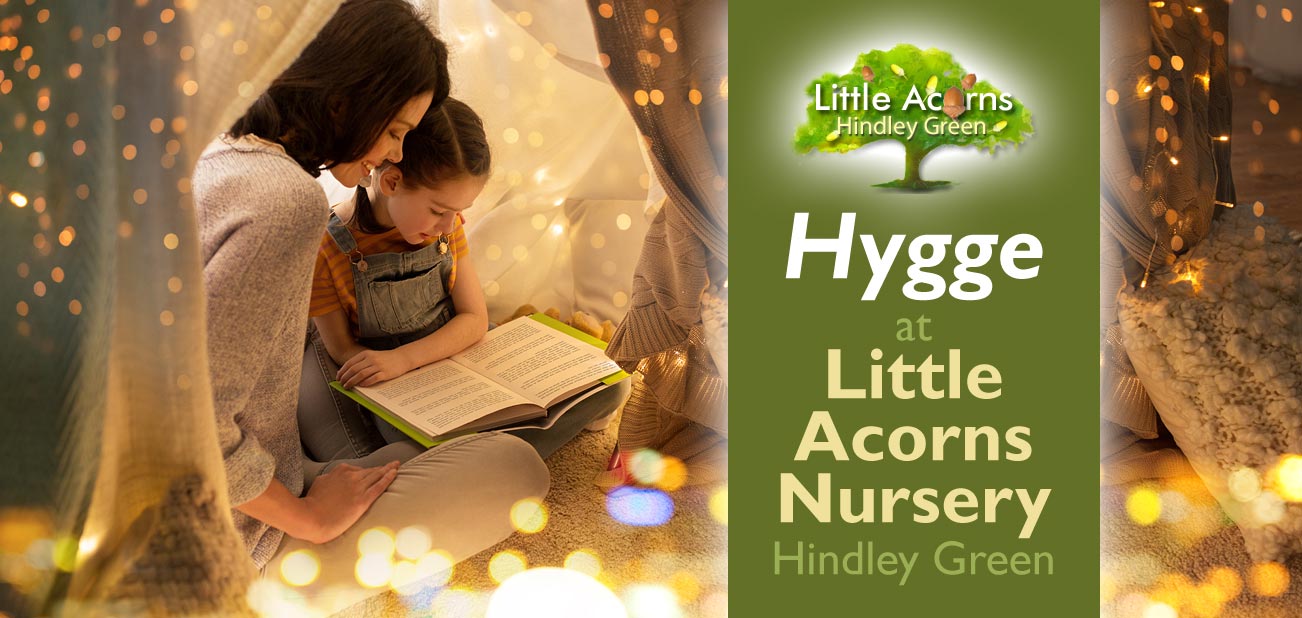
 At Little Acorns Nursery in Hindley Green, we’re embracing Hygge (pronounced “Hue-gah”), which is becoming very popular around the globe. But what is Hygge and why are we embracing it? This article explains everything and you’ll soon see why Hygge is a very good thing for everyone at the nursery, including both children and staff. Take a look …
 Hygge has been described as resulting in “comfortable conviviality” i.e. friendliness and warmth that makes everyone feel welcome and happy. It’s also been described as “the pursuit of everyday happiness … basically like a hug, just without the physical touch.”
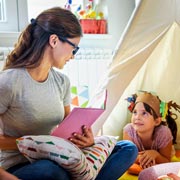
 There will be twinkly ‘mood’ lighting instead of harsh fluorescent lighting. Rooms will have real plants that bring nature indoors, natural materials and objects like wood, wicker, pine cones and pebbles. There will be calming music and perhaps even scent in the air. There will be cosy corners, dens and even teepees where children can ‘nest’ while they read, play or converse. Hygge gives a room a lovely atmosphere, often with flickering candles (or, at the nursery, the warm-coloured LED equivalents, for safety purposes).
 Embracing all these aspects of Hygge will make children feel really at home, safe, relaxed, cosy and content. Their day will feel fulfilling and enriched. It will be calm and peaceful whilst also embracing nature both outside and indoors. Friendships will deepen as small groups of children play, converse, read or simply ‘be’ in the many cosy nooks and dens available to them. They are also free to have some solo time where they can explore a particular interest, relax with a book or engage in an activity in a calm and comfortable corner. Whatever they’re doing, children will enjoy and benefit from the mood lighting, calming surroundings, relaxing music and suchlike.
 Hygge is like a warm cloak that softly embraces every child, allowing him or her to quietly blossom, learn and develop in the most homely and relaxed of atmospheres. With Hygge, they can embrace and naturally absorb everything that’s so good about the Hygge lifestyle, including it’s almost magical effects that will bring out the wonder in every child. Hygge instinctively appeals to a child’s very heart and soul, allowing their learning and development to blossom and thrive in the most natural of ways.
 gives babies, toddlers and preschoolers the very best start in life and in their early years education. If you are looking for

