
When choosing a nursery or preschool for your child, it’s very important to get it right. After all, when they’re under five, your child’s learning and development are at a critically important stage. You will want to ensure they’re safe, well cared for, and happy at your chosen nursery. You’ll also want to ensure they learn and grow optimally as individuals and are as school-ready as possible by the time they leave to start ‘big’ school. What’s more, you’ll want to hear what other parents and professionals think about the setting. With all that in mind, we’ve put together 15 reasons why choosing Little Acorns Nursery could be right for your child if they live in the Hindley Green area near Wigan. As you’ll see, many of the benefits of choosing Little Acorns for childcare are also backed up by independent opinions, for example, those of Ofsted inspectors and the parents of children who have attended.
1. Little Acorns is a Good Provider (Ofsted)
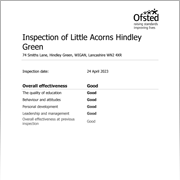 We’re a good provider of early years education and childcare. You don’t need to take our word for it, though, because the Government body Ofsted independently rated the nursery as Good in every category in their most recent report. We were rated as ‘good’ across the board including in overall effectiveness, the quality of education, leadership and management, behaviour and attitudes, and personal development. It was indeed a full house of good scores, meaning that children are in safe and very capable hands that will bring out the best in every one of them.
2. Wonderful Customer Reviews & Ratings Online
 We’ve got lovely reviews and 5-star ratings online and, at the time of writing, have scored top marks across the board. The following is a typical review illustrating the type of lovely comments that parents have been publishing online about Little Acorns Nursery, Hindley Green:
“I wholeheartedly recommend this nursery. My little boy has loved his three years here, building loving and nurturing relationships with staff and the other children. He has learned so much and astounds us every day with the level of vocabulary and concepts he understands. Communication has been fantastic all through his time here. A truly family feel permeates the whole setting and I know I’m leaving my little one in good hands.”— Victoria M (via the Day Nurseries website, June 2024. Overall Experience: 5.0 out of 5).
Even the Ofsted inspector who last visited the nursery said:
“Parents speak highly of the staff at the nursery and develop high levels of trust.” — Ofsted report (April 2023).
3. Convenient Opening Hours for Working Parents
Little Acorns Nursery opens early and closes late on weekdays. This is great for local working parents as it allows them time to drop off and pick children up with minimal impact on their working hours. The nursery opens at 7:30 a.m. and closes at 6 p.m. from Monday to Friday inclusive. Those are longer working hours than many of our local competitors — we checked!
4. A Nursery Open All Year Round
Unlike some other nurseries and preschools, Little Acorns Nursery is open virtually all year round, only closing on Bank Holidays and for one week over Christmas. We’re therefore open over school summer holidays, for example, meaning working parents can carry on working without worrying about childcare during such school breaks.
5. Excellent Safeguarding
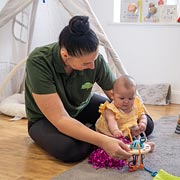 Little Acorns staff are fastidious about the welfare and safety of babies and children under their care. As even the Ofsted inspector reported in our last inspection, “Leaders have ensured that staff are well trained and knowledgeable about matters relating to child protection. They have provided clear procedures for staff to report any concerns that they may have about children’s welfare.” Your child is in safe hands at Little Acorns Nursery.
6. We Support Many Childcare Funding Schemes
Little Acorns Nursery supports a wide variety of free childcare initiatives that are available to eligible families through government funding. Whether it’s free childcare hours for 2-year-olds, 3- and 4-year-old preschoolers, or the imminent roll-out planned for eligible babies starting in September 2024, we support many different childcare funding schemes where families are eligible. With today’s tough economy and recent inflation levels, we know that families will welcome such help to make childcare more affordable.
7. The Nursery Has Undergone a Stunning Refurbishment
 During the first half of 2024, the nursery underwent a significant refurbishment and the results really speak for themselves. It’s a real facelift that includes beautiful new flooring, refreshed paintwork, re-plastered walls, renewed skirting, lovely bright downlighters, new storage areas, new bathrooms, new hallway carpet, and a modern, spacious feel. There are some lovely new interior design touches too, which spark new life into the nursery and preschool areas. New furniture, resources and enhancements are also included to make this a more exciting, stimulating, and engaging place for children to spend time. These include details like new bifold doors to allow free-flow access from indoors to the outdoor areas when appropriate. You can see some of the refurbishments here.
8. Children Love our Extensive Gardens & Outdoor Areas
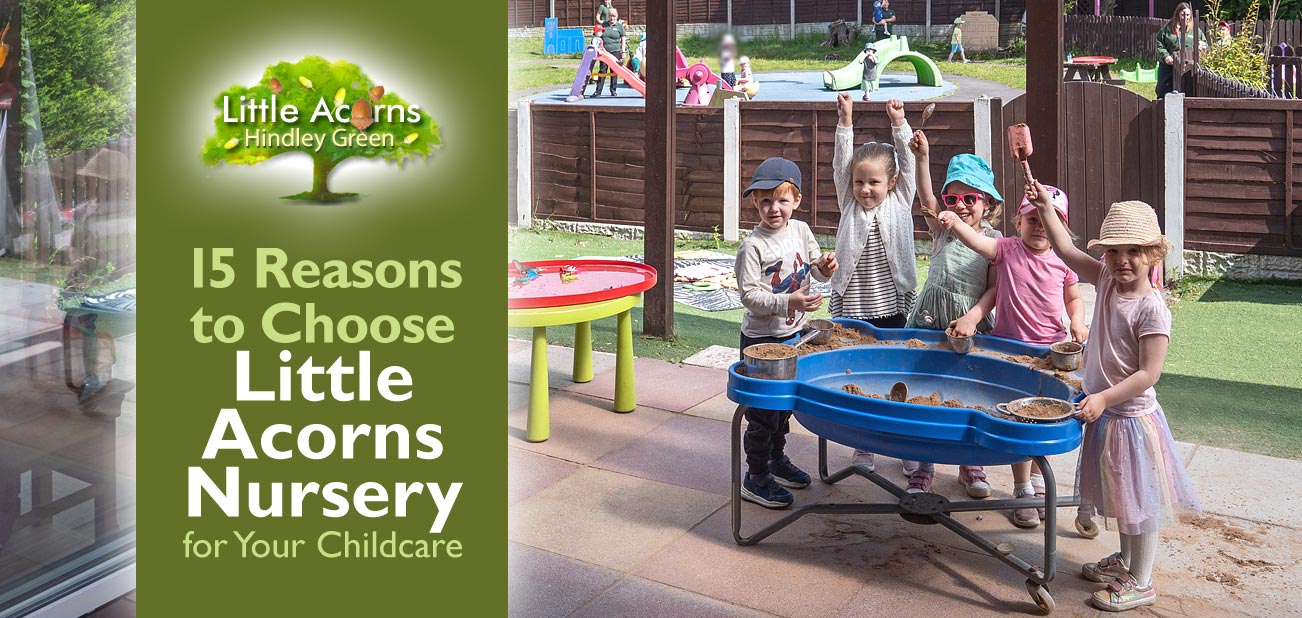
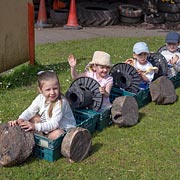 Few childcare nurseries and preschools can claim to have as large an outdoor space as Little Acorns Nursery in Hindley Green. Our extensive outdoor space is a wonderful area for children to explore, discover, play, and learn. Including both undercover areas and open areas, there are nature zones, sensory areas, a variety of exciting play areas, counting areas, and a stimulating array of equipment. This includes construction toys and equipment, creative activities, sand play, water play, bicycles and scooters, play houses and, of course, more standard climbing frames, slides, and suchlike. Children can benefit here from both structured and free play in a safe but exciting outdoor environment.
“The nursery has a huge outdoor area which is perfect as my daughter loves the outdoors. I feel so lucky to have found a nursery with such a wonderful and happy environment for my daughter.”— Louise M (via the Day Nurseries website, May 2024. Overall Experience: 5 out of 5).
9. Photos & Regular Updates for Parents
A smartphone app allows staff to send parents regular updates about their child’s day at the setting. This is a really useful tool, for example, to help parents see how well their child is fitting in when they first start nursery. It also shows parents some of the activities children are taking part in and includes commentary from staff. It’s a great way for parents to connect, monitor their child’s progress and be assured of their well-being, despite being away from their child.
“I get photos and updates and this really helps settle my mind when I’m at work.” — Ashley G (via the Day Nurseries website, April 2024. Overall Experience: 5 out of 5).
10. Skilled & Experienced Staff
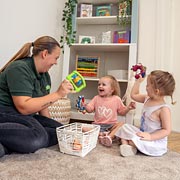 Little Acorns Nursery employs high-calibre childcare staff who are caring, experienced and skilled. Naturals with the children, they are also qualified as a minimum when they start in paediatric first aid, safeguarding, and basic food hygiene although many have qualifications that far exceed that baseline. Staff also have the support of a CPD programme, for continuous professional development, which includes access to training courses and tools that will further their skill set. That’s a win-win-win as the staff, the nursery and the children will all benefit. The Ofsted inspector also commented on the quality of staff at the most recent inspection:
“The high priority given to continuing professional development has resulted in a team of many skilled and experienced staff. This has a positive impact on the quality of education for all children, including those who are disadvantaged.” — Ofsted (April 2023).
11. Childcare Tailored for Every Child
Some of the most fundamental goals at Little Acorns Nursery are to bring out the best in each and every child and, in turn, set them up for future success. Our professional childcare practitioners and leadership team do everything they can to achieve such goals, including through a learning and development programme that’s tailored for each child — after all, every child is different. From the outset, this is achieved in part via two-way feedback with parents and, where required in the case of those with special needs, the use of external professional expertise. In this way, every child’s strengths can be made even stronger and any weaker areas given focus to bring them up to speed.
“Staff work closely with parents right from the start to assess and plan how to meet children’s individual needs.” — Ofsted (April 2023).
12. Excellent Support for Children with Special Educational Needs and/or Disabilities (SEND)
Little Acorns Nursery is indeed excellent in its support for children with special educational needs and/or disabilities (‘SEND’). The Ofsted inspector perhaps said it best when they visited in 2023:
“The special educational needs coordinator (SENCo) successfully uses her comprehensive knowledge of local arrangements for children with special educational needs and/or disabilities (SEND). She links closely with other supporting professionals, accurately assesses need and identifies precise targets for learning. Through strong relationships with staff, children with SEND progress well, particularly in their understanding and communication.” — Ofsted.
13. We Ready Children for School
One of our key aims and indeed strengths is to prepare every child for starting school. So, during their time with us, we do everything we can to nurture them in every area of their learning and development. We ensure they have the knowledge and skills they’ll need so that, when the time comes to leave us to begin school, they’ll hit the ground running and absolutely thrive in their journey forward to school — and beyond.
“The carefully thought out curriculum helps children to gain the kinds of knowledge and skills they need in readiness for their future move to school.”— Ofsted (April 2023).
14. Hygge
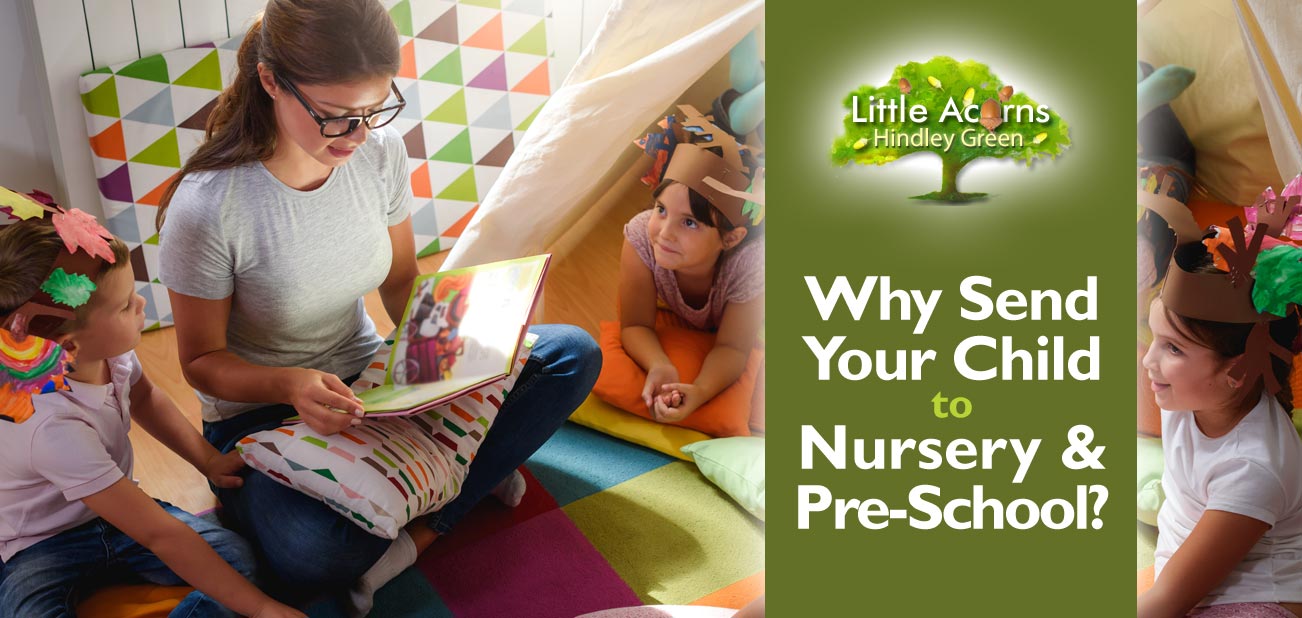
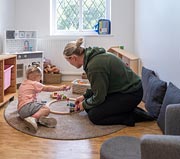 Little Acorns is also one of only a few Hygge-inspired childcare nurseries and this facet helps make the setting even more of a home-from-home for little ones. Hygge (pronounced “Hue-gah”) is a Danish and Norwegian word that describes the kind of lifestyle that has cosiness, contentment, and well-being at its centre. A Hygge-style environment will therefore be one that appreciates natural materials like wood and warm, homely, child-friendly, decor like rugs and cushions. Hygge also encourages a real appreciation of nature amongst both staff and children. Put simply, Hygge makes Little Acorns Nursery a better place to be. Learn more about the nursery’s developing Hygge approach here.
15. The Benefits of Being Privately Owned
Little Acorns is an independently owned nursery rather than a large faceless ‘group’ that sets rules from somewhere hundreds of miles away. By being independent, our leadership team is more agile and able to adapt quickly for the best interests of the nursery and its children. Being a small independent also means your child won’t be ‘lost’ in the system but, rather, will be part of our nursery family. Little Acorns really is a home-from-home for every child.
The Best Nursery for Your Child in Hindley Green, Wigan

 We hope today’s article has given local parents food for thought in their search for the best nursery & preschool in Hindley Green or a good childcare provider within a convenient distance of Wigan, Bickershaw, Leigh, Atherton, Westhoughton, Ince-in-Makerfield, Platt Bridge, Tyldesley, Bolton or Greater Manchester. Get in touch to find out more, come for a visit, or register your child for a place:
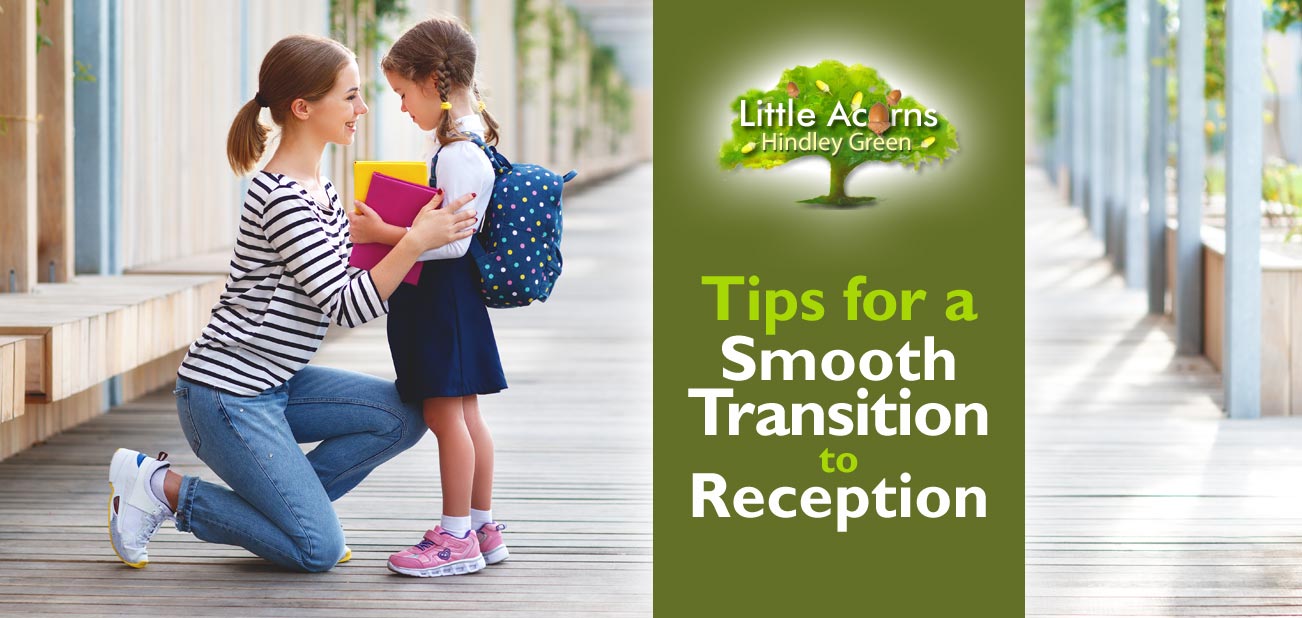
 The transition from preschool to Reception marks a significant milestone in any child’s life. It can be emotional for parents and, for children, it can be a period filled with excitement, curiosity, and perhaps a bit of apprehension. Ensuring a smooth transition involves a combination of careful planning, practical strategies and emotional support. With that in mind, today’s guide outlines more than twenty simple, actionable ways to ensure your child has a seamless transition and a positive start to school life.
 Use positive reinforcement to create a positive association with the idea of school. For example, highlight the exciting aspects of learning, making friends, playing new games, and discovering new things.
 Organise play dates with future classmates to build social connections before the first day. Encourage interactions with other children to develop essential social skills. Attending a nursery, preschool, or playgroup will provide excellent opportunities for this.
 Foster self-reliance by allowing your child to perform simple tasks like dressing themselves, tidying up, using the toilet, and organising themselves. Also, assign small responsibilities to them at home to instil a sense of accountability and responsibility. Such skills will serve them well once at school.
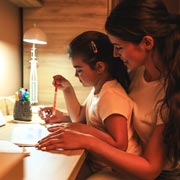 Read age-appropriate books together, particularly those that introduce topics they’ll be introduced to in Reception class. This not only sparks excitement and teaches them new things but also helps children understand what to expect. Instil a love for reading through interactive reading sessions. Visit the library too and explore a variety of books.
 Ensure that your child understands basic time concepts, such as morning, afternoon, and evening. This, in tandem with our next tip below, will help your child better understand the structure of the school day.
 Ensure your child can manage basic self-care tasks independently. Such skills will be invaluable to them once they have started school.
 Ensure sufficient sleep by establishing a calming bedtime routine. This not only gets them used to a pattern but will also help them to maintain focus and energy levels once at school.
 The journey from preschool to the first day of school is a significant milestone for both parent and child. Preparing children for school involves a holistic approach that addresses emotional, social, and practical aspects. By incorporating these strategies into your family’s daily routine, you can contribute to a positive and confident transition for your child and set the stage for the most successful start to their school journey.
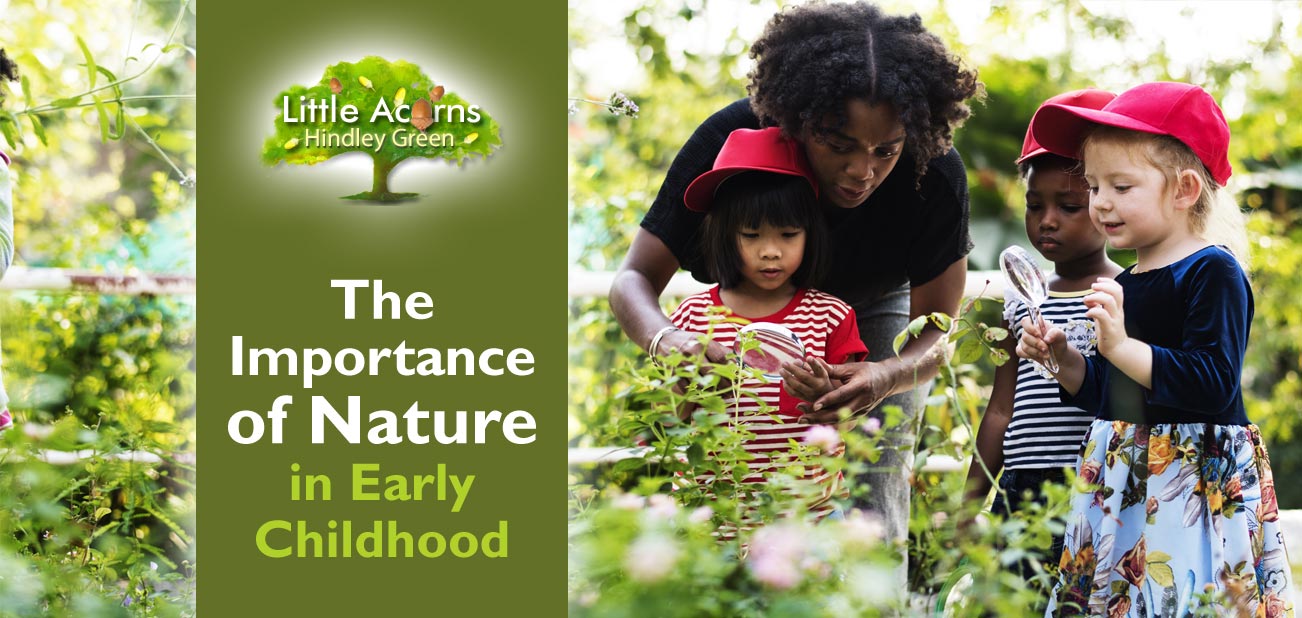
 As parents, we all want the best for our children. We strive to provide them with a nurturing and stimulating environment that supports their growth and development. However, in today’s fast-paced world, it’s easy to overlook the importance of nature in our children’s lives.
 Make time for outdoor play — set aside regular time for outdoor play and exploration. This can include visits to local parks, nature reserves, or your own back garden.
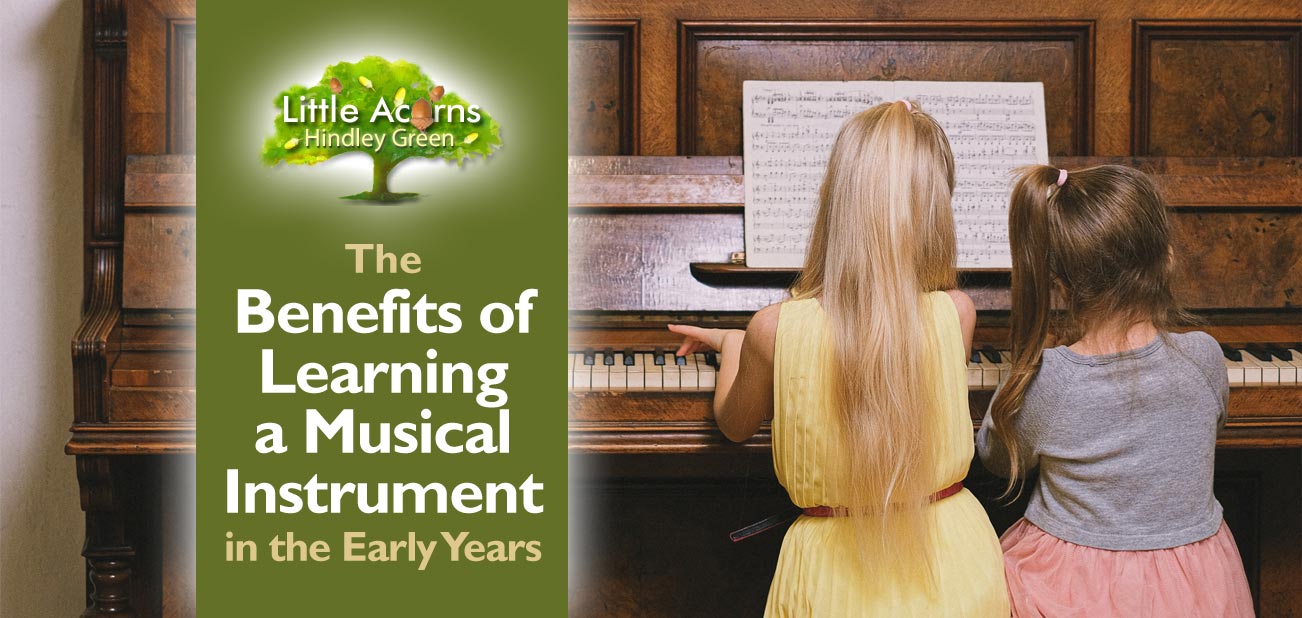
 With free tutorials available on YouTube and inexpensive instruments available in charity shops, phone apps and online marketplaces, there has never been a better time for children to start learning a musical instrument. It’s something for every parent to consider because such a pastime will benefit their child in an incredible variety of ways. Not only will they learn a new skill that will stay with them for life, but their lives will be enriched in many additional ways too. So, today, we take a look at the often profound benefits of learning a musical instrument, especially for young children. We’ll start with the three most obvious benefits before coming to many others that may surprise you.
 Playing all these notes in a certain order, sometimes in isolation and at other times as chords and progressions, will do wonders for a child’s coordination and fine motor skills. Although perhaps tricky at first, with practice and ‘muscle memory’, children’s ability to master the playing of musical sequences, chords, melodies and rhythms will gradually become easier and easier. Before long, it’ll become second nature to them.
 In a similar way, children who learn a musical instrument will usually, of course, also be learning to read printed music. While this comes in different forms, it all encourages children to concentrate on the reading process. Specifically, they’re learning to read from left to right, to analyse the printed music detail and to make sense of it. It’s another great workout for the brain, and we’ll say more about that next.
 Playing a musical instrument often goes hand-in-hand with collaboration. Whether it’s forming a band, taking part in a school orchestra, writing songs with friends or simply jamming out together, children of all ages will naturally play together given the opportunity. As such, it’s a natural socialiser and one that brings children of different ages together, with new friendships being formed through a common interest. That is a very healthy thing. It also teaches children a wide variety of social skills including communication (e.g. speaking and listening at appropriate times), collaboration, being mindful of the needs of others, waiting your turn and so on.
 Music itself is also a great antidote to stress and other emotions. Giving children the tools to appreciate music — and even involve themselves in it — will help with their mental well-being as it can calm them when they’re stressed, relax them when they’re tired or even give them an energy boost when they need to get active. Ask any runner! All they need is the right piece of music and half the mental battle is already complete.
 With all these benefits, it’s highly worthwhile for children to start learning a musical instrument as young as possible. It’s easy to start them, for example with simple instruments like drums, triangles, and tambourines initially. With these simple instruments, very young children can learn to keep time to music or a beat a rhythm demonstrated by adults. They can then progress to more advanced instruments such as recorders, keyboards, and stringed instruments. They have to start somewhere, though, but it’s never too early to start! Mozart was just 3 when he began to learn piano playing. By 5 he had composed a whole concerto! Who knows; perhaps your child could be a star in the making!
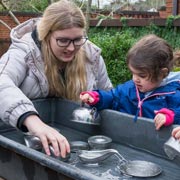 Some may be surprised to learn that nurseries/pre-schools like Little Acorns are not simply “childcare services”. We’re way more than just a crèche, playgroup or a group of nannies or childminders. In reality, our services extend way beyond simply looking after children while parents go to work, although of course we do that too. The truth is that we benefit little ones and their families in a whole range of additional, often profound, ways and that’s what we look at today.
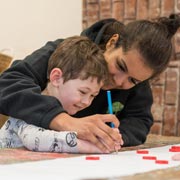 First of all, a Key Person will be allocated to your child on Day 1 when they start at the nursery. The Key Person is a childcare professional that will look out for the child’s wellbeing in all manner of different ways. One of the most important is in the monitoring of the little one’s progress in terms of learning and development. From the day they help to settle the child into the nursery to the day they leave for school, the child’s Key Person will be there to ensure that all the child’s individual needs are being met and that they are fulfilling their fullest potential in every area. Part of that will be the oversight of the bespoke early years education programme, which we’ll come to next.
 At Little Acorns Nursery, a bespoke early years learning and development programme will be designed and implemented to suit the strengths and any challenges for each individual child. This is orchestrated by the child’s Key Person and nursery staff and, where needed, through cooperation with any external professionals, e.g. for children that have any special educational or developmental needs. The learning and development programme is tailored to them and them only. Using this approach bolsters the child’s stronger areas, so they can be further strengthened, and addresses any weaker areas that may require extra focus. It is also adapted as time goes by, as progress is made by the child. In this way, every child gets to achieve personal bests and optimal outcomes in every area of their learning and development.
 All of this nurturing, education and facilitation of their personal development does one other crucial thing too; it sets them up well for when they leave us around the age of five to start at primary school. By giving them the skills and tools they will need in every area, they are in a better position to absolutely thrive once they start school, right from day one. Indeed, many studies have shown that children who receive a good early years education go on to be higher achievers both at school and in their working lives. That’s gold dust, right there. Let’s take a closer look …
 ‘Hygge’, pronounced ‘Hue-gah’, is another exciting initiative happening at Little Acorns Nursery in Hindley Green. If you’ve not heard of it, rest assured that it’s something that children will absolutely love and will benefit them in many ways. It’s also something that we’ll be pioneering in the area, so you may not find it in other nurseries and pre-schools around Wigan right now.
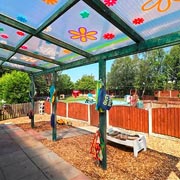 Everything at Little Acorns Nursery is there for a reason. It’s all been carefully brainstormed, pre-planned and implemented with utmost care. Whether it’s the introduction of Hygge, the addition of a new piece of equipment, or the purchasing of a specific toy or learning device, everything at Little Acorns has a purpose and is there to benefit the children.
 Parents of children at Little Acorns Nursery also give us great feedback about the wonderful childcare provision at the setting. Browse the site for full examples of parent feedback received (it’s scattered around the site) but, to give you a taster, comments include, “My girls absolutely adore this nursery but most of all they adore the staff”, “thank-you for the bottom of my heart for what you have done for my girls”, “I couldn’t recommend this nursery enough, they care and love the children like their own and I couldn’t of ever felt more comfortable leaving my children with a nicer set of girls.”, “I would not hesitate to recommend this nursery to anyone!”, “You should all be very proud of the work you do. It really means so much to us every time we see those small steps forward and we appreciate it.”, and “If I ever had any more children, without a doubt they will be coming to this nursery even if I moved 500 miles away!”.

 Starting nursery or pre-school is a real milestone for children and parents alike. As well as being exciting, though, transitioning to nursery or pre-school can be daunting for the little ones. The researching of childcare settings, checking Ofsted reports and appraising recommendations from friends is all very well, but that’s only the first step. The transition will be smoother for the children themselves if a few golden rules are followed. That’s precisely where today’s guide comes in, with our 20 Ways to Prepare Under-5s for Nursery. Take a look.
 Arrange a visit of your chosen or short-listed nurseries/pre-schools. Good settings (like Little Acorns Nursery) will be happy to give you and your child a guided tour. It’s best to go during an actual session, so that you can both see the setting in action on a standard day. Bear in mind that it can also be a chance for your child to become more familiar with the setting. If they later go on to start at the nursery, they will then already be aware of what the rooms look like, where the toilets are, who their carers are, and so on. Show them the play areas inside and out and let them see the other children having fun.
 There are several things you can also do around preparing your child for eating at nursery/pre-school. For starters, get your little one used to eating in a group of other children — perhaps with friends or related children at first. Also practise cutlery skills with your child, so they’re more able to eat independently when they start.
 Pre-joining visits and settling-in sessions are a great way for children to make friends at the setting, but parents can also orchestrate this outside of the nursery or pre-school. For example, by finding out which friends and neighbours send their children to the setting, they can then suggest some play dates with those children. Little ones will then see one or more friendly little faces welcoming them, right from the outset, once they start at the setting. It’s a good opportunity for children to learn the art of socialising. It’s also good for parents to network in this way, so they can compare notes and perhaps pool information they might otherwise have missed.
 Whether your child is potty/toilet trained or still in nappies, teach them to help themselves in this type of area. If they are not yet toilet trained and are ready for it, begin to teach them. It’ll stand them in better stead once they start at nursery/pre-school. If they are newly toilet trained, though, reinforce that accidents do happen and that the childcare staff are used to it and will help change them if so.
 A little independence will go a long way for them once children start at nursery or pre-school. Personal hygiene and toilet training is just one of many things they can help themselves with if they’re shown how.
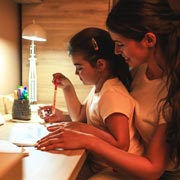 Childcare providers are more than just babysitters or a crèche. Settings like Little Acorn Nursery and many others offer a full early years education too. It’s very high quality, covering pretty much every aspect of early years learning and development and the all-important
  In the month or weeks leading up to your child’s start date, it’s a great idea to try to mimic the timings at the nursery, so that the routine is pre-embedded. So, try to get them used to getting up and getting dressed etc. at the same time as the nursery and they can even have a restful nap at the same time as nap sessions at the setting. An appropriate bedtime routine is also important, so that your child is energised and not tired once they begin at the nursery.
 Ensure that you are familiar with the pick-up and drop-off times as well as the nursery’s security arrangements should someone else be picking your child up instead of you.
 When the big day arrives for your child, don’t let on if you’re anxious or sad otherwise your child may pick up on it and become upset. So, keep it casual and don’t make a fuss when you drop them off for the first time. Staff and any friends they’ve previously made as part of your planning above are sure to welcome them. Chances are, they’ll run off into the nursery with a friend and have great fun right away anyway!
 What’s more, the boost in the child’s success is clear to see at all stages — in the short term, medium term and long term — right into adulthood. When parents are actively involved in a child’s education, that child will do better at nursery and pre-school, achieve better grades at school and go on to have more success in higher education and, ultimately, in their careers. It’s incredible, therefore, just how powerful proactive parental involvement in a child’s education can be. Let’s take a closer look at the findings.
 The studies conclude that parents can help children — and boost their potential for success — in several impactful ways. We have picked out a few of the most powerful and easy-to-accomplish ways below.
 To illustrate that point, just reading with them regularly can boost their language skills by a staggering 20% (we’ll write a separate post about the benefits of reading with children in due course).
 This is all backed up by
 There are lots of free or assisted funding schemes for childcare and these are especially useful to parents looking to keep childcare costs down. With increased inflation and the cost of living crisis in Britain, such schemes have probably never been more welcome. Today we’ll take a condensed look at the main childcare funding options available to parents, particularly those of children under five, although many schemes also help children substantially older.
 Although the Childcare Vouchers Scheme closed to new applicants on 4th October 2018, childcare vouchers are still available to those who enrolled before the deadline, so long as they continue to meet eligibility requirements. For those that do, childcare vouchers help to cut the cost of childcare for children aged up to 15, or 16 if they are disabled.
 Tax-Free Childcare is a great, UK-wide, scheme that many working families will be eligible for, even including relatively high earners. What’s more, it could save them as much as £2,000 in childcare fees each year, per child, rising to £4,000 if their child has a disability.
 Certain children aged 2 in England* are eligible for 570 hours of totally free childcare per year. This is a great opportunity for them to begin their early years education relatively young and indeed the age of 2 is a crucial age to do so, according to studies. The substantial free funding is usually taken as 15 hours of free childcare over 38 weeks of the year, although some childcare settings allow it to be spread out in a different way. Not all 2-year-olds are eligible, however, and basically it comes down to the fact that the parent(s) must be in receipt of Government benefits of some kind. Other 2-year-olds are eligible for additional reasons, for example because they are looked after by the local authority or are subject to an Education, Health and Care (ECH) Plan. Even some non-UK citizens who do not claim benefits have eligible 2-year-olds although, as with all these scenarios, various rules around eligibility apply.
 In contrast to the above, 15 hours of free funding is available for all families in England* with a child aged 3 to 4 requiring childcare. As with the above, the children can get 570 hours of free childcare per year except this time only while they’re 3 or 4. This is again usually spread out as 15 hours per week over the course of 38 weeks, however some childcare providers will allow a different pattern. It really is a no-brainer and is a great way to get children into early years education and perhaps parents back into the workplace. Children are eligible to start from the term following their 3rd birthday until they start in Reception Year at school, or reach ‘compulsory school age’ if that’s later.
 The “30 Hours” childcare scheme for 3 and 4-year-olds is a little harder to obtain because families are not eligible where one partner earns £100k or more. Additionally, the parent and their partner, if they have one, must usually expect to earn at least £152 per week, on average, in order to qualify, although the figures are lower for parents younger than 23. You may still qualify for the free childcare funding if you are on maternity leave, paternity leave, shared leave, adoption leave, or are a carer. Rules apply. As with the Tax-Free Childcare scheme, you have to ensure your details are kept up-to-date every quarter in order to check that you’re still eligible. Your child must usually live with you too, in order to qualify. However, as with all these things, there are some exceptions to the core rules.
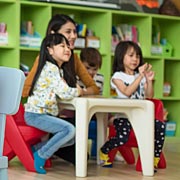 If you are a student as well as being a parent, you may be eligible for some childcare support through a variety of funding schemes.
 If you and your partner, if you have one, claim Universal Credit, are working and have a child under the age of 17, you may be able to claim back as much as 85% of your childcare costs if eligible. In order to claim, various rules apply and there are even some exceptions to the above. For example, those not working through ill health or disability may still be eligible in some circumstances. You must not, however, be claiming Tax-Free Childcare nor Tax Credits in order to receive childcare funding through Universal Credit.
 Childcare funding through Universal Credit has replaced the Tax Credits system, which closed to new applicants in February 2019. If you are not an existing Tax Credits customer, you will therefore need to claim under the Universal Credit scheme instead. However, for existing families who can still claim Tax Credits, they are able to claim as much as 70% of eligible childcare costs for a child under 16 (17 if disabled) up to a maximum of £122.50 per week for one child or £210 per week for more than one.
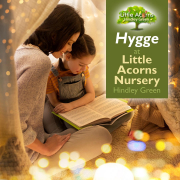
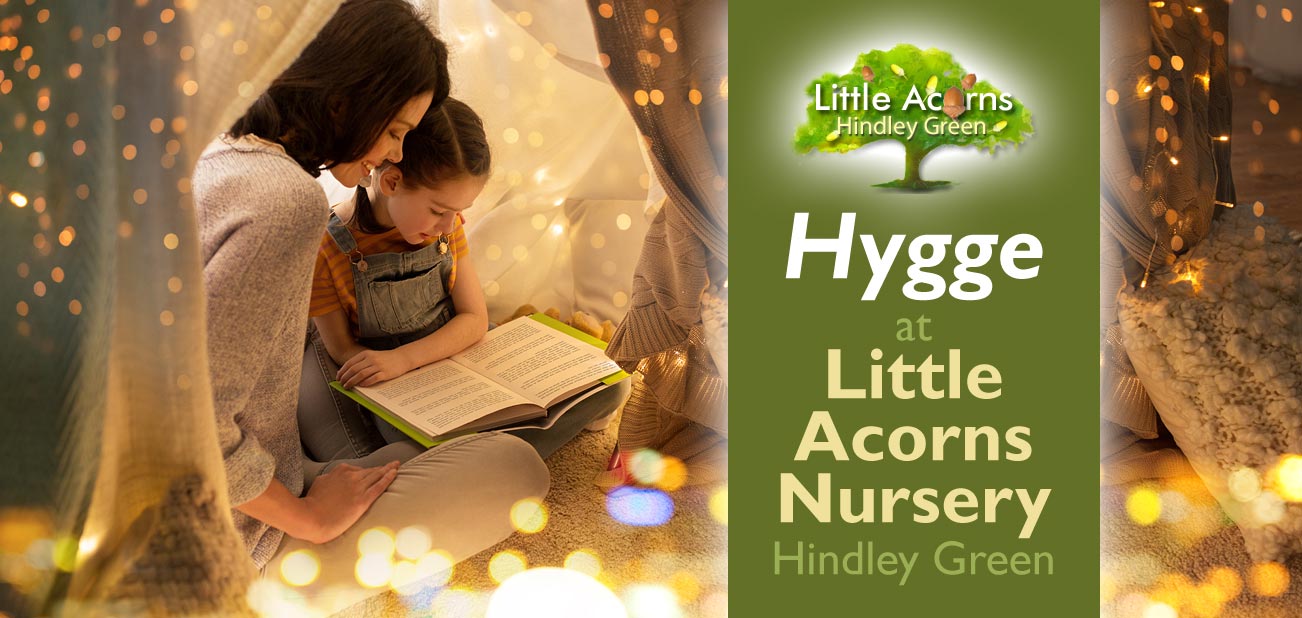
 At Little Acorns Nursery in Hindley Green, we’re embracing Hygge (pronounced “Hue-gah”), which is becoming very popular around the globe. But what is Hygge and why are we embracing it? This article explains everything and you’ll soon see why Hygge is a very good thing for everyone at the nursery, including both children and staff. Take a look …
 Hygge has been described as resulting in “comfortable conviviality” i.e. friendliness and warmth that makes everyone feel welcome and happy. It’s also been described as “the pursuit of everyday happiness … basically like a hug, just without the physical touch.”
 There will be twinkly ‘mood’ lighting instead of harsh fluorescent lighting. Rooms will have real plants that bring nature indoors, natural materials and objects like wood, wicker, pine cones and pebbles. There will be calming music and perhaps even scent in the air. There will be cosy corners, dens and even teepees where children can ‘nest’ while they read, play or converse. Hygge gives a room a lovely atmosphere, often with flickering candles (or, at the nursery, the warm-coloured LED equivalents, for safety purposes).
 Embracing all these aspects of Hygge will make children feel really at home, safe, relaxed, cosy and content. Their day will feel fulfilling and enriched. It will be calm and peaceful whilst also embracing nature both outside and indoors. Friendships will deepen as small groups of children play, converse, read or simply ‘be’ in the many cosy nooks and dens available to them. They are also free to have some solo time where they can explore a particular interest, relax with a book or engage in an activity in a calm and comfortable corner. Whatever they’re doing, children will enjoy and benefit from the mood lighting, calming surroundings, relaxing music and suchlike.
 Hygge is like a warm cloak that softly embraces every child, allowing him or her to quietly blossom, learn and develop in the most homely and relaxed of atmospheres. With Hygge, they can embrace and naturally absorb everything that’s so good about the Hygge lifestyle, including it’s almost magical effects that will bring out the wonder in every child. Hygge instinctively appeals to a child’s very heart and soul, allowing their learning and development to blossom and thrive in the most natural of ways.
 gives babies, toddlers and preschoolers the very best start in life and in their early years education. If you are looking for

