


People often use the phrase ‘the miracle of life’ and, indeed, there seems to be a lot of truth in it when it comes to babies. Hidden within the evolution of these little beings are some facts and figures that many will find surprising. Some sound incredible until one delves deeper, and that’s exactly what we’re going to do in today’s Crazy Baby Facts exploration. So, perhaps grab a warm drink, take a seat for a few minutes, and get ready to be surprised…
Early Signs of Right-Handedness
 Did you know that the position newborn babies prefer to face when lying on their backs may be an indicator of whether they’ll be left- or right-handed? The thumb they suck is, of course, a similar indicator. The 85% of them who prefer to face right in the first few months and the 90% who suck their right thumb generally turn out to be right-handers — the same kinds of percentage of adults who are right-handers.
The Age From Which Infants Have Memories
How old are you in your earliest memory? The memory of infants is interesting in that their ability to remember long-term, ‘autobiographical’ memories of events — including what will later become their earliest memories — doesn’t occur until they’re around 3 to 4 years of age. Although they may be able to form memories of events, particularly emotional ones, a little earlier between the ages of 2 and 3, those memories tend to fade. We should mention, of course, that shorter-term memories, such as recognising caregivers and remembering where toys are, come much earlier.
Newborn Babies’ Hearts Race
While it’s common knowledge that adults have a typical resting heartbeat rate of about 60 to 100 beats per minute (bpm), for newborn babies in their first month, it’s much higher at 100 to 160 bpm. That said, it can be higher or lower — 70 to 190 bpm while awake — without necessarily meaning there is a problem. The range is usually lower while asleep, typically ranging between 90 and 160 bpm. As the child grows older, the range decreases further, with a typical rate being between 70 and 110 bpm by the time they’re around 7 to 9 years of age. [Source]
Should there be any concerns, it’s important, of course, to seek professional medical advice.
How Many Babies Are Born Every Hour?
Here’s another crazy baby fact: 15,981 babies are born every hour across the world. That equates to >266 new babies every minute, and 4.44 every second! It’s no wonder that the world’s population is growing (at +0.9% annually). [Source]
Where 53% of All Births Occur
 The locations where babies are born around the world are also very interesting. 5% of the world’s babies are born in Europe. What about the other 95%? Well, a staggering 52.9% of all babies are born in the continent of Asia, 30.7% across Africa, 10.7% in the Americas, and just 0.7% across Oceania.
Do Foetuses Really Have Gills?
There is some debate as to whether foetuses have gills at some point while they’re growing. The answer is sort of because they do grow pharyngeal arches, which look rather like gill folds, while in the womb. They’re not true gills, as such, however; it’s thought they may be a throwback to our very distant evolution from fish. What we do know is that what appear to be gill slits during the foetus’s early stages eventually evolve into parts of the baby’s mouth and jaw. [Source]
Foetuses Do Have Tails
We’re all born with a coccyx, the tailbone at the end of our spine. However, did you know that foetuses have tails with vertebrae during the early stages of development in the womb? These fuse together around the 7th to 8th week of gestation, the tail disappears, and only the coccyx is left by the time babies are born.
Foetuses Really Have Fur
While many parents are familiar with Vellus hair, the soft “peach fuzz” that newborn babies often have, many will not be aware that they were even more furry in the womb. Lanugo hair is a soft, fine, and usually colourless ‘fur’ that covers babies while in the womb, alongside vernix caseosa, the creamy covering that babies have when they’re born. Both protect the foetus and help to regulate its temperature while in the womb. However, the Lanugo hairs are usually shed before birth, around week 35, although a few babies are born with some, particularly if they’re born prematurely. [Source]
Taste Bud Superpowers
 Babies are born with many more taste buds than adults. They’re not only on the tongue either. Spread on the roof and sides of the mouth, tonsils, and throat, as well as on the tongue, it’s thought they’re super-abundant in babies to help them experience tastes in a highly sensitive way. This could be an evolutionary mechanism to help them identify safe and unsafe food sources. Some estimates put the number of babies’ taste buds as high as three times more than adults, although we have found conflicting reports about the exact numbers. Whatever the number, it decreases by the time a child reaches adulthood. Interestingly too, babies can’t taste salt until the age of about 4 months.
Bone Bonuses for Babies
Adults have 206 bones in their bodies. What you may not know, however, is that babies are born with somewhere between 275 and 300! As they grow older, some of these fuse together to become stronger and more solid, hence the number of bones reducing to 206 by adulthood. The bones in the skull are a great example.
No Tears for Newborns
The moment a newborn first cries is one that a parent never forgets. However, did you know that they don’t cry actual tears until they’re between one and three months old? Until then, it’s rather more like ‘dry crying’ than crying liquid tears, simply because their tear ducts take that long to mature.
Rapidly Expanding Brains
 Did you know that babies’ brains double in size in the first year alone, and triple in size by the time children are 5? Some experts believe that boys’ brains grow faster than girls’ brains in the first three months, but it’s inconclusive. Either way, brains don’t finish developing fully until the age of 21 and, even then, there is some scientific debate as to whether they continue developing even longer.
The Most & Least Popular Date for Births
More babies in England and Wales are born in September than in any other month, with 28 September being the most popular birth date of the year. In fact, it has appeared in the top ten dates for births for several years.
Boxing Day, on the other hand, is the year’s least popular day for births, with fewer babies being born on that date than on any other in the year. According to the Office for National Statistics (ONS)*, this has been the case for well over ten years.
How Many Children Mothers Have on Average
According to ONS data* for 2024 (the latest available at the time of writing), women in England and Wales have, on average, 1.41 children in their lifetimes. This is slightly lower than the preceding year and, indeed, there has been a downward trend for several years. That said, there are regional variations, with the West Midlands seeing the average number of children higher at 1.59 children, while the equivalent for London mothers is lower at just 1.35.
The Average Age of New Parents
Interestingly, the standardised mean age (SMA) of parents has gradually increased over the last two decades — parents are getting older, in other words. This increase in the age of parents has grown by just under 2 years for fathers, and just over 2 years for mothers, during those two decades. Latest ONS data*, at the time of writing, is for 2024, and shows the SMA for fathers in England and Wales at 33.9 years of age, and 31 for mothers. For just the first born child specifically, mothers gave birth at the age of 29.4 on average, although in London, it was higher at 31.1 years — the only region higher than the average age for England and Wales as a whole (31).
Incredible Breastfeeding Fact
 As well as many other benefits associated with breastfeeding, statistics show that babies who are breastfed for at least two months are half as likely to be at risk of Sudden Infant Death Syndrome (SIDS). As well as that, breastmilk passes on important antibodies to the infant, helps protect it from certain diseases and allergies, and even adapts to supply the exact calorific content the baby requires over time. Incredible!
Little Acorns Nursery
Are You Looking for High-Quality Childcare Services in Hindley Green, Wigan?

Today’s amazing baby facts were brought to you by the team at Little Acorns, a nursery in Hindley Green, near Wigan. As well as providing childcare services in Hindley Green and Wigan, we may suit families living nearby in places like Bolton, Ince-in-Makerfield, Platt Bridge, Westhoughton, Atherton, Leigh, Bickershaw, and Tyldesley. Free childcare hours are available here for eligible families aged from 9 months to 4 years.
Get in touch to start your child’s early years education at Little Acorns Nursery — ask a question, come for a guided visit, or start your child’s application today — we can’t wait to meet you and your little one!
* ONS data referenced in this article is available here.


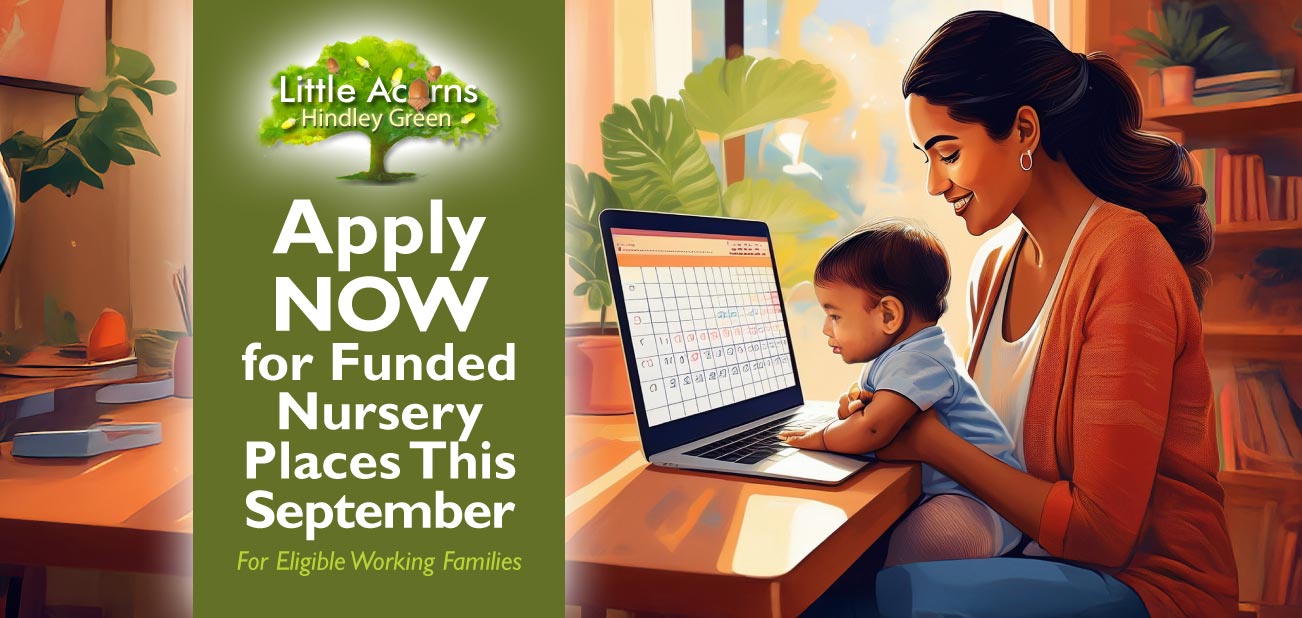
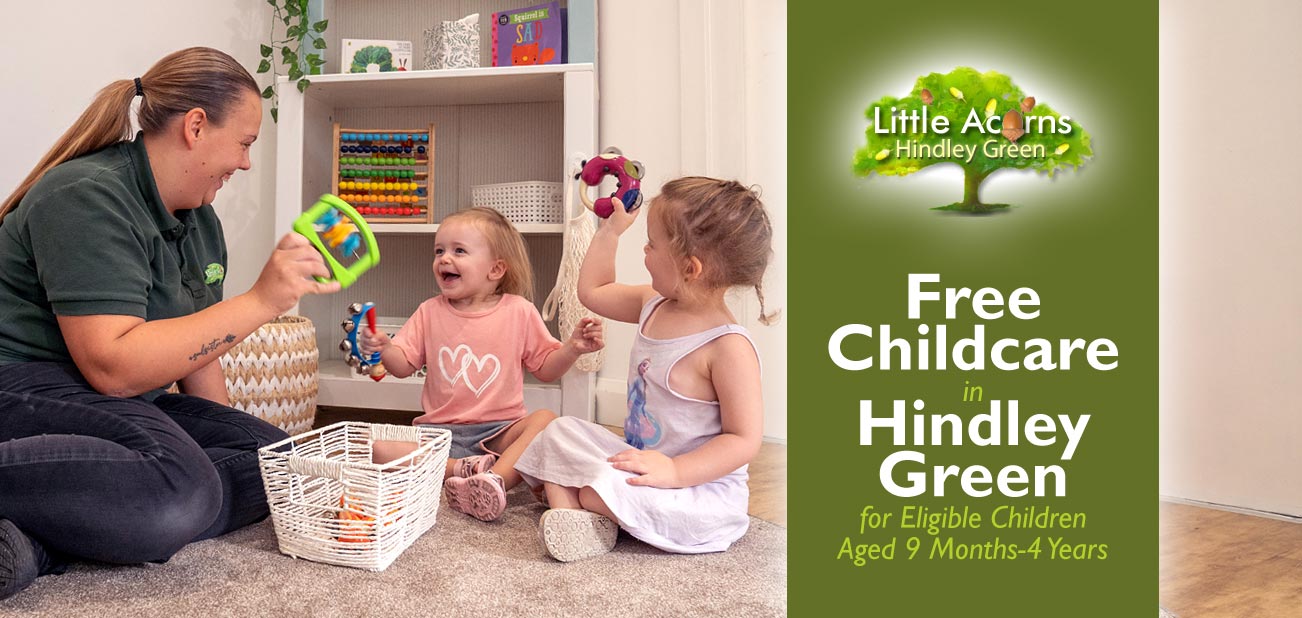
 Since September 2024, the number of free childcare hours available for eligible children aged 9 months to 2 years (inclusive) is 570 per year. This is usually taken as 15 hours per week over 38 term-time weeks of the year*. In further good news, the allocation is set to double to 1140 hours per year from September 2025, thereby aligning with what eligible 3 and 4-year-olds are already entitled to (see below).
 Meanwhile, a total of 1140 hours of free childcare is currently available for eligible children aged 3 and 4 each year. This is usually taken as 30 hours per week over 38 term-time weeks of the year*.
 Whether your child is funded by family or via one of the

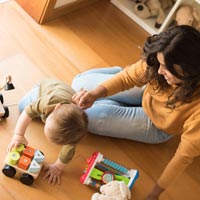 One of the most widely accepted truths among professionals involved in ‘early years’ education is that play is incredibly important to children. That’s not just because it comes naturally to them and is fun; play is the key tool through which children learn about themselves, each other, and the world around them. Indeed, the act of playing benefits children in a wide array of profoundly beneficial ways, including socially, mentally, physically, and emotionally. With that in mind, today’s post highlights some of the many benefits of play to children, particularly in their early years. So, if you have a child under five, take a look and you’ll soon see why encouraging your little one to play in a variety of ways will bring out the very best in them and help set them up for life.
 One of the most obvious things about children’s play is that often it gets them exerting themselves physically, as they run, climb, jump, make, create, and construct. Such activities help them to master gross and fine motor skills, balance, movement, and coordination. All such skills are enhanced significantly through play and are a fundamental building block of children’s development.
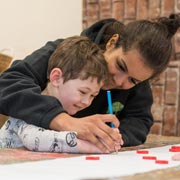 Right from an early age, the act of playing helps in the development of young minds and even contributes to the rapid growth of new connections in the brain. This is true even for babies, whose key tool to learn about the world is through play, as they explore with their senses as well as by reaching out to grasp toys and objects around them.
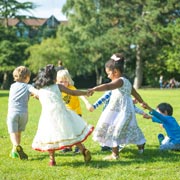 Whether playing with peers or with parents, the need to gradually master communication and language is imperative. Play helps that to happen in the most natural of ways. All the time they’re playing, children are naturally communicating, picking up new vocabulary, learning new phrases, getting to grips with grammar, and so on. Play is indeed a wonderful facilitator of communication and language.
 Playing is an integral part of every happy childhood. It’s fun and, put simply, makes children happy. That’s wonderful for children’s emotional and spiritual well-being and the importance of that cannot be overstated.
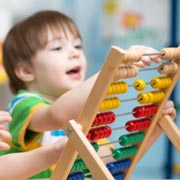 As we have seen in this article, play benefits children in a completely holistic way. Play enhances their lives through a multitude of benefits that include improved skills and abilities, a deeper understanding of the world and society, solid friendships and the myriad of opportunities that all of that will bring. Play also fosters a deeper love of learning, because play makes learning enjoyable. Indeed, through play, children explore, discover, and learn instinctively — with zero ‘friction’. As such, play should be at the very core of every child’s learning and development journey.





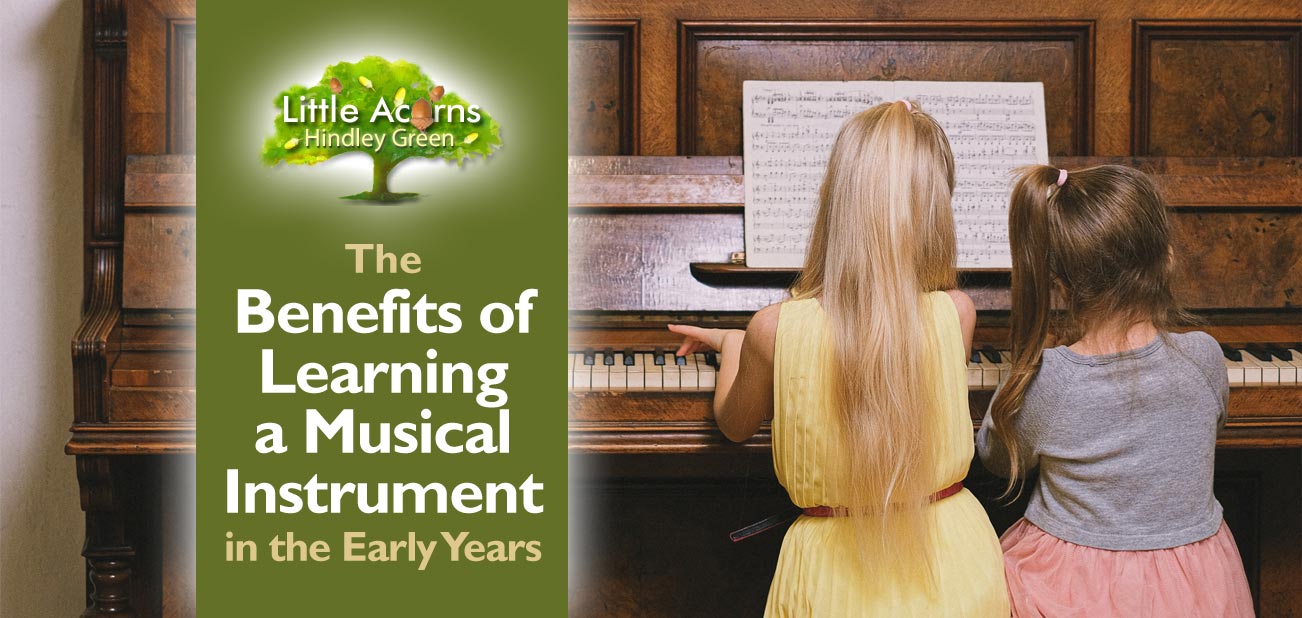
 With free tutorials available on YouTube and inexpensive instruments available in charity shops, phone apps and online marketplaces, there has never been a better time for children to start learning a musical instrument. It’s something for every parent to consider because such a pastime will benefit their child in an incredible variety of ways. Not only will they learn a new skill that will stay with them for life, but their lives will be enriched in many additional ways too. So, today, we take a look at the often profound benefits of learning a musical instrument, especially for young children. We’ll start with the three most obvious benefits before coming to many others that may surprise you.
 Playing all these notes in a certain order, sometimes in isolation and at other times as chords and progressions, will do wonders for a child’s coordination and fine motor skills. Although perhaps tricky at first, with practice and ‘muscle memory’, children’s ability to master the playing of musical sequences, chords, melodies and rhythms will gradually become easier and easier. Before long, it’ll become second nature to them.
 In a similar way, children who learn a musical instrument will usually, of course, also be learning to read printed music. While this comes in different forms, it all encourages children to concentrate on the reading process. Specifically, they’re learning to read from left to right, to analyse the printed music detail and to make sense of it. It’s another great workout for the brain, and we’ll say more about that next.
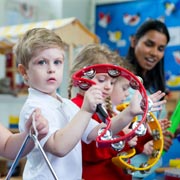 Playing a musical instrument often goes hand-in-hand with collaboration. Whether it’s forming a band, taking part in a school orchestra, writing songs with friends or simply jamming out together, children of all ages will naturally play together given the opportunity. As such, it’s a natural socialiser and one that brings children of different ages together, with new friendships being formed through a common interest. That is a very healthy thing. It also teaches children a wide variety of social skills including communication (e.g. speaking and listening at appropriate times), collaboration, being mindful of the needs of others, waiting your turn and so on.
 Music itself is also a great antidote to stress and other emotions. Giving children the tools to appreciate music — and even involve themselves in it — will help with their mental well-being as it can calm them when they’re stressed, relax them when they’re tired or even give them an energy boost when they need to get active. Ask any runner! All they need is the right piece of music and half the mental battle is already complete.
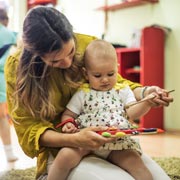 With all these benefits, it’s highly worthwhile for children to start learning a musical instrument as young as possible. It’s easy to start them, for example with simple instruments like drums, triangles, and tambourines initially. With these simple instruments, very young children can learn to keep time to music or a beat a rhythm demonstrated by adults. They can then progress to more advanced instruments such as recorders, keyboards, and stringed instruments. They have to start somewhere, though, but it’s never too early to start! Mozart was just 3 when he began to learn piano playing. By 5 he had composed a whole concerto! Who knows; perhaps your child could be a star in the making!
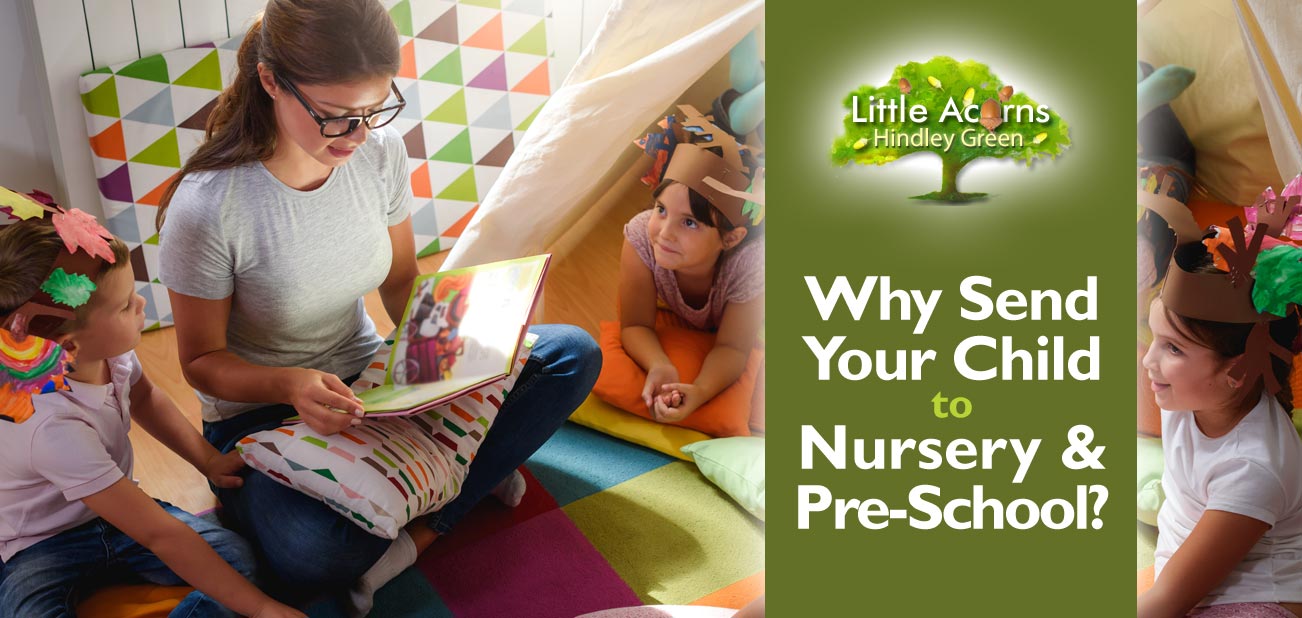
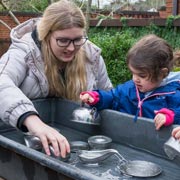 Some may be surprised to learn that nurseries/pre-schools like Little Acorns are not simply “childcare services”. We’re way more than just a crèche, playgroup or a group of nannies or childminders. In reality, our services extend way beyond simply looking after children while parents go to work, although of course we do that too. The truth is that we benefit little ones and their families in a whole range of additional, often profound, ways and that’s what we look at today.
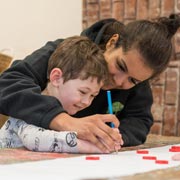 First of all, a Key Person will be allocated to your child on Day 1 when they start at the nursery. The Key Person is a childcare professional that will look out for the child’s wellbeing in all manner of different ways. One of the most important is in the monitoring of the little one’s progress in terms of learning and development. From the day they help to settle the child into the nursery to the day they leave for school, the child’s Key Person will be there to ensure that all the child’s individual needs are being met and that they are fulfilling their fullest potential in every area. Part of that will be the oversight of the bespoke early years education programme, which we’ll come to next.
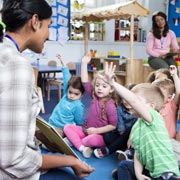 At Little Acorns Nursery, a bespoke early years learning and development programme will be designed and implemented to suit the strengths and any challenges for each individual child. This is orchestrated by the child’s Key Person and nursery staff and, where needed, through cooperation with any external professionals, e.g. for children that have any special educational or developmental needs. The learning and development programme is tailored to them and them only. Using this approach bolsters the child’s stronger areas, so they can be further strengthened, and addresses any weaker areas that may require extra focus. It is also adapted as time goes by, as progress is made by the child. In this way, every child gets to achieve personal bests and optimal outcomes in every area of their learning and development.
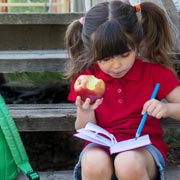 All of this nurturing, education and facilitation of their personal development does one other crucial thing too; it sets them up well for when they leave us around the age of five to start at primary school. By giving them the skills and tools they will need in every area, they are in a better position to absolutely thrive once they start school, right from day one. Indeed, many studies have shown that children who receive a good early years education go on to be higher achievers both at school and in their working lives. That’s gold dust, right there. Let’s take a closer look …
 ‘Hygge’, pronounced ‘Hue-gah’, is another exciting initiative happening at Little Acorns Nursery in Hindley Green. If you’ve not heard of it, rest assured that it’s something that children will absolutely love and will benefit them in many ways. It’s also something that we’ll be pioneering in the area, so you may not find it in other nurseries and pre-schools around Wigan right now.
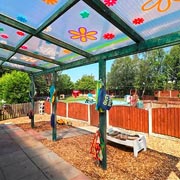 Everything at Little Acorns Nursery is there for a reason. It’s all been carefully brainstormed, pre-planned and implemented with utmost care. Whether it’s the introduction of Hygge, the addition of a new piece of equipment, or the purchasing of a specific toy or learning device, everything at Little Acorns has a purpose and is there to benefit the children.
 Parents of children at Little Acorns Nursery also give us great feedback about the wonderful childcare provision at the setting. Browse the site for full examples of parent feedback received (it’s scattered around the site) but, to give you a taster, comments include, “My girls absolutely adore this nursery but most of all they adore the staff”, “thank-you for the bottom of my heart for what you have done for my girls”, “I couldn’t recommend this nursery enough, they care and love the children like their own and I couldn’t of ever felt more comfortable leaving my children with a nicer set of girls.”, “I would not hesitate to recommend this nursery to anyone!”, “You should all be very proud of the work you do. It really means so much to us every time we see those small steps forward and we appreciate it.”, and “If I ever had any more children, without a doubt they will be coming to this nursery even if I moved 500 miles away!”.
 Starting nursery or pre-school is a real milestone for children and parents alike. As well as being exciting, though, transitioning to nursery or pre-school can be daunting for the little ones. The researching of childcare settings, checking Ofsted reports and appraising recommendations from friends is all very well, but that’s only the first step. The transition will be smoother for the children themselves if a few golden rules are followed. That’s precisely where today’s guide comes in, with our 20 Ways to Prepare Under-5s for Nursery. Take a look.
 Arrange a visit of your chosen or short-listed nurseries/pre-schools. Good settings (like Little Acorns Nursery) will be happy to give you and your child a guided tour. It’s best to go during an actual session, so that you can both see the setting in action on a standard day. Bear in mind that it can also be a chance for your child to become more familiar with the setting. If they later go on to start at the nursery, they will then already be aware of what the rooms look like, where the toilets are, who their carers are, and so on. Show them the play areas inside and out and let them see the other children having fun.
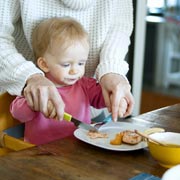 There are several things you can also do around preparing your child for eating at nursery/pre-school. For starters, get your little one used to eating in a group of other children — perhaps with friends or related children at first. Also practise cutlery skills with your child, so they’re more able to eat independently when they start.
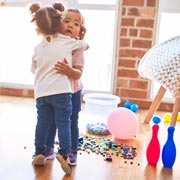 Pre-joining visits and settling-in sessions are a great way for children to make friends at the setting, but parents can also orchestrate this outside of the nursery or pre-school. For example, by finding out which friends and neighbours send their children to the setting, they can then suggest some play dates with those children. Little ones will then see one or more friendly little faces welcoming them, right from the outset, once they start at the setting. It’s a good opportunity for children to learn the art of socialising. It’s also good for parents to network in this way, so they can compare notes and perhaps pool information they might otherwise have missed.
 Whether your child is potty/toilet trained or still in nappies, teach them to help themselves in this type of area. If they are not yet toilet trained and are ready for it, begin to teach them. It’ll stand them in better stead once they start at nursery/pre-school. If they are newly toilet trained, though, reinforce that accidents do happen and that the childcare staff are used to it and will help change them if so.
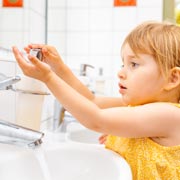 A little independence will go a long way for them once children start at nursery or pre-school. Personal hygiene and toilet training is just one of many things they can help themselves with if they’re shown how.
 Childcare providers are more than just babysitters or a crèche. Settings like Little Acorn Nursery and many others offer a full early years education too. It’s very high quality, covering pretty much every aspect of early years learning and development and the all-important
  In the month or weeks leading up to your child’s start date, it’s a great idea to try to mimic the timings at the nursery, so that the routine is pre-embedded. So, try to get them used to getting up and getting dressed etc. at the same time as the nursery and they can even have a restful nap at the same time as nap sessions at the setting. An appropriate bedtime routine is also important, so that your child is energised and not tired once they begin at the nursery.
 Ensure that you are familiar with the pick-up and drop-off times as well as the nursery’s security arrangements should someone else be picking your child up instead of you.
 When the big day arrives for your child, don’t let on if you’re anxious or sad otherwise your child may pick up on it and become upset. So, keep it casual and don’t make a fuss when you drop them off for the first time. Staff and any friends they’ve previously made as part of your planning above are sure to welcome them. Chances are, they’ll run off into the nursery with a friend and have great fun right away anyway!
 Parents* of under-fives may have heard nurseries, pre-schools, childcare professionals and other parents referring to “the EYFS”. However, what is it, and how does it affect your children? Well,
  For early years practitioners in England, following the EYFS framework is not optional. It is actually enshrined in law in England, via Section 39 of the Childcare Act 2006, so is an important and binding entity. (Other parts of the UK have similar equivalents).
 Ensuring high levels of safeguarding, welfare and happiness for every child at an early years setting;
 Communication and Language;
 As they work towards their individual goals, assessments will be made, for each child, on a continuous basis. By assessing the children, the learning and development programme and the goals themselves can be tailored and fine-tuned along the way, as required. This will optimise each child’s progress and achievements.
 Ensure those who have access to children are suitable, safe, pre-vetted people;

