
Fun Art Activities for Kids, Inspired by Nature
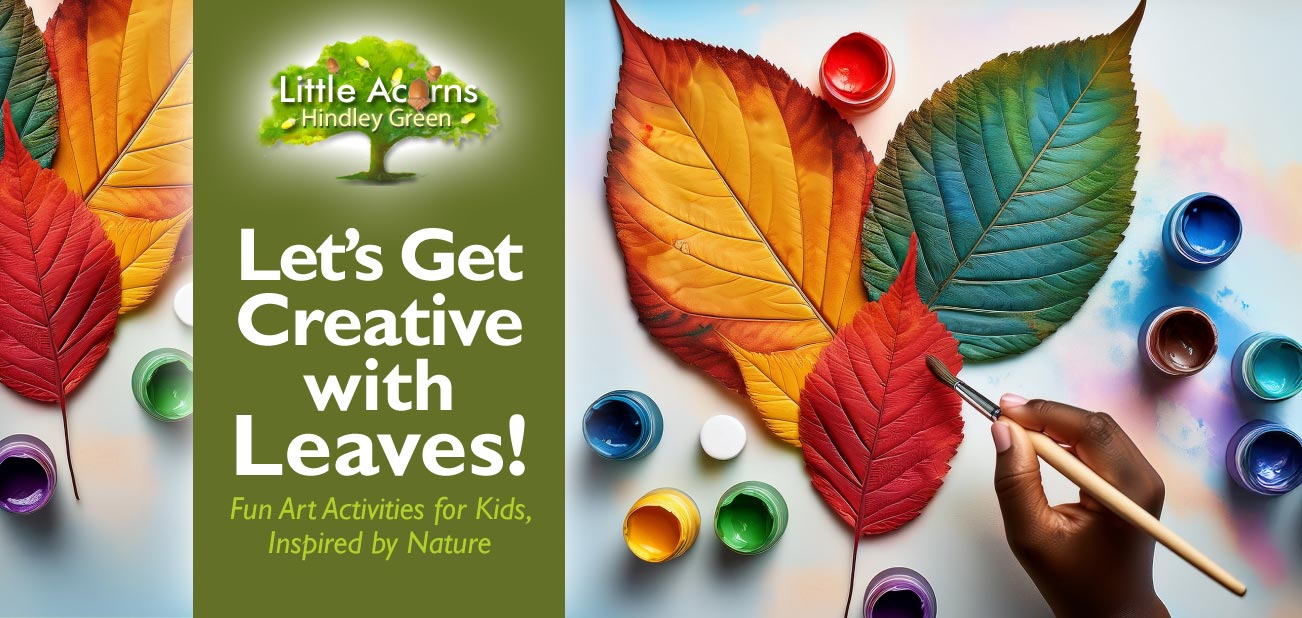
 Following May’s Leaf Nature Hunt post, we now follow up with some fabulously creative activity ideas inspired by the leaves children have collected. It’s the perfect time for such activities as summer gradually makes way for autumn, and leaves naturally fall all around. Not only are today’s activity ideas fun and creative for little ones, but they also make a vital link in children’s minds between The Great Outdoors and art. Such a link has been present for centuries, so this is a great opportunity to introduce the theme to youngsters. With these simple leaf-inspired ideas, children will benefit from nature, inspire their creative minds, boost their imaginations, and even develop new creative and motor skills. So, let’s get creative today with leaves! Take a look at the activity ideas below.
Step 1 for Children: Collect Some Leaves!
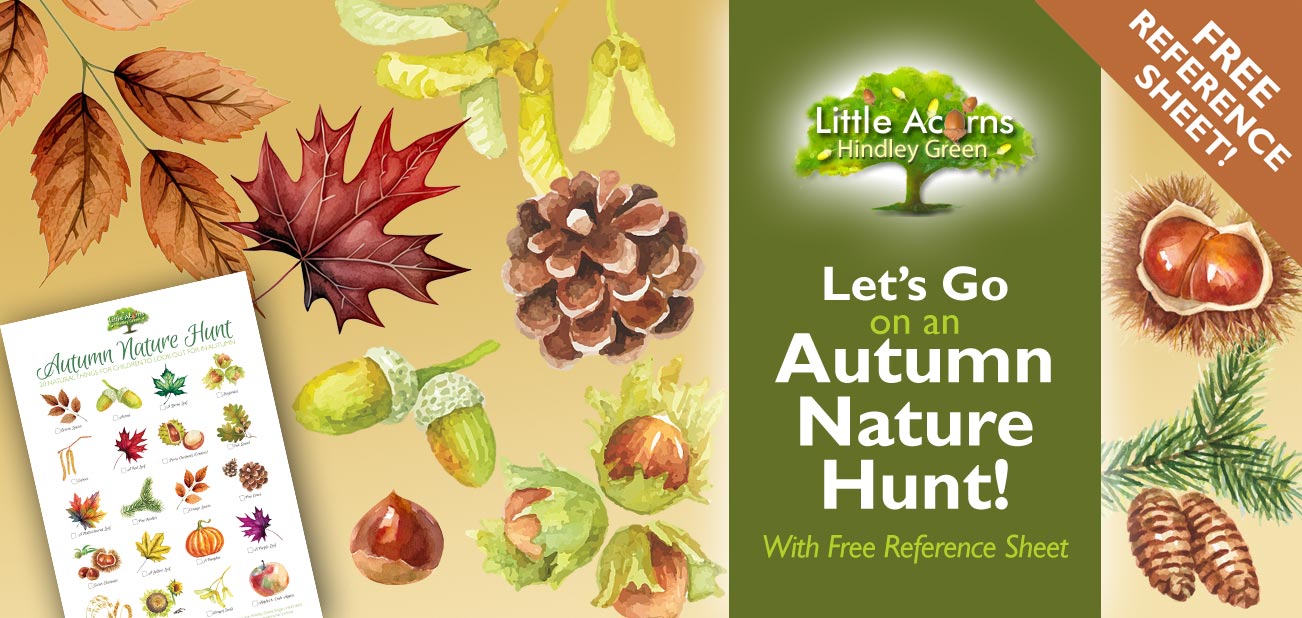
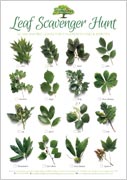 Children will need some leaves for these ‘leaf art’ activities. We suggest they collect a wide selection of shapes, sizes, and varieties, so they have the flexibility to undertake any of the leaf art activities below. Our free leaf reference poster should help. Adult supervision* is, of course, required for young children foraging for leaves outdoors; there are many hazards out there.
Step 2: Gather Art Materials
Children will need the relevant art materials for their leaf art. These may include non-toxic paint, pencils, or crayons, as well as paper and potentially child-safe glue, depending on the activities undertaken.
Step 3: Make Some Leaf Art!
Once children have gathered everything they need, it’s time to get creative! Here are a few ‘leaf art’ ideas to get them started.
Make a Leaf Collage
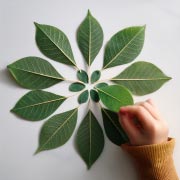
 Whether fresh, dried, or pressed (see below), leaf collages can be used to make wonderful pictures and designs. With a little imagination, leaves can suddenly resemble little trees and landscapes, or be combined into formations that depict a flower head or a graphical design. The accompanying images show a couple of examples to get children’s creative juices flowing.
TIP: For more permanence, use dried or pressed flowers glued to paper or card. For greater creativity, add extra elements like dried/pressed flowers, or other elements like twigs and dried grass stems. Children should feel free to draw their own additions too, for example, the ground level, hill shapes, the horizon, drawn animals, or children playing ball under leaf ‘trees’.
Paint & Decorate Leaves
 One of the most straightforward creative activities with leaves is simply to paint and decorate them with coloured paints. Doing so can create highly attractive groups of leaves that are fun and cheerful to look at. Experiment with flat colours or more intricate decorations such as polka dots, stripes, stars, or zigzags. Glue the finished leaves to paper or card once dry to use them as part of a leaf collage (see above).
TIP: Dried or pressed leaves may help coloured paint adhere more easily to the leaves; however, they may become more fragile if dried, so handle with care!
Discover Leaf & Flower Pressing
 Leaves and small flowers can be dried, flattened, and kept longer by pressing them. Once pressed and dried, they’re like little works of art in themselves and are quite delightful. They can be kept as bookmarks or keepsakes, or used as art and collage components for some of the other leaf activities outlined today.
HOW? Simply place leaves and small flowers individually between the pages of an ideally unprinted notebook or sketchbook, or in between sheets of unprinted newsprint, blotting, or cartridge paper. Place a heavy, flat weight on top — books usually suit perfectly — and leave for anywhere from a few days to a couple of weeks, depending on the thickness and moisture levels of the contained leaves/flowers.
Do a Leaf Rubbing
 Leaf rubbing is a simple yet effective art activity involving leaves. First, simply place a leaf under a sheet of fairly thin paper. Holding the paper still with one hand, children should use their writing hand to rub a crayon, pastel, charcoal stick, or soft pencil lead over the area where the leaf sits, scribbling from left to right in closely aligned lines. A ‘picture’ of the underlying leaf will gradually appear!
TIP: Use leaves with a defined texture and structure for the best effect. Use different colours for added interest.
Print with Leaves
 Leaf printing is super-easy and fun for little ones. Find a suitable leaf and, using a broad brush or — better still — paint roller, paint the most textured side of a leaf with a thin layer of paint, ensuring it covers the whole side of the leaf. Then, while the paint is still wet, place the painted side carefully over a sheet of blank paper. Without moving its position, press all parts of the leaf down so the paint makes contact with the underlying paper. Another way to accomplish this is to use a clean roller to ‘roll’ over the leaf so it connects the paint with the paper. Carefully remove the leaf and — hey presto — you should have an image of the leaf structure and texture right there on the paper. Try different leaves, various colours, and overlapping experiments to accomplish different outcomes.
TIP: Textured leaves with defined structures and veins work best. Often, the underside of a leaf is more defined. Leaf printing can be used to make pictures too, like in some of the other activities featured today.
Make Art Inspired by Leaves
 Instead of painting or using leaves directly, children can also try to depict them with their own paintings and drawings. These are a good way to encourage children to focus on getting the shape and details correct, fine-tune hand-eye coordination, and bolster technical mark-making skills. And, because children are free to paint or draw however they like, they can let their imaginations run riot and perhaps invent their own leaf shapes, leaf patterns, and natural worlds on paper.
TIP: If you, the parent, have some creative skills, try demonstrating with your own leaf drawing or painting first. Explaining what you’re focusing on and how you’re achieving things along the way may help children better understand how they might approach the activity themselves.
Create Greeting Cards Using Leaves
 Children can use some of the creative skills they’ve learnt in the activities above to make greeting cards that feature their leaf art. For example, they can forage for heart-shaped leaves and paint them cerise pink to use as part of a simple Valentine’s Day or Mother’s Day greeting card. More general greeting cards for other special occasions can also be accomplished using leaves and dried flowers — for example, arranged to depict a leaf or dried ‘bouquet’ on a card sent for a birthday.
TIP: Try doing an image search on your preferred search engine to find other examples of leaf and flower art to inspire your child’s own creations.
Leaf Art Provides Many Benefits to Children
Leaf art activities like these may seem simple, but they provide many potential benefits to children, including under-fives. Getting out in nature to forage for leaves is, in itself, beneficial in a huge number of ways, including through exercise, greater well-being, fresh air and freedom, and even a boost to academic grades, to name but a few. See our article The Importance of Nature in Early Childhood for more details.
The leaf art itself also benefits children in a wide variety of ways, and supports many of the aims of the EYFS curriculum. From practising hand-eye coordination, honing fine motor skills, and stimulating imaginations, to opportunities for self-expression, creativity, expanded language, and interpersonal communication, these simple activities offer huge benefits to little ones — naturally. Spring, summer, and autumn are the perfect times for such activities, so why not get your child inspired with some leaf art soon? Enjoy!
Little Acorns Nursery, Hindley Green
A Year-Round Childcare Service for Children Under Five
 Little Acorns Nursery in Hindley Green provides a high-quality weekday childcare service virtually all year round. With its home-from-home environment, excellent facilities, and extensive outdoor grounds, children have fun while their learning and development are carefully nurtured by high-quality early years practitioners. At Little Acorns, every child receives the support and care they need to be as school-ready as possible by the time they leave us to begin formal education. Little Acorns Nursery supports funded hours for eligible children from the age of just 9 months.
To register your interest, apply for a nursery place, arrange a visit, or simply ask any questions, please get in touch today:
Our nursery in Hindley Green serves people from the Wigan, Bolton, and Greater Manchester areas, including Bickershaw, Leigh, Atherton, Westhoughton, Ince-in-Makerfield, Platt Bridge, and Tyldesley.
*Safety Notice
Children, especially the young, should be accompanied by an adult at all times when exploring and playing outdoors. Supervising adults should teach children about potential dangers, including poisonous berries, fungi, animal waste, choking hazards, water hazards like ponds, water courses, and lakes, traffic dangers, stranger danger, and so on. These are just a few examples, and adults will need to do their own risk assessments and educate children about such risks. Children should also be reminded to wash their hands with soap and water after the activities.


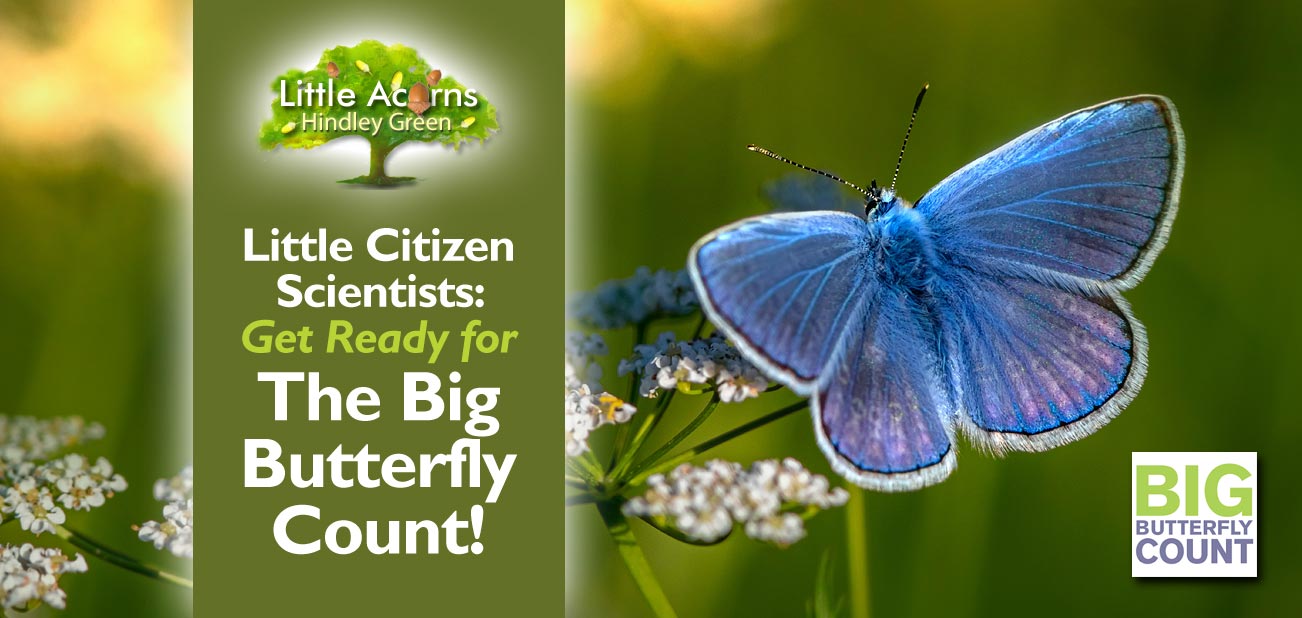
 Calling all children and their families — people of all ages are needed this July and August for the world’s biggest wildlife survey — the Big Butterfly Count! So, whether you’re a child or an adult, you can play your part. This is a great activity for under-fives too as it’ll be fun, educational, and incredibly worthwhile. What’s more, they’ll become little citizen scientists by taking part. The nature-based activity takes as little as just 15 minutes and costs nothing at all. Children don’t need any special abilities other than a little patience and good observation — both great skills for them to practise. Let’s take a look and see what the Big Butterfly Count is all about and how children can take part this year.
 The Big Butterfly Count is a nature survey that anyone can take part in during July and August each year. For 2025, it takes place from Friday the 18th of July to Sunday the 10th of August, a period in which temperatures are usually warm and butterfly populations are likely to peak. In essence, all that is required is for butterflies to be counted during a 15-minute period (more detail follows later in this guide). The survey event is open to everyone and, indeed, the more people who take part, the better. So, if you, your child, your family, or your friends want to play a part in protecting butterflies and nature as a whole, please get involved.
 The populations of butterflies can be used as a barometer for the health of pollinator numbers and nature as a whole. With some butterfly species already disappearing from our gardens and countryside and others nearing extinction, there is no time to lose. Only by identifying the issues can we, as a nation, begin to reverse some of the decline. By reversing it, it will be good for butterflies, good for other pollinators like bees, good for nature as a whole — and good for humans too! After all, without pollinators, the supply of foods like cereals, fruit, vegetables and legumes would start to run out. So, taking part in the Big Butterfly Count is extremely worthwhile and we urge little ones and their families to take part.
 First, ensure you have downloaded and printed out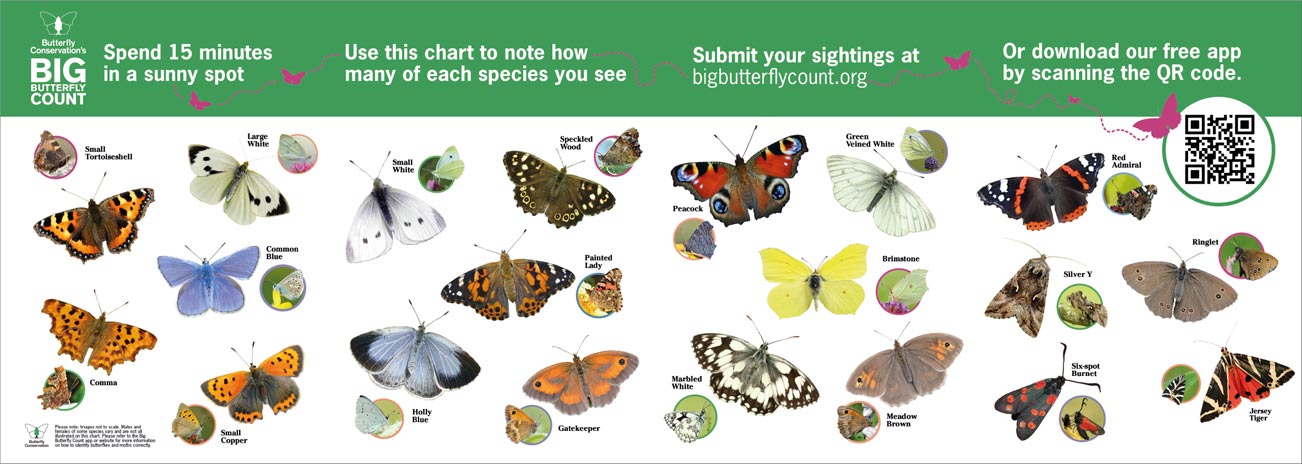
 Choose a spot for your butterfly survey. It should be somewhere outside where butterflies are most likely to be seen. Sunny, sheltered spots are good, particularly where a variety of different sizes and types of flowers or blossoms are in bloom.
 Sometime in the period from Friday the 18th of July to Sunday the 10th of August, you/your child should spend 15 minutes making a note of how many of each type of butterfly you can see. Concentrate only on the species included in the event organiser’s reference from Step 1. You must count how many of each single species you see at the same time. So, if you see three Painted Ladies at the same time, then record that as 3. However, if you see one Painted Lady on three separate occasions during the 15 minutes, that would only count as 1 — otherwise, it could simply be the same butterfly revisiting.
 Did You Know?
 Nature and outdoor play feature significantly in children’s time at
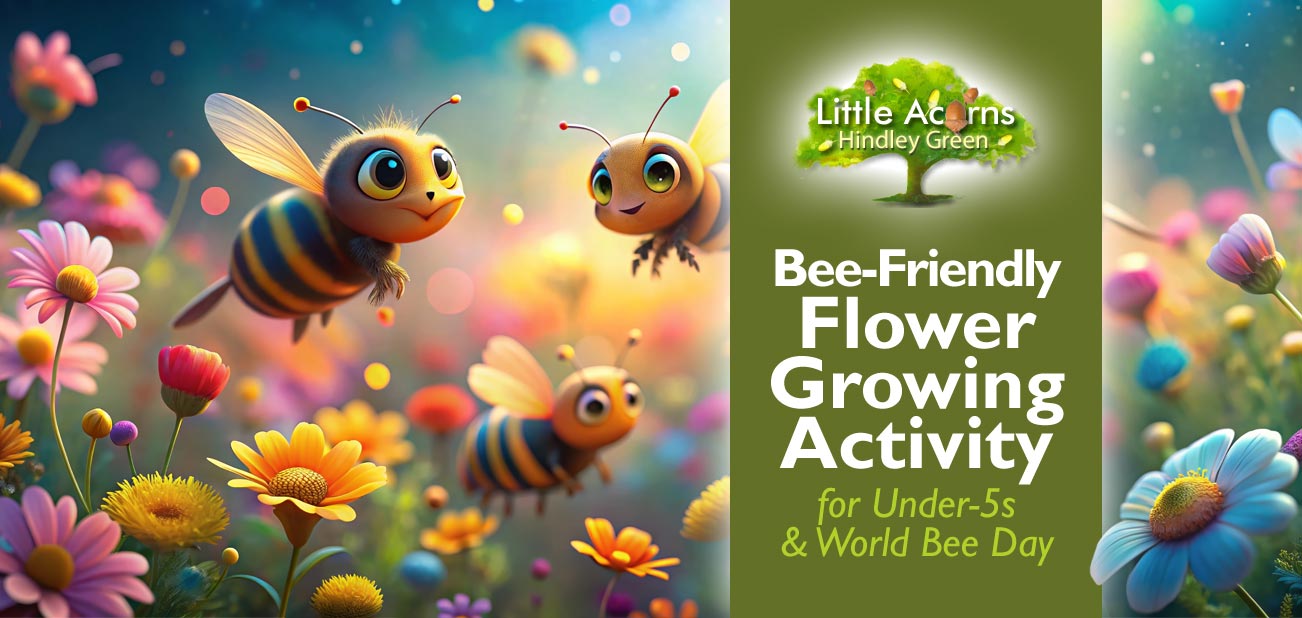
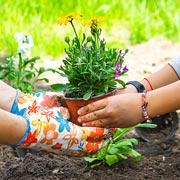 With World Bee Day arriving on the 20th of May and National Children’s Gardening Week arriving on the 24th, it’s an excellent time for a flower-growing activity for children — including under-fives. More specifically, the growing of bee-friendly flowers — from seeds — will be an excellent way to celebrate World Bee Day and support these adorable little creatures. Bees, butterflies, and other pollinators are incredibly important for the world, being largely responsible for pollinating the crops, including nuts, seeds, fruits and vegetables, that we rely on for food. Yet they are under threat with numbers dwindling severely in recent years. Without bees and other pollinators, the world’s animals, plants, trees, and flowers would be in real danger. Today’s bee-friendly flower-growing activity is therefore an incredibly worthwhile one for children to get involved in. It’s fun, highly educational for little ones, and will help to make the world a better place! Little ones, let’s get growing!
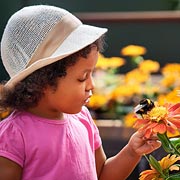 Unless seeds are available from friends and family or harvests from previous years, parents of under-fives will need to source them. However, that’s easy and can be incredibly inexpensive. Most supermarkets sell seed packets and, if not, there is a whole range of online stores to choose from (
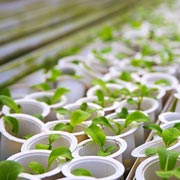 If children are going with our recommended second option, they will first need to read packets to ensure their timing is right. For seed trays, they can use inexpensive, commercially available seed trays or use smaller options like flower pots. Another free alternative is to use repurposed margarine tubs, yoghurt pots, or similar. Whichever option they choose will need drainage holes added underneath by supervising parents plus a drip tray of some kind. Whether that’s a commercial one or something as simple as a saucer is up to families.
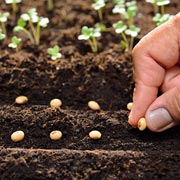 Once the soil is layered into the seed trays or pots, to a level an inch or so below the top, children can indent the soil/compost for the seeds to go into. Seeds can be manually spaced out into these indents so that, once they grow, the individual plants will be easily separated. We suggest scattering a shallow layer of sieved soil or compost over the seeds once placed into the indents and given a sprinkling of water.
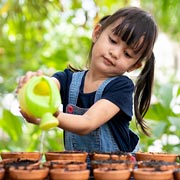 Children should continue to water the seedlings regularly, when needed, and may also have to thin out any ‘clumps’ or plants that are too close together, otherwise, several plants may get tangled and have to compete with one another unnecessarily.
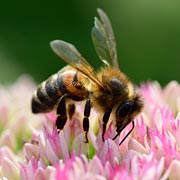 Once flowers appear, children can expect pollinators like honey bees, bumblebees, butterflies, and hoverflies to appear. It’s going to be magical for children when that day first arrives! Bees and the other pollinators truly are delightful and adorable. Children should look but not touch*, after all, bees have important work to do!
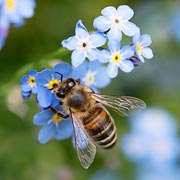 This activity will raise awareness of bees and pollinators in children of all ages. It’s not only a wonderful way to introduce children to these adorable creatures, but also a great opportunity to raise awareness of the plight bees and pollinators are facing. They are under severe pressure from habitat loss, global warming, the use of harmful pesticides/weedkillers, pollution, invasive predators, and many other threats that have made their populations plummet in recent years.

 World Book Day is a special charitable event, celebrated globally, that encourages children of all ages to discover the joy of reading. Why? Because reading has the power to substantially improve children’s lives. Schools, nurseries, and libraries across the nation make the day extra special for children through storytelling sessions, fancy dress, and book-related activities.
 Find time for your little one to read.
 Dress up as a favourite character! There’s no need for elaborate costumes; a simple hat, crown, or themed outfit inspired by a beloved book character can bring your child’s favourite stories to life.


 Since September 2024, the number of free childcare hours available for eligible children aged 9 months to 2 years (inclusive) is 570 per year. This is usually taken as 15 hours per week over 38 term-time weeks of the year*. In further good news, the allocation is set to double to 1140 hours per year from September 2025, thereby aligning with what eligible 3 and 4-year-olds are already entitled to (see below).
 Meanwhile, a total of 1140 hours of free childcare is currently available for eligible children aged 3 and 4 each year. This is usually taken as 30 hours per week over 38 term-time weeks of the year*.


 Draw up a short list of possible settings for your child, having first whittled down the choices by
  If your child already has a friend or neighbour of a similar age who will also attend your chosen nursery, it can be very useful. Both children will then have a friendly face to play with from Day 1. If not, it should be easy enough to ask around to find out about other local children who will start at the nursery when your child does. Arranging play dates for them in the weeks running up to the start date will help each child familiarise themselves with one another, so they each have a friend or two at the nursery right from the start. It’s a great way of settling them in.
 Aside from the initial guided tours undertaken, we schedule 2 formal settling-in visits for children once a place has been offered. These hour-long settling-in sessions usually occur in the week before children are due to start at the nursery formally. They are both free of charge. Here’s how they are approached:
 Reassuring your child will also help them settle into nursery – so communication is key. This is true both before they start and once they attend, particularly at the beginning. Before starting, it’s important to ensure they know that changes will soon happen, what to expect when the time comes, and that it’s going to be a big adventure with lots of fun! Encourage questions and answer them sensitively. They also need to be reassured that you will always be there, behind the scenes, looking out for their best interests. And, of course, it’s crucial for them to know you’ll be there to pick them up at home time (don’t be late!).
 As we said previously in our
  Encourage children by celebrating their successes at the nursery. Whether it’s the successful completion of their first day, the first tear-free day, the making of a new friend or any other accomplishment, ensure you congratulate your child. This will give them a sense of achievement, reassure them that they’re doing well, and encourage them to keep attending and building on their progress.
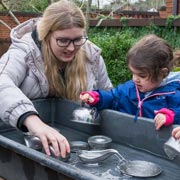 With children sometimes taking as many as 2, 3, or even 4 weeks to fully settle into a new nursery, it’s also important for staff to closely monitor and nurture them. That’s indeed exactly what we do at Little Acorns Nursery in Hindley Green. We ensure the setting is a home-from-home environment for children as much as possible. Children will feel valued, loved, listened to, and well cared for at Little Acorns. We’ll reassure them when they need it, communicate well with parents/carers, discuss any challenges and work to address them speedily and in the most effective ways. We have children’s best interests at heart, so parents can rest assured that their little ones are kept safe, happy and well and, even if not immediately, they’ll grow to love being at the nursery. A couple of recent testimonials prove the point beautifully (hover over them to pause):