
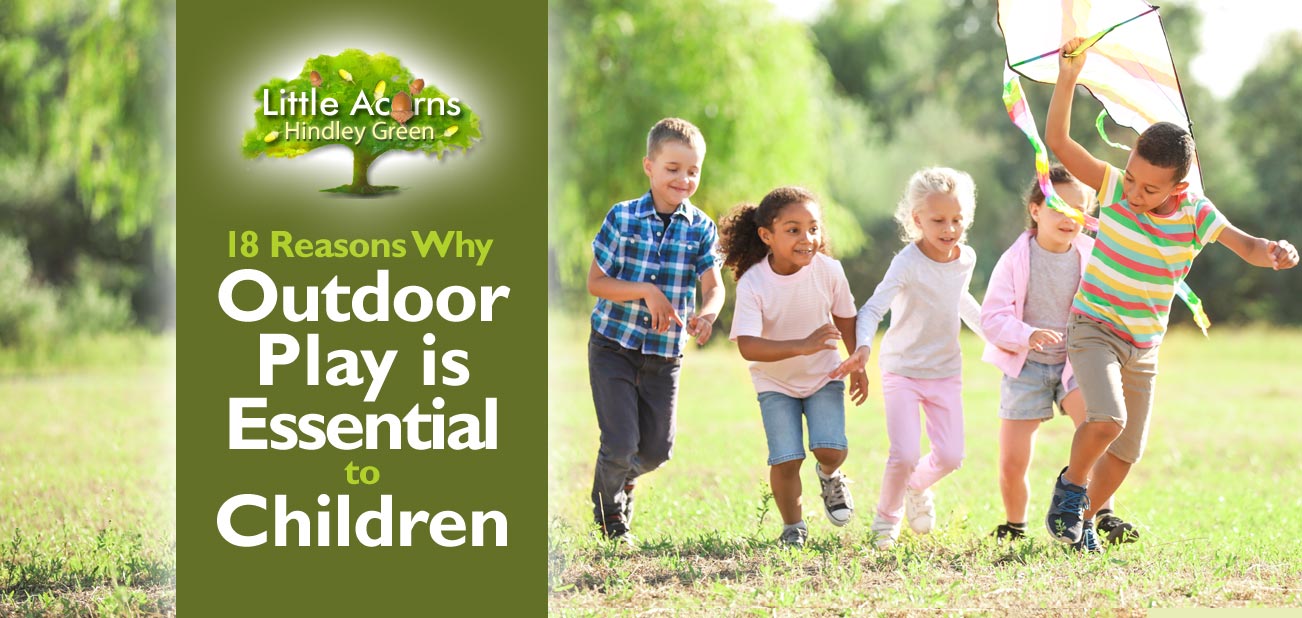
 Outdoor play is one of the truly magical elements of any healthy, fun-filled childhood. At the very least, it gives children the chance for some freedom, fresh air, and adventures that simply aren’t possible indoors. In today’s technological age of electronic screens, however, it’s also something that children have been doing less and less of over the generations. That’s a shame, when you think about it, not least because outdoor play is immense fun and incredibly beneficial to children. In light of this, today’s post explores 18 Reasons Why Outdoor Play is Essential to Children — of all ages. Take a look and see why outdoor play is so good for little ones.
Opportunities for Unique Adventures
 We mentioned it in our introduction — playing outdoors provides children with wonderful opportunities for real adventures! Whether it’s exploring The Great Outdoors on a family ramble, climbing on playground equipment with friends, embarking on a make-believe quest with the family dog, or making a den with siblings, there are no limits to what’s possible with outdoor play. Indeed, the adventures that are possible through outdoor play are only limited by a child’s imagination! Speaking of which…
Outdoor Play Boosts Creativity
Children are naturally inventive, especially when they play and create. Outdoor play opens up a myriad of new opportunities for them to use their imaginations, generate ideas, build, and create. Whether building a den, inventing new games, role-playing, or crafting things from natural objects, outdoor play naturally boosts children’s imaginations and creative skills.
Outdoor Play is Pure Fun!
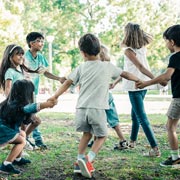 Let’s not forget, too, that playing outdoors is huge fun — and that’s important. Simply put, playing outdoors and giving children space to run around will make them happy. And there’s not much in life that’s more important than a child’s happiness — it’s an essential part of any magical childhood.
Children Learn So Much Through Outdoor Play
It’s common knowledge that young children learn best through play. By playing outdoors, children are exposed to new and virtually infinite opportunities to learn new things. Whether it’s new facts about the world or about themselves, these new learnings are gold dust that will enrich any child.
Outdoor Play Encourages New Skills
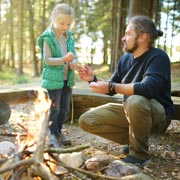 Outdoor play lends itself to the learning of new skills. With such a varied array of activities possible, children will naturally attempt new things, and each of these can be an opportunity to extend their skills. Physical skills might include tying knots, building dens with branches, playing ball games, climbing, racing, and so on. In addition, children will learn softer skills like teamwork, cooperation, strategy, critical thinking, leadership, and role play. What’s more, all of this will happen instinctively — such is the power of outdoor play.
Outdoors is a Feast for the Senses
Playing outdoors is a potential feast for children’s senses (under adult supervision, of course). The outdoor environment is rich in textures, colours, smells, and scents that will stimulate children’s senses — taste too, under close adult supervision. Brightly coloured flowers that smell incredible, the fascinating textures of tree bark, soft moss growing on rocks, the delicious flavour of an apple, and multicoloured rainbows spanning the sky are just a few of the many things that’ll stimulate the senses of a child outdoors. Such stimulation teaches children about the world, about nature, and encourages new connections in children’s developing brains.
Improved Spatial Awareness
Next, we come to the proprioception and vestibular senses, which control and coordinate the position of the body through movement, spatial orientation, and the sensing of gravity — even when the eyes are closed. These additional, hidden senses are also stimulated by the many activities experienced during outdoor play, allowing children to fine-tune their spatial awareness, physical movements, coordination, and the adjustments of force. Such skills will allow them to move optimally and stay safer from potential harm.
Outdoor Play Boosts Friendships
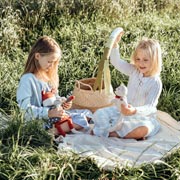 Children who regularly play outdoors will inevitably meet other children and encounter new dynamics. These will help them make new social connections, and immersive activities will deepen existing friendships. Playing outdoors is a great way, therefore, to strengthen and extend a child’s social circle, and boost social skills like teamwork, leadership, cooperation, brain storming, and so on.
Enhanced Communication Skills
All this outdoor play, which is seldom undertaken without other friends, siblings, or family members, is a natural conduit for improving communication skills. Group-based activities and multi-player outdoor games require clear communication skills, which children will naturally learn while having the best fun.
Outdoor Play Supports the EYFS
The Early Years Foundation Stage (EYFS) curriculum is, importantly, another beneficiary when children play outdoors. Several prime and key areas of the EYFS are supported when children do so. Examples include Physical Development, Communication & Language, Understanding the World, Personal, Social & Emotional Development and even Mathematics — each of these is boosted in children who play outdoors.
Outdoor Play Boosts Children Physically
 The often high-octane activities associated with outdoor play will also help children boost strength, fitness, motor, and coordination skills. By exposing themselves to different terrains, environments, tasks, games, and equipment outdoors, they will increase the variety of motor skills they need to accomplish activities. Running, jumping, hopping, constructing, chasing, and climbing will all help improve them physically, in so many ways that may not be possible indoors. What’s more, such things will help children protect themselves from harm, as well as empower them physically.
Proximity to Nature is Good for Children
Many studies have shown that being close to nature is immensely beneficial to children and adults alike. Indeed, the benefits of nature are profound and numerous to children (click the bold link to read our stand-alone article on the topic). In short, close proximity to nature boosts mental well-being, reduces anxiety, fights depression, and even improves academic grades. Incredibly, even just a view of a natural open space has been proven to improve children’s educational performance. Just a few minutes spent closer to nature can also help children reset following a time of stress.
Outdoor Play Helps Children Assess Risk
 Playing outdoors, with adult oversight, is the perfect opportunity for children to begin learning how to assess risk. Whether it’s safely navigating outdoor play equipment, stepping over undulating ground, climbing a tree, or playing fast-paced ball games, children will soon learn when and how they need to assess possible risks. It’s a skill that, once learned, will keep them safer from harm, so is incredibly important.
Outdoor Play is in the Real World
Outdoor play takes children back to the all-important basics, away from electronic screens and the dangers of a more sedentary lifestyle. Outdoors, they’re deeply involved in activities, immersing themselves fully into real-life games and scenarios. That’s a far cry from sitting and looking at electronic TVs, tablets, smartphones and computers. And, with the UK recently debating whether it would be better to ban mobiles in schools and social media for children under 16, this is highly relevant today.
Outdoor Play Boosts Confidence
By playing outdoors, children get to enjoy greater movement, more independence, and an element of freedom that’s simply not possible indoors. By giving children such opportunities, they will naturally take charge of activities a little more, learn to make decisions for themselves, and add deeper levels of sophistication to their relationships with friends. Such opportunities will naturally boost independence, self-confidence, and self-esteem — essential tools to help them thrive as they get older.
Outdoor Play Helps Ready Under-5s for School
 All these new skills and enhancements make under-5s well-equipped when the time comes to leave preschool and begin school. Through outdoor play, they’ll have greater independence, confidence, communication and social skills, and physical skills, to name just a few. What a great way to help them hit the ground running from the moment they begin school!
Outdoor Play Widens Children’s Horizons
There are few activities that will better expose children to the wider world than outdoor play. Through it, they’ll discover new places, new facts, new skills, new activities, and broaden their understanding of our beautiful planet. As well as having fun and discovering new experiences, their eyes will be truly opened to the enormous scope of what’s out there if they care to explore. That widening of horizons can profoundly benefit their lives and future potential.
Outdoor Play Prepares Children for Life
 All in all, outdoor play prepares children for life. Through greater independence, better confidence, raised self-esteem, and new tools, skills and knowledge at their disposal, children can go forward with new vigour and thrive. Such is the power of outdoor play.
So, with spring not far away at the time of writing, it’s a great time to plan some outdoor play for your children — under adult supervision, of course. Whether it’s a trip to the playground or a hike in the wilds of the countryside, outdoor play will benefit them in incredible ways. And it’s so much fun! What’s not to like?
Little Acorns Nursery, Hindley Green
A Weekday Childcare Service Near Wigan
 At Little Acorns Nursery, Hindley Green, we understand the benefits of outdoor play and nature to children. With that in mind, children under our care get to experience rich and stimulating opportunities for outdoor play and proximity to nature. The childcare setting is fortunate to have extensive grounds, where children can enjoy playing on a wide range of equipment or explore nature zones.
Little Acorns Nursery supports free childcare hours for eligible families. This includes eligible children as young as 9 months old. To apply for a place, find out more, arrange a nursery tour, or get in touch, please get started below:
Little Acorns Nursery is located in Hindley Green, near Wigan. Families living nearby in Bickershaw, Leigh, Atherton, Westhoughton, Ince-in-Makerfield, Platt Bridge, Tyldesley, Bolton and Greater Manchester may also find it a convenient choice.


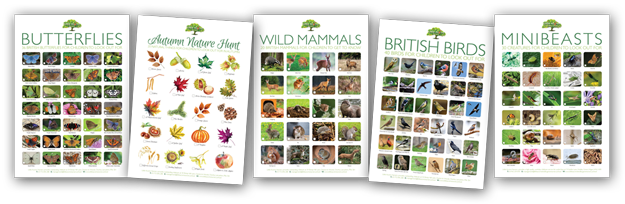
 Wherever you look, nature’s flowers and trees are bursting with life during spring and summer. This got us thinking about the many nature-based activities that are possible for children and under-5s to enjoy at this time of year — under appropriate supervision, of course. One of them is a simple leaf-hunting activity that’ll get little ones exploring the outdoors, enjoying the fresh air, having some fun, and learning about the natural world. With this in mind, we’ve put together a Leaf Scavenger Hunt reference poster for children and families. It can serve as inspiration for some common leaves to look out for during the warmer months of the year. The poster is free to download, right here today, and highlights 16 different types of leaves. Included are oak, sycamore, beech, lime and many more. Children will probably be familiar with some — especially oak leaves with their wonderful little acorns — while others may be unfamiliar. However, all of our examples were sourced on a single morning’s outing, so it’s feasible to find all 16 kinds with a bit of eagle-eyed persistence! So, download the poster for your children, print it out, and explore the outdoors to see how many of the 16 leaf types your little one can find. See if they can identify the differences which make each species of leaf/tree/plant unique — and learn their names if they can. The free identification poster and some help from an adult should help. Have fun out there!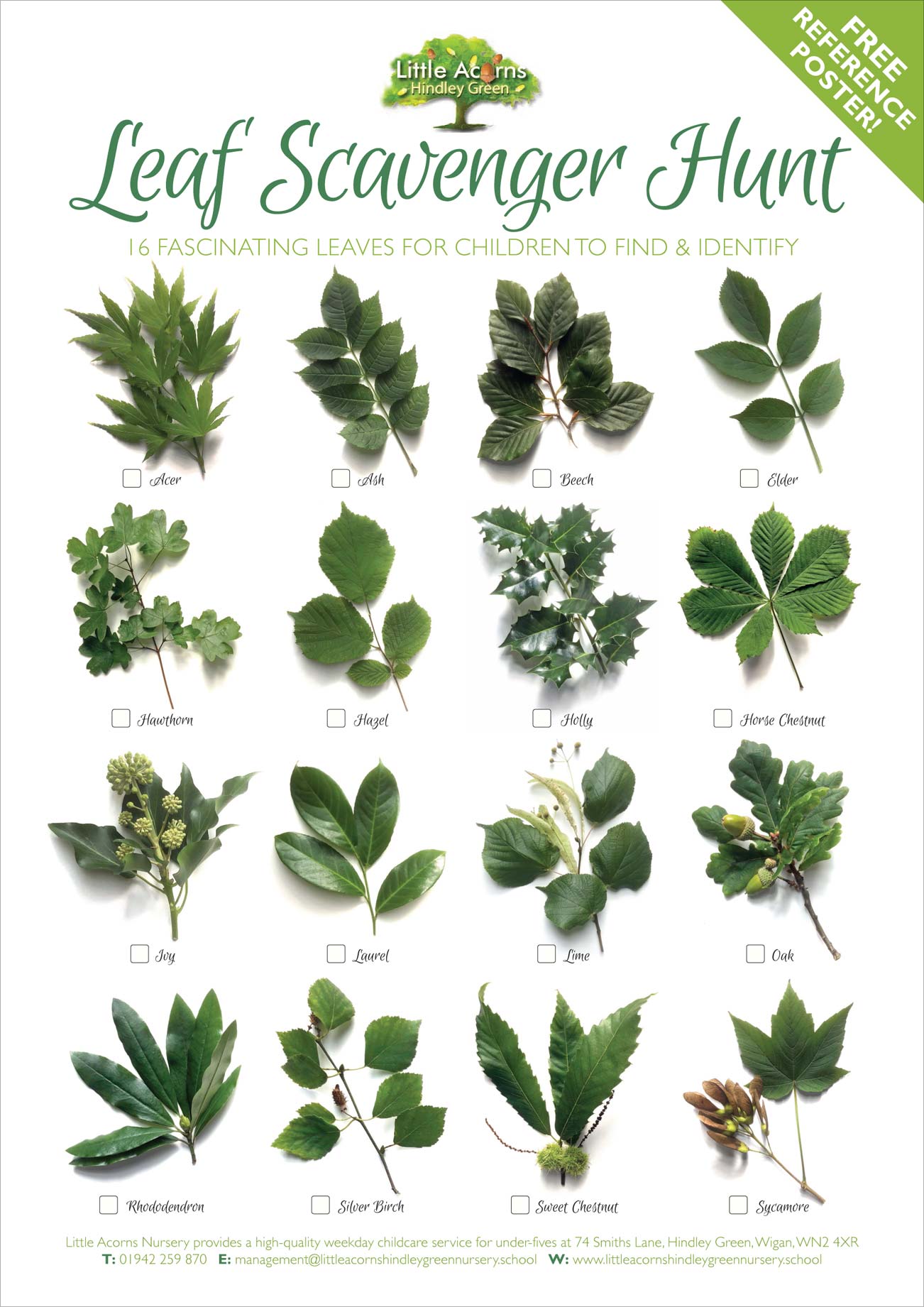
 Some of the leaves will be easier to identify than others. For example, Horse Chestnut (a.k.a. ‘conker tree’) leaves are quite distinctive with their fan of multiple sections (see the 2nd row, last image on the right on the poster for our example). In contrast, hazel and lime leaves are quite similar to one another. One easy clue to tell them apart is that lime leaves are slightly shiny, whereas hazel leaves are extremely matt. And, of course, they have very different seeds once those appear (the lime seed clusters are quite beautiful as you can see on the poster in the 3rd row, 2nd image from the right).
 Another interesting factor to point out to children is that some of the leaves come in different colours. Beech leaves, for instance, can be green or deep burgundy, brown or dark purple depending on which variety of beech a child locates. It’s similar for acers, which can be green, yellow, red or a deep purple/maroon. Acers however, are more likely to be found in gardens and parks than in the countryside. Some are a little like miniature sycamores, only rather more delicate and fancy! And, come
 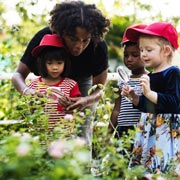 This activity is a great opportunity for children to open their eyes to the natural world. By looking at nature more deeply, they’ll see the finer details that may have been overlooked. Nature is incredibly varied and interesting when you take the time to look closely and discover it properly. It’ll teach children about the natural world, the seasons, the changes in plants and trees at different times of the year, the circle of life, and so much more. Getting out, close to nature, is also incredibly beneficial to children. From busting stress, improving well-being, supporting the EYFS and boosting exercise, to improving concentration and even academic grades,
  Once children have collected them, leaves can inspire various other creative activity ideas for children. For example, has your child ever tried leaf rubbing (putting a leaf under paper and scribbling over it to reveal the leaf structure), leaf pressing (pressing leaves between pages of a heavy book to allow them to dry and flatten), or leaf printing (painting a leaf with paint then pressing it onto paper to offset the leaf’s form as an image)? These are just a few examples of the



 World Book Day is a special charitable event, celebrated globally, that encourages children of all ages to discover the joy of reading. Why? Because reading has the power to substantially improve children’s lives. Schools, nurseries, and libraries across the nation make the day extra special for children through storytelling sessions, fancy dress, and book-related activities.
 Find time for your little one to read.
 Dress up as a favourite character! There’s no need for elaborate costumes; a simple hat, crown, or themed outfit inspired by a beloved book character can bring your child’s favourite stories to life.

 Families, set your diaries for the wildlife event of the year, which happens this January from Friday the 24th to Sunday the 26th inclusive. It’s free, takes just one hour, and allows children and adults to be part of the world’s biggest garden wildlife survey. During the event, families and individuals across the nation simply count the birds they spot in the garden, park, local green space, or even balcony over the course of 60 minutes. The results of hundreds of thousands of these surveys are compiled by the Royal Society for the Protection of Birds (RSPB) to build a picture of the health of the nation’s bird populations. It’s important scientific and ecological work and children can become citizen scientists if they simply take part. Learn more about the Big Garden Birdwatch and how to take part in today’s guide for families with children.
 Children will love being involved in this important nature-based activity. They’ll not only play their part in helping birds and nature, but they’ll also have fun and learn something along the way. They will discover some of the many wonderful feathered visitors who live in their neighbourhood and learn about some of the important issues affecting the natural world. They’ll begin to grasp the impact of humans on Britain’s flora and fauna and learn the importance of conservation and looking after the natural world around them. Through this endeavour, they’ll learn how they can make a positive difference. They will also become little citizen scientists! It’s fun, educational, and will give them a wonderful sense of achievement too. It may even change their outlook over the long term and help them think about their own impact on the planet, which is a wonderful outcome. And last but not least,
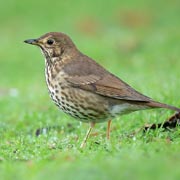 Once the chosen time and date arrive, all you/your children need to do is monitor birds landing on your chosen patch. Count those that actually land rather than any flying otherwise there’s a danger that one bird could be counted multiple times. What you need to record for the survey, though, is the largest number of each bird species that have landed at any one time during the hour. So, for example, if you spot two blackbirds that have landed at the same time in the first half hour, but later in the hour you can see 4 that have landed at the same time, then you need to record “4” for blackbirds.
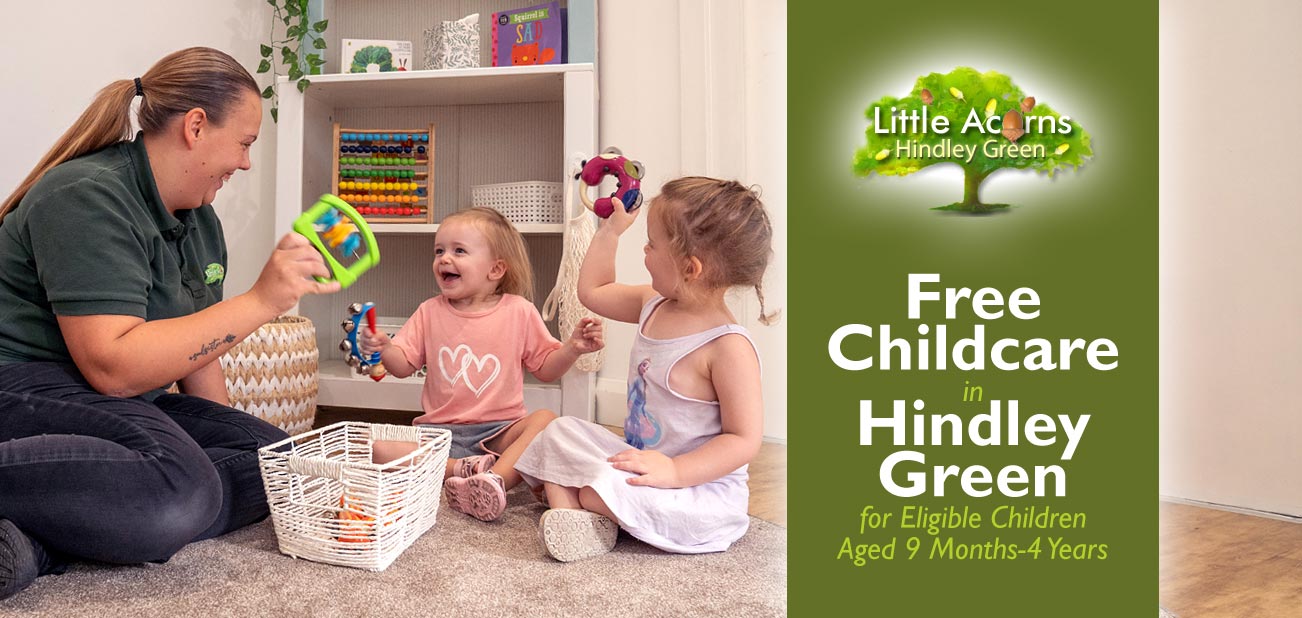
 Since September 2024, the number of free childcare hours available for eligible children aged 9 months to 2 years (inclusive) is 570 per year. This is usually taken as 15 hours per week over 38 term-time weeks of the year*. In further good news, the allocation is set to double to 1140 hours per year from September 2025, thereby aligning with what eligible 3 and 4-year-olds are already entitled to (see below).
 Meanwhile, a total of 1140 hours of free childcare is currently available for eligible children aged 3 and 4 each year. This is usually taken as 30 hours per week over 38 term-time weeks of the year*.



 Draw up a short list of possible settings for your child, having first whittled down the choices by
  If your child already has a friend or neighbour of a similar age who will also attend your chosen nursery, it can be very useful. Both children will then have a friendly face to play with from Day 1. If not, it should be easy enough to ask around to find out about other local children who will start at the nursery when your child does. Arranging play dates for them in the weeks running up to the start date will help each child familiarise themselves with one another, so they each have a friend or two at the nursery right from the start. It’s a great way of settling them in.
 Aside from the initial guided tours undertaken, we schedule 2 formal settling-in visits for children once a place has been offered. These hour-long settling-in sessions usually occur in the week before children are due to start at the nursery formally. They are both free of charge. Here’s how they are approached:
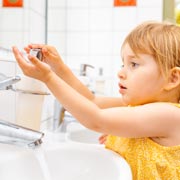
 Reassuring your child will also help them settle into nursery – so communication is key. This is true both before they start and once they attend, particularly at the beginning. Before starting, it’s important to ensure they know that changes will soon happen, what to expect when the time comes, and that it’s going to be a big adventure with lots of fun! Encourage questions and answer them sensitively. They also need to be reassured that you will always be there, behind the scenes, looking out for their best interests. And, of course, it’s crucial for them to know you’ll be there to pick them up at home time (don’t be late!).
 As we said previously in our
  Encourage children by celebrating their successes at the nursery. Whether it’s the successful completion of their first day, the first tear-free day, the making of a new friend or any other accomplishment, ensure you congratulate your child. This will give them a sense of achievement, reassure them that they’re doing well, and encourage them to keep attending and building on their progress.
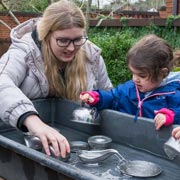 With children sometimes taking as many as 2, 3, or even 4 weeks to fully settle into a new nursery, it’s also important for staff to closely monitor and nurture them. That’s indeed exactly what we do at Little Acorns Nursery in Hindley Green. We ensure the setting is a home-from-home environment for children as much as possible. Children will feel valued, loved, listened to, and well cared for at Little Acorns. We’ll reassure them when they need it, communicate well with parents/carers, discuss any challenges and work to address them speedily and in the most effective ways. We have children’s best interests at heart, so parents can rest assured that their little ones are kept safe, happy and well and, even if not immediately, they’ll grow to love being at the nursery. A couple of recent testimonials prove the point beautifully (hover over them to pause):


 We’ve got lovely reviews and 5-star ratings online and, at the time of writing, have scored top marks across the board. The following is a typical review illustrating the type of lovely comments that parents have been publishing online about Little Acorns Nursery, Hindley Green:
 Little Acorns staff are fastidious about the welfare and safety of babies and children under their care. As even the Ofsted inspector reported in our last inspection, “Leaders have ensured that staff are well trained and knowledgeable about matters relating to child protection. They have provided clear procedures for staff to report any concerns that they may have about children’s welfare.” Your child is in safe hands at Little Acorns Nursery.
 During the first half of 2024, the nursery underwent a significant refurbishment and the results really speak for themselves. It’s a real facelift that includes beautiful new flooring, refreshed paintwork, re-plastered walls, renewed skirting, lovely bright downlighters, new storage areas, new bathrooms, new hallway carpet, and a modern, spacious feel. There are some lovely new interior design touches too, which spark new life into the nursery and preschool areas. New furniture, resources and enhancements are also included to make this a more exciting, stimulating, and engaging place for children to spend time. These include details like new bifold doors to allow free-flow access from indoors to the outdoor areas when appropriate. You can
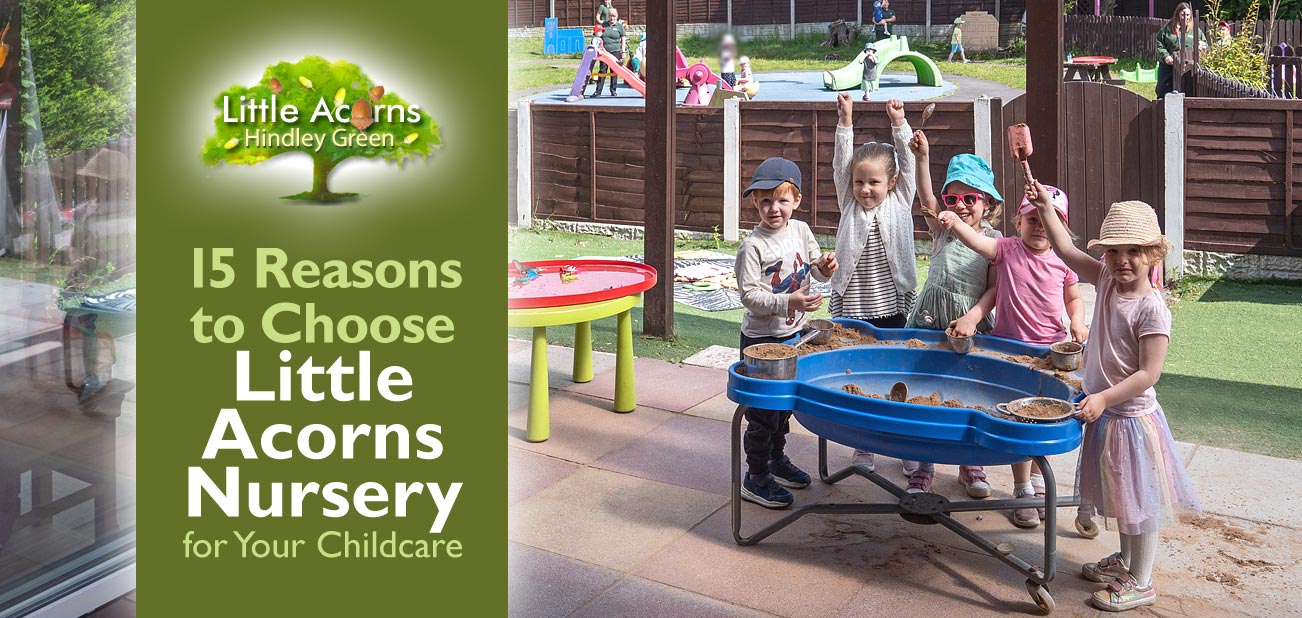
 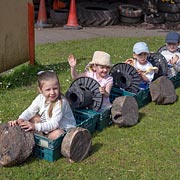 Few childcare nurseries and preschools can claim to have as large an outdoor space as Little Acorns Nursery in Hindley Green. Our extensive outdoor space is a wonderful area for children to explore, discover, play, and learn. Including both undercover areas and open areas, there are nature zones, sensory areas, a variety of exciting play areas, counting areas, and a stimulating array of equipment. This includes construction toys and equipment, creative activities, sand play, water play, bicycles and scooters, play houses and, of course, more standard climbing frames, slides, and suchlike. Children can benefit here from both structured and free play in a safe but exciting outdoor environment.
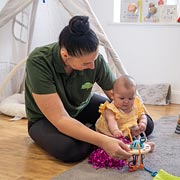
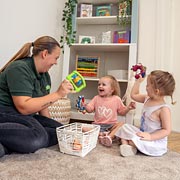 Little Acorns Nursery employs high-calibre childcare staff who are caring, experienced and skilled. Naturals with the children, they are also qualified as a minimum when they start in paediatric first aid, safeguarding, and basic food hygiene although many have qualifications that far exceed that baseline. Staff also have the support of a CPD programme, for continuous professional development, which includes access to training courses and tools that will further their skill set. That’s a win-win-win as the staff, the nursery and the children will all benefit. The Ofsted inspector also commented on the quality of staff at the most recent inspection:
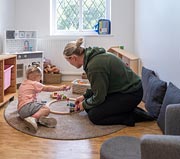 Little Acorns is also one of only a few Hygge-inspired childcare nurseries and this facet helps make the setting even more of a home-from-home for little ones. Hygge (pronounced “Hue-gah”) is a Danish and Norwegian word that describes the kind of lifestyle that has cosiness, contentment, and well-being at its centre. A Hygge-style environment will therefore be one that appreciates natural materials like wood and warm, homely, child-friendly, decor like rugs and cushions. Hygge also encourages a real appreciation of nature amongst both staff and children. Put simply, Hygge makes Little Acorns Nursery a better place to be.

