
Spooktacular Halloween Activities for Children
 Autumn’s arrival means that Halloween is just around the corner, coming on the 31st of October each year. The run-up to that date is a great time to start preparing for some fun Halloween activities for children to take part in. Whether dressing up for Halloween-themed parties, putting carved pumpkin lanterns and spooky decorations out at night, or playing Trick-or-treat locally, children of all ages will find Halloween a time of unique fun! It’s also a great opportunity for children to strengthen bonds with friends and for families to start getting creative! With that in mind, here are our top picks for spooktacular Halloween activities for kids!
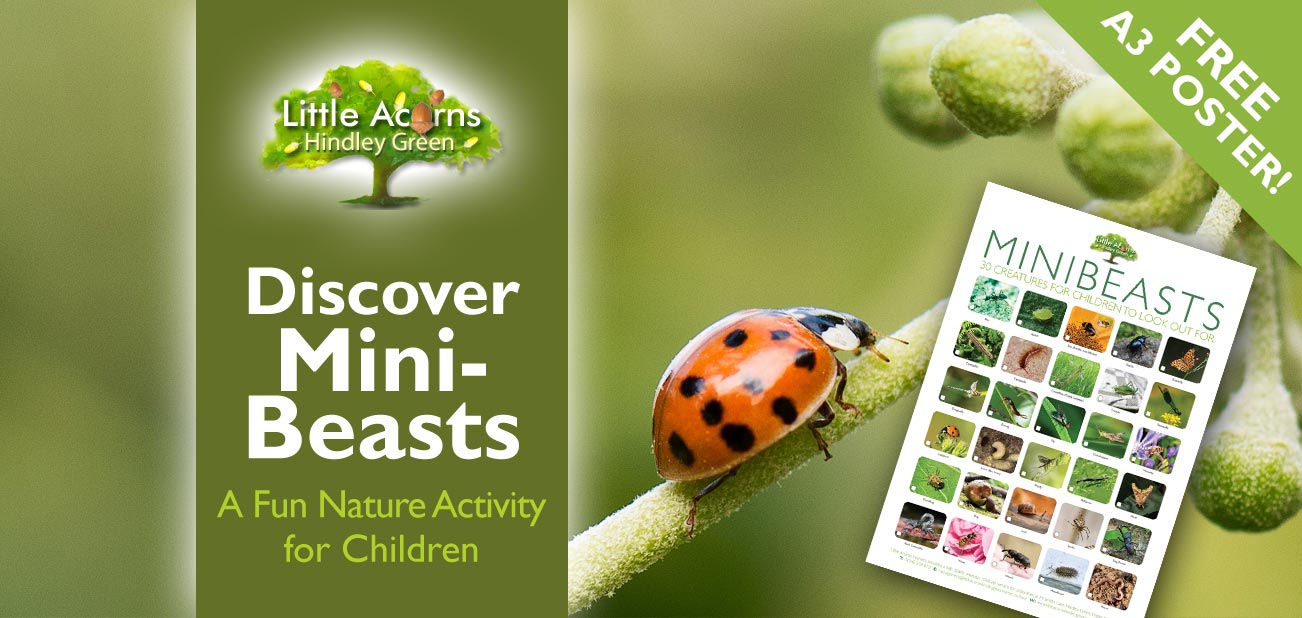
 Today’s ‘Discover Minibeasts’ post is the third in our series of nature-based activities for children. And, as with the
 We’re delighted to announce that Little Acorns Nursery, Hindley Green, has passed its first Ofsted Inspection — and with flying colours! The Ofsted Report was published recently following the Ofsted inspection in late April this year. It is our first since we took over the nursery from Kate’s Kindergarten in 2022. So, it’s now official — Little Acorns Nursery is a ‘Good Provider’ of childcare and early-years education. Let’s take a look at the Inspector’s findings and some of her lovely comments. We’ll see why the nursery/preschool achieved such consistent, positive feedback and good ratings in every area. Doing so is incredibly important to the children under our care and, of course, to their parents and caregivers.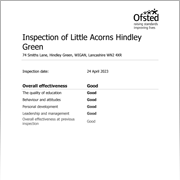
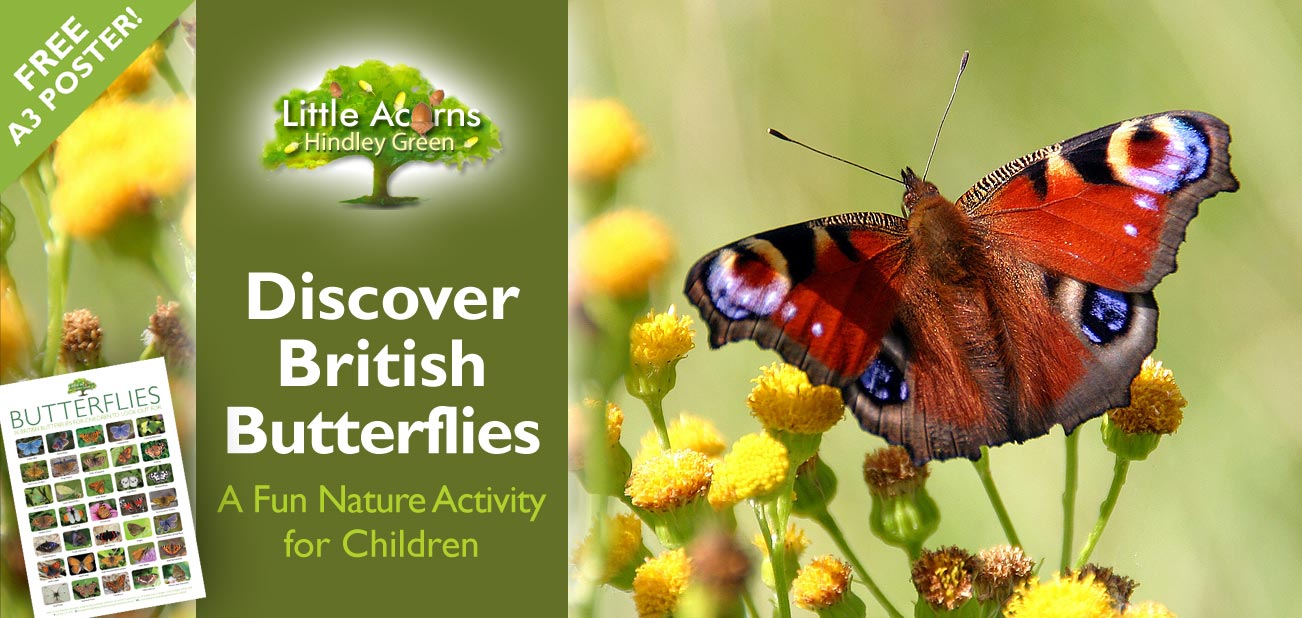
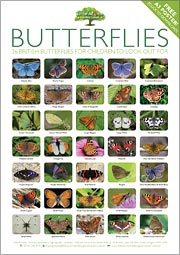 Today’s exciting blog post encourages families to explore the wonders of nature and embark on a delightful butterfly-spotting adventure! Butterflies are simply beautiful creatures and their amazing colours and patterns are sure to appeal to little ones. With that in mind, we have prepared a visually appealing and informative A3 poster featuring 36 British butterflies, which you can download for free and print out. So, why not get the family ready to step outside, immerse yourselves in nature, and create cherished memories as you observe these enchanting creatures in their natural habitat? The poster gives visual reference and also ensures you have a lasting memento of this unique experience. Over time, this poster and nature-based activity will help you and your little one learn to identify these diverse and important little pollinators. As we reported before,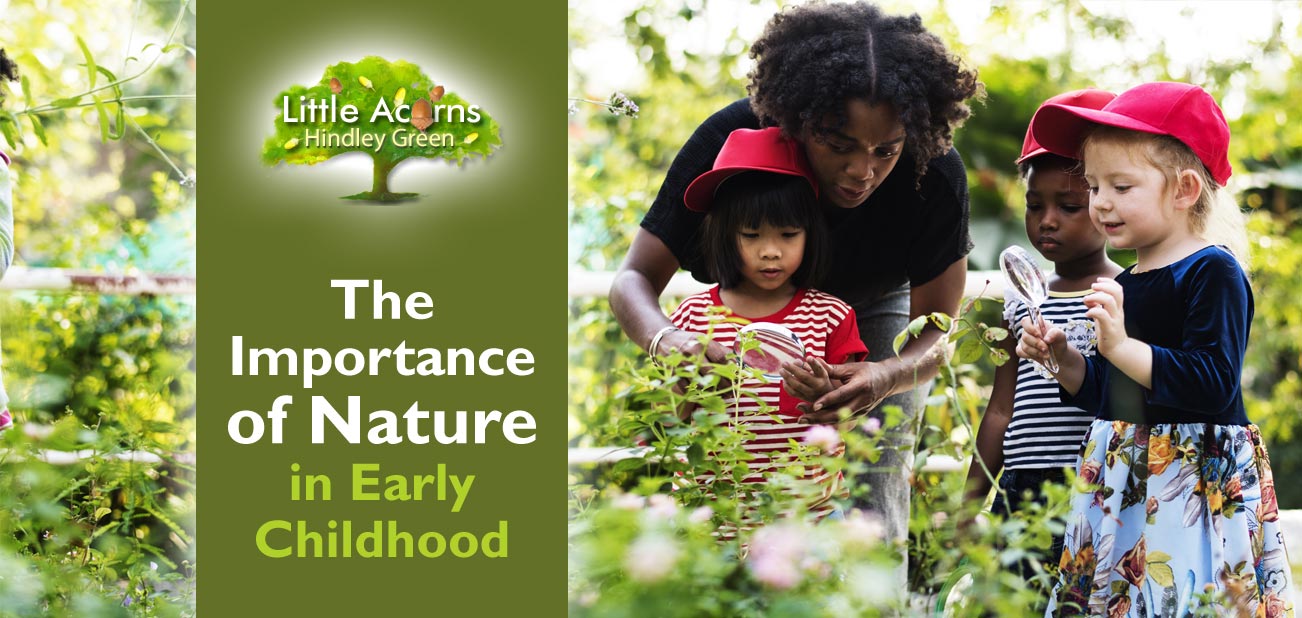
 As parents, we all want the best for our children. We strive to provide them with a nurturing and stimulating environment that supports their growth and development. However, in today’s fast-paced world, it’s easy to overlook the importance of nature in our children’s lives.
 With free tutorials available on YouTube and inexpensive instruments available in charity shops, phone apps and online marketplaces, there has never been a better time for children to start learning a musical instrument. It’s something for every parent to consider because such a pastime will benefit their child in an incredible variety of ways. Not only will they learn a new skill that will stay with them for life, but their lives will be enriched in many additional ways too. So, today, we take a look at the often profound benefits of learning a musical instrument, especially for young children.
 Some may be surprised to learn that nurseries/pre-schools like Little Acorns are not simply “childcare services”. We’re way more than just a crèche, playgroup or a group of nannies or childminders. In reality, our services extend way beyond simply looking after children while parents go to work, although of course we do that too. The truth is that we benefit little ones and their families in a whole range of additional, often profound, ways and that’s what we look at today.
 Starting nursery or pre-school is a real milestone for children and parents alike. As well as being exciting, though, transitioning to nursery or pre-school can be daunting for the little ones. The researching of childcare settings, checking Ofsted reports and appraising recommendations from friends is all very well, but that’s only the first step. The transition will be smoother for the children themselves if a few golden rules are followed. That’s precisely where today’s guide comes in, with our 20 Ways to Prepare Under-5s for Nursery. Take a look …
 Parents of under-fives may have heard nurseries, pre-schools, childcare professionals and other parents referring to “the EYFS”. However, what is it, and how does it affect your children? Well,

